

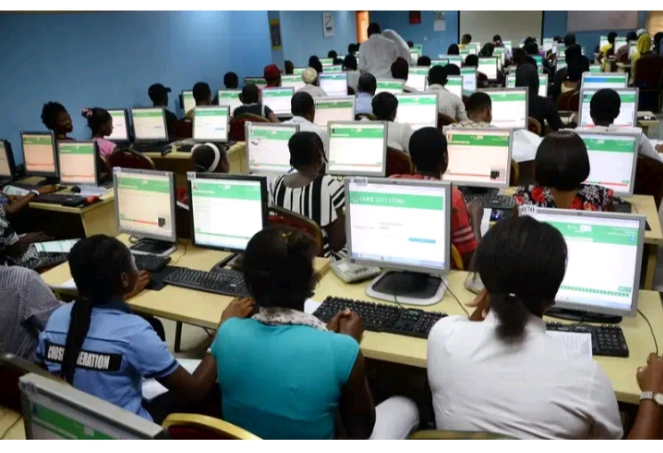
All exams in Nigeria will be 100% computer-based by 2027 –Minister
Minister of Education, Dr Tunji Alausa, said by 2027 all exams would be 200 per cent computer-based.
Dr Alausa, disclosed this during the inauguration of the committee on Improvement of Quality Examinations in Nigeria in Abuja on Thursday.
Alausa said that the committee was tasked with the responsibility of addressing major challenges in the education sector, standardise examination practices and ensure fairness and quality.
He emphasised the government’s commitment to tackling widespread examination malpractices and enhancing the overall quality of the nation’s educational assessments.
He said tackling examination leakages requires a holistic approach, as students are not the only culprits in examination malpractices.
The minister said that parents also contributed to examination malpractices by encouraging their wards to engage in sharp practices.
He added that teachers, school principals as well as those supervising the examinations were also culpable in the rising examination malpractices in the country.
“So, we’re planning that by 2027, all our exams will be computer-based. We will work so hard to ensure that that happens. We have to use technology to help our endeavour.
“The committee will also be working with local swapping of candidates.
“There are multiple participants in exam practices. From the students to parents, teachers, principals, to even people regulating and supervising exam conduct.
“During this change, a lot of areas of compromises will happen. There will be people investigating and regulating the exams,” he said.
Alausa outlined several goals which the committee was set up to achieve, including eliminating examination leakages, addressing identity theft in examinations and improving examination supervision.
He stressed the importance of transitioning to computer-based examinations by 2027 and combating local swapping of candidates during examinations.
He further said this will be made possible through the government’s substantial funding of education under the President Bola Tinubu-led administration, with a strong focus on human capital development.
The minister also announced that examination certificates would now feature three key identifiers: national identification numbers, candidates’ photos and birthdates to ensure the authenticity of results.
He described examination malpractice as a growing threat, warning that allowing it to persist would undermine the efforts of diligent students striving to improve themselves.
“I’ve mandated all the registrars of our examination bodies, such as WAEC, NECO and NAPTEB that by their next examinations scheduled for May, June and July, there will be three identifiers on the certificates they issue.
“These identifiers will be the national identification number of the candidates, the picture of the candidate on the certificates and their date of birth.
“By having these three identifiers, we will ensure almost 100 per cent certainty in identifying candidates,” he stated.
Responding, chairman of the committee, Prof. Is-haq Oloyede, thanked the Federal Government for the confidence reposed in him and other members of the committee in carrying out the national assignment.
Oloyede, who is the Registrar of the Joint Admissions and Matriculation Board (JAMB), pledged to carry out the assignment diligently.