
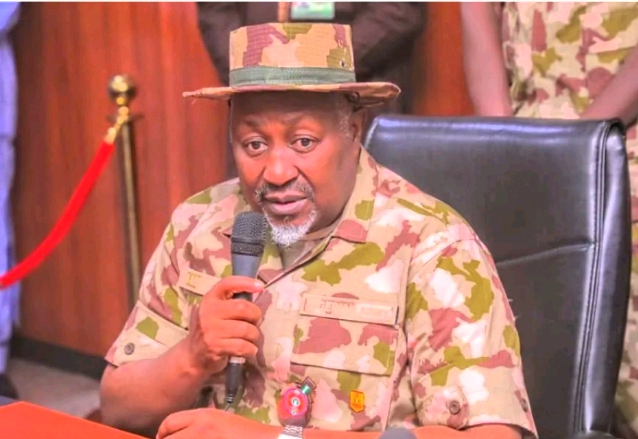
In the defence of Defence Minister Mohammed Badaru
By Lawal Jet Kaugama
Calls for the dismissal of Nigeria’s Minister of Defence, Mohammed Badaru Abubakar by some backyard online newspapers amid ongoing security challenges in the country, are not only misguided but also overlook the significant strides made under his leadership.
Such criticisms appear to be politically motivated attempts to undermine both Badaru’s contributions and the broader security reforms initiated by President Bola Ahmed Tinubu.
If some critics say President Tinubu must sack Defence Minister Muhammed Badaru Abubakar, what about the other Security Chiefs, including Minister of State for Defence Bello Matawalle, National Security Adviser, Nuhu Ribadu, Service Chiefs, Inspector General of Police and so on?
Or is it only Badaru that is in charge of the Security of this country? Calling for Badaru’s sack is mischievous, a ploy by his traducers to discredit his achievements.
Nigeria’s security apparatus is a complex, multi-tiered structure involving various key figures: the Minister of Defence, the Minister of State for Defence, the National Security Adviser (NSA), Service Chiefs, and the Inspector General of Police (IGP), among others. Attributing the nation’s security challenges solely to Minister Badaru disregards the collective responsibility and the collaborative efforts required to address such multifaceted issues.
Since his appointment in August 2023, Badaru has demonstrated proactive leadership by directly engaging with troops and assessing on-ground realities. In April 2025, he led a high-level delegation, including Minister of State for Defence, Dr. Bello Matawalle and Chief of Defence Staff Gen. Christopher Musa, to Borno State to evaluate security situations and coordinate strategies with local authorities. This hands-on approach underscores his commitment to understanding and addressing the challenges faced by security personnel and affected communities.
The Ministry of Defence, under Badaru’s stewardship, has recorded notable successes. Reports indicate that within a year, the Armed Forces neutralized approximately 9,300 adversaries, including terrorists and bandits, and arrested over 1,400 suspects. These achievements reflect improved coordination among the Army, Navy, Air Force, and other security agencies, a synergy that Badaru has actively fostered.
Recognizing the evolving nature of security threats, Badaru has prioritized the modernization of military equipment and the welfare of personnel. Initiatives such as the Special Operations Force Training at Camp Kabala in Kaduna State exemplifies efforts to enhance the operational effectiveness of the Armed Forces. By focusing on training and equipping troops with modern tools, Badaru aims to build a resilient and responsive military force.
Badaru’s background as a successful businessman and former governor of Jigawa State provides him with a unique perspective on the socio-economic dimensions of security. His experience in economic planning and governance enables him to approach security challenges with a comprehensive strategy that addresses underlying factors contributing to instability.
While Nigeria continues to grapple with security issues, it is imperative to assess the performance of its leaders based on tangible outcomes and strategic initiatives. Minister Mohammed Badaru Abubakar’s tenure has been marked by proactive engagement, operational successes, and a commitment to modernization and collaboration. Calls for his dismissal ignore these contributions and risk destabilizing the progress made thus far. A holistic and fair evaluation of the entire security framework, rather than targeting individual actors, is essential for sustained national security.
Lawal Jet Kaugama, a commentator on national issues, writes from Kano