
Why Gov. Aliyu’s commitment to social morality deserves our support
By Lawal Jet Kaugama
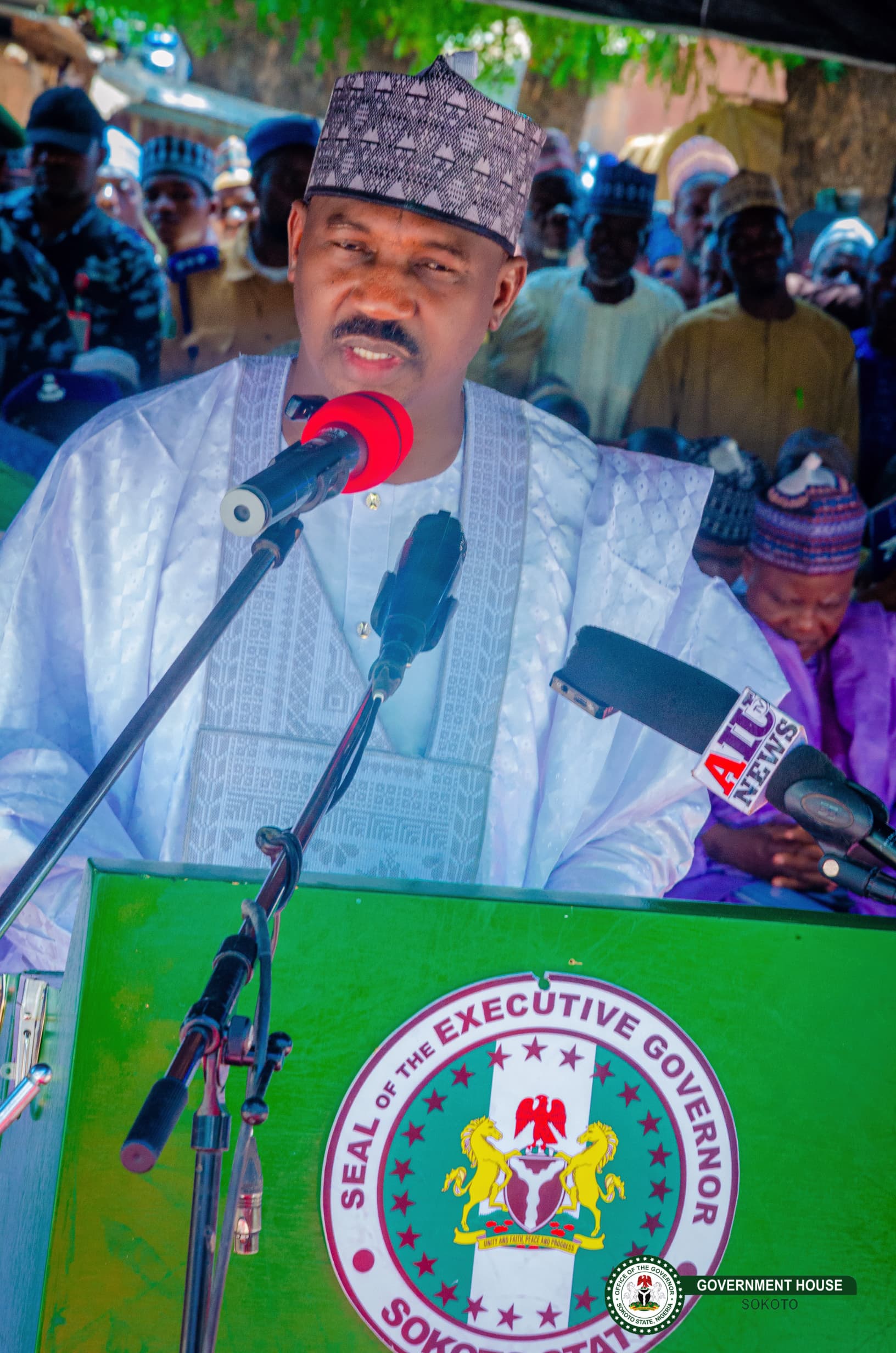
Sokoto State governor, Dr. Ahmed Aliyu, has reaffirmed his administration’s commitment to ensuring that liquour and other intoxicants are not sold in the state.
This was contained in a release by Press Secretary to Sokoto State Governent, Abubakar Bawa, on Friday.
He said Governor Aliyu highlighted the recent efforts by the Sokoto State Hisbah Board, particularly the confiscation and destruction of liquor, as evidence of the government’s determination to rid the society of all immoral practices during the commissioning of the central mosques.
In an era where leadership often wavers between making impactful decisions and appeasing diverse societal interests, Governor Aliyu stands out as a leader resolutely committed to the moral and social well-being of his community. His reaffirmation to eliminate the sale of liquor and other intoxicants within the state is not just a political stance but a moral commitment rooted in the values and aspirations of the Sokoto populace.
Governor Aliyu’s dedication to maintaining the sanctity and moral fabric of Sokoto State was notably highlighted during the commissioning ceremony of the reconstructed Shagari Jumu’at Mosque. There, he did not just speak of his administration’s unwavering commitment to morality; he also demonstrated it through tangible actions. The proactive steps taken by the Sokoto State Hisbah Board, including the confiscation and destruction of liquor, are a testament to the government’s determination to curb social vices. It is a rare and commendable move that deserves recognition and support.
One must acknowledge the complexities involved in enforcing such policies. In a pluralistic society where individual freedoms often clash with communal norms, it takes courage and wisdom to strike a balance. Governor Aliyu’s approach is exemplary in this regard.
While emphasizing the importance of curbing immoral practices, he has equally ensured that the Hisbah Corps operates within the legal framework, respecting fundamental human rights. This balanced stance not only upholds the state’s moral standards but also preserves the dignity and rights of its citizens.
The governor’s emphasis on community cooperation is another praiseworthy aspect. Realizing that lasting change requires collective effort, he has called on the public to support the Hisbah Board’s mission. By doing so, he fosters a sense of shared responsibility among the citizens, encouraging them to be active participants in the state’s moral rejuvenation. This inclusive approach is essential for sustaining the positive outcomes of such policies.
Moreover, Governor Aliyu’s commitment to social morality does not stand in isolation. It is complemented by his remarkable strides in community development, particularly in religious infrastructure.
The ongoing reconstruction of 63 Jumu’at mosques across the state is a monumental effort that not only addresses the spiritual needs of the people but also promotes community cohesion and pride. This initiative goes beyond mere physical reconstruction; it signifies a renewal of spiritual commitment, especially in a region with rich Islamic heritage.
The monthly allocations provided to Jumu’at mosques and the stipends granted to Imams, deputies, and Muazzins underscore the governor’s holistic vision for community uplift
It is a thoughtful measure that ensures these religious leaders are well supported, enabling them to focus on their spiritual and community responsibilities without financial strain.
A particularly notable event was the commissioning of the reconstructed Shagari Jumu’at Mosque. Former Deputy Governor Barrister Mukhtar Shagari rightly commended Governor Aliyu for his infrastructural vision, recognizing the historical and spiritual significance of the mosque as the birthplace of the esteemed Islamic scholar Sheikh Abubakar Mahmoud Gummi. Such projects reflect a deep respect for Sokoto’s cultural and religious legacy.
Governor Aliyu’s approach to leadership, marked by a blend of moral fortitude and infrastructural ambition, exemplifies a model worth emulating. He has shown that governance can indeed align with cultural values without sacrificing progress or inclusiveness.
As Prof. Sambo Wali Junaid, representing the Sultan of Sokoto, aptly noted, the governor’s efforts in reconstructing mosques are noble endeavours that foster both spiritual growth and community unity.
In a time when political discourse is often dominated by controversies and superficial commitments, Governor Aliyu’s decisive actions offer a refreshing narrative. His leadership not only addresses the practicalities of community welfare but also inspires a collective moral consciousness. It is imperative for the people of Sokoto to continue supporting his vision, understanding that genuine societal change is achievable through unity, respect, and a commitment to shared values.
Governor Aliyu has laid a solid foundation for a morally upright and progressive Sokoto. As citizens, it is our duty to build on this foundation, actively participating in initiatives that enhance both our moral and communal lives. The governor’s vision for Sokoto is both progressive and deeply rooted in the cultural ethos of the state. It is this blend of modern governance and traditional values that sets his administration apart and deserves our unequivocal support and commendation.
Lawal Jet Kaugama, a commentator on national issues, writes from Kano