
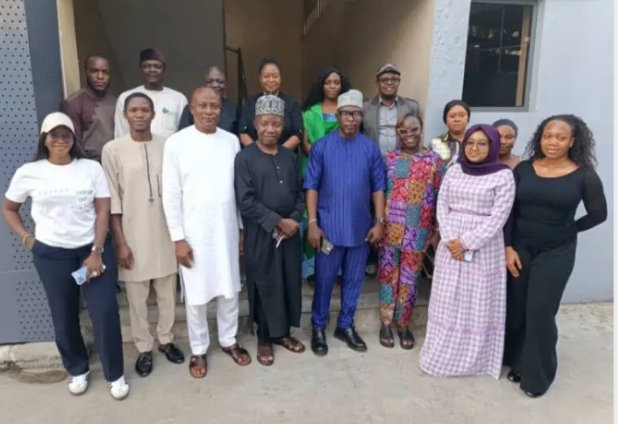
UBEC reviews partnership framework to strengthen basic education delivery
By Uji A.Iliyasu, Abuja
The Universal Basic Education Commission (UBEC) has commenced a comprehensive review of its Public-Private Engagement and Partnerships (PPEP) framework as part of ongoing reforms aimed at expanding access to quality basic education across Nigeria.
Executive Secretary of UBEC, Aisha Garba, directed the overhaul of the partnership framework to enhance collaboration with public agencies, private organisations, development partners, and civil society groups. The review is being undertaken at a three-day stakeholders’ meeting in Lagos, organised in collaboration with the United Nations Children’s Fund (UNICEF).
Confirming the development, UBEC official Mr. David Apeh said the Commission recognises the critical role of strategic partnerships in driving sustainable educational reforms. He noted that the revised framework seeks to institutionalise engagement processes and provide clear guidelines for working with diverse stakeholders, including corporate bodies and philanthropic foundations.
According to him, the Lagos meeting aims to explore expert insights on effective public-private partnerships, enrich the existing draft, identify priority areas, develop suitable partnership models, and ensure alignment with national education policies.
Meanwhile, UBEC’s Executive Secretary, Aisha Garba, reiterated her commitment to improving basic education delivery across the country. She expressed concern over Nigeria’s alarming number of out-of-school children, estimated at 17 million, and highlighted challenges such as low learning outcomes, poor completion rates, and inadequate access to further education.
Garba outlined her strategic vision to tackle these issues by improving access, raising education quality, and ensuring safe and conducive learning environments. She listed key interventions, including technology integration, infrastructure upgrades, targeted support for vulnerable groups, and a strong focus on children with special needs and the girl-child.
She urged state governments, development partners, and community leaders to strengthen collaboration with UBEC to expand access, reduce the out-of-school population, and maximise the utilisation of UBEC Matching Grants. Garba assured that her administration would pursue tailored, region-specific solutions and adopt a multi-sectoral approach to drive meaningful reforms in Nigeria’s basic education sector.