
NSSEC unveils national minimum standards, gves states 12 months to comply
By Uji A Iliyasu Abuja
The National Senior Secondary Education Commission (NSSEC) has released the National Minimum Standards for Secondary Education, with a directive to state governments to begin full implementation within the next 12 months.
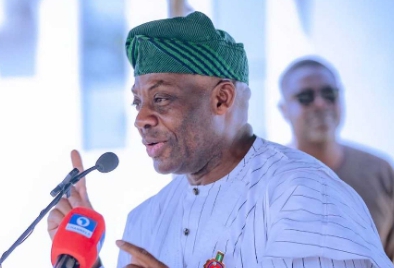
Executive Secretary of the Commission, Dr. Iyela Ajayi, disclosed this during an interaction with journalists in Abuja, stressing that NSSEC is committed to reshaping secondary education through strict standards enforcement, teacher development, digital expansion and improved infrastructure.
Ajayi said the newly launched standards clearly outline requirements for teacher recruitment, qualifications, teacher–student ratios, infrastructure, classroom quality and overall school environment.
“The National Minimum Standards benchmark all aspects of senior secondary education. How many teachers do you have? What should be their qualifications? What should be the teacher–student ratio? What type and quality of buildings are available? All these are spelled out,” he said.
He added that the document, launched in February and already distributed to all states, carries legal backing for enforcement. “We have given them 12 months to comply. We cannot continue with a situation where students learn under trees or in classrooms without roofs. Those days must end,” he declared.
On teacher quality, Ajayi said the Commission is scaling up continuous professional development, including training programmes for English and Mathematics teachers, as well as capacity building for educators and administrators on AI-driven teaching methods.
He listed NSSEC’s priority areas to include teacher training, recruitment and retention of qualified personnel, ICT integration, digital learning, and widespread rehabilitation of school infrastructure. Other focus areas are technical and vocational education, inclusive learning for girls and persons with disabilities, skill-based curriculum reforms and strengthened school governance.
Ajayi noted that NSSEC has already facilitated the upgrade of at least 50 senior secondary schools—one in each state—through constituency projects, providing new classrooms, laboratories and ICT facilities. “We are not yet like UBEC, but the little we have done is already changing the narrative,” he said.
He also revealed ongoing discussions with telecom companies for subsidised broadband in schools and partnerships with development agencies to secure 30,000 tablets for teachers. Plans are underway to make computer literacy compulsory and expand instruction in robotics, artificial intelligence and data science.