
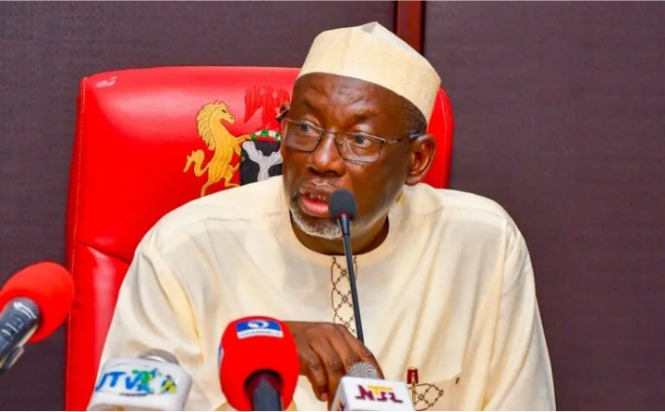
Tsangaya Education Reform: Reading Gov Namadi beyond the moment
By Lawal Jet Kaugama
When Gov Umar Namadi shared the outcome of the six-month Tsangaya education programme in Jigawa State, it sounded, at first glance, like a routine government success story. But beneath the statistics, 150 participants, 96 per cent completion, nationally recognised certificates from National Board for Arabic and Islamic Studies, lies something more politically significant: a test case for how social reform can translate into long-term political capital.
The Tsangaya system has long been one of northern Nigeria’s most debated institutions, criticised for its vulnerabilities, yet deeply rooted in culture and religious identity. What Namadi’s administration appears to have done is neither abolish nor ignore it, but attempt a hybridisation: preserving its spiritual core while injecting formal education.
That 96 per cent success rate is not just impressive. Youngsters without any formal primary education passing examinations equivalent to secondary school level within six months challenges long-held assumptions about educational barriers. It suggests that the issue has never been capacity, but access and structure.
Even more compelling is the anecdote of a participant who used the certificate to secure a position requiring formal qualifications. In policy terms, that is the difference between reform on paper and reform that reshapes lives. In political terms, it is golden.
What Gov Namadi is building, if sustained, is not just an education reform but a narrative of inclusion. Northern Nigerian politics has often revolved around identity, loyalty, and patronage. But programmes like this introduce a different currency of opportunity.
By empowering Alarammomi (traditional Quranic teachers), the government is not only addressing education gaps but also engaging a historically marginalised group with social influence.
These are community figures, opinion shapers in rural and semi-urban areas. When there is noticeable benefits, their communities are happier for it.
If expanded effectively, this initiative could evolve into a quiet but powerful political network that is rooted not in campaign promises, but in real time transformation.
Here comes the 2027 question, which is already in motion.
Projecting towards 2027 may seem premature, but Nigerian politics rewards those who build early foundations. Whether Gov Namadi harbours ambitions beyond Jigawa is not the immediate question. The more relevant issue is whether his governance style is constructing a transferable political identity worthy of historical recognition.
Three factors will shape his chances in terms of consistency of impact.
One successful programme does not define a political future. Sustained delivery across sectors, education, healthcare, infrastructure, commerce, will determine whether this moment becomes a pattern.
In modern politics, perception is as critical as performance. If Gov Namadi successfully frames this Tsangaya reform as a model for northern development, it could elevate his profile beyond state politics.
By 2027, Nigeria’s political landscape will likely be reshaped by generational shifts. Leaders who can bridge traditional structures (like the Tsangaya system) with modern governance will have a strategic advantage.
However, the road is not without challenges. Scaling such programmes requires funding, institutional discipline, and resistance to politicisation. There is also the risk of over-promising, raising expectations that may be difficult to meet across all communities.
Moreover, educational reform alone does not secure political longevity. Economic realities as employment, inflation, and social stability, will ultimately test any administration’s legacy.
For now, Namadi’s statement is more than a celebration; it is a signal. It suggests an administration that understands the value of targeted, culturally-sensitive reform, and its political implications.
If he continues on this trajectory, 2027 may be a realistic horizon to consider. Not because of ambition alone, but because of the groundwork that campaigns for him.
In politics, the future rarely belongs to the loudest voice. More often, it belongs to those who quietly change the conditions of people’s lives—and allow those changes to speak for them.Lawal Jet Kaugama, a commentator on national issues, writes from Kano