
SPESSE expansion signals bigger role for Nigeria’s universities
By Uji A Iliyasu, Abuja
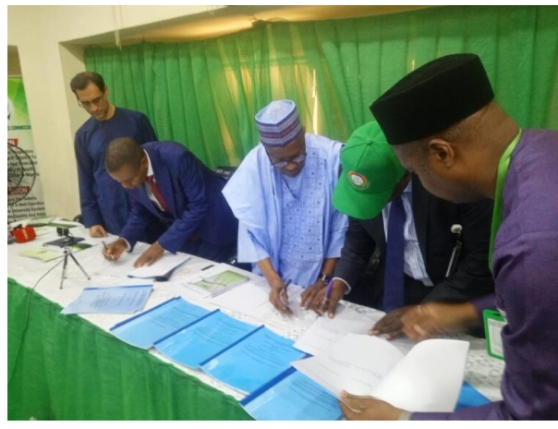
Barely two weeks after the additional financing phase of the Sustainable Procurement, Environmental and Social Standards Enhancement (SPESSE) project became effective, Vice Chancellors of the six participating universities gathered to sign new performance contracts, marking the beginning of a more ambitious stage for one of Nigeria’s most strategic higher education and public sector reform initiatives.
The signing ceremony, coordinated by the National Universities Commission (NUC) , underscored the Federal Government’s commitment to strengthening capacity in procurement, environmental, and social standards management while positioning Nigerian universities as key drivers of institutional reform and sustainable development.
Speaking at the event, the Executive Secretary of the NUC, Professor Abdullahi Yusufu Ribadu, described the new phase as “a new chapter in our collective journey to strengthen Nigeria’s capacity in procurement, environmental, and social standards.”
With an additional $65 million financing support from the World Bank, the project’s total funding has now increased to $145 million, while implementation has been extended to June 2029.
The SPESSE project was established to address Nigeria’s shortage of skilled professionals in procurement, environmental, and social safeguards, as well as the absence of specialised academic programmes within the Nigerian university system to train experts in those fields.
To bridge the gap, six Centres of Excellence were created across the country’s geo-political zones under the coordination of the NUC and support of the World Bank. The universities emerged through a competitive selection process based on institutional readiness, quality assurance, and sustainability plans.
Since becoming operational in 2021, the project has recorded major milestones. Academic programmes ranging from short courses and postgraduate diplomas to master’s, undergraduate, and PhD programmes have been introduced in procurement, environmental standards, and social standards management.
According to the NUC, over 40,000 participants have already been trained through the project’s professional tracks, while some universities are preparing to graduate Nigeria’s first undergraduate specialists in the fields.
Three of the six centres have already commenced PhD programmes, with the remaining institutions expected to begin theirs during the next academic session in July 2026.
Prof. Ribadu also noted that the project is expanding its international outlook, with some centres already attracting foreign students as part of efforts to internationalise education in Nigeria. Collectively, the centres have established more than 68 international partnerships to support research, teaching, and professional development.
The project has equally strengthened professional certification systems. In 2025, certification portals for procurement, environmental, and social standards practitioners were launched by the Bureau of Public Procurement, the Federal Ministry of Environment, and the Federal Ministry of Women Affairs to improve quality assurance and professional accountability.
Under the Additional Financing phase, the NUC aims to deepen institutional ownership, expand online and distance learning, strengthen international partnerships, and ensure long-term sustainability of the centres beyond external funding.
The Commission has set ambitious targets for the new phase, including the production of at least 60 PhD graduates, enrolment of 60 foreign students, facilitation of staff internships, and expansion of student exchange programmes with foreign institutions.
National Project Coordinator, Dr Joshua Atah, disclosed that all SPESSE programmes have received resource verification and accreditation by the NUC, while the Joint Admissions and Matriculation Board ( JAMB) and the National Youth Service Corps (NYSC) have been formally notified.
He added that investments in virtual classrooms, learning management systems, live-streaming facilities, and high-performance computing infrastructure have improved access to training and enhanced teaching quality across the Centres.
As implementation enters a new phase, SPESSE is increasingly emerging as a major platform for strengthening universities, professionalising public sector practice, and advancing sustainable human capital development in Nigeria.