
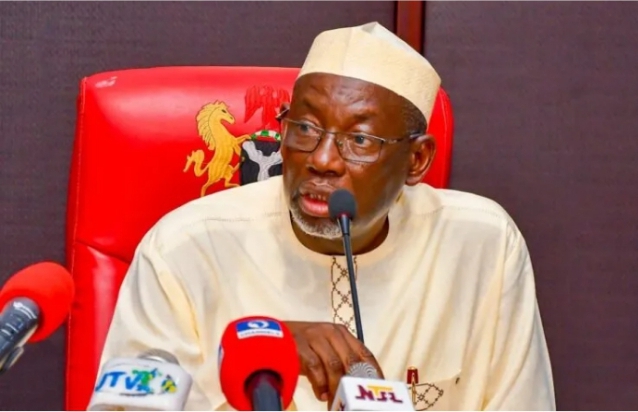
Gov Namadi’s citizen-centred governance approach
By Lawal Jet Kaugama
The resolutions emanating from Jigawa State’s Executive Council meeting of 8 June 2026, paint a compelling portrait of administrative leadership that transcends the conventional operational mechanics of government.
Gov Malam Umar A. Namadi’s approach reveals something increasingly rare in Nigerian governance: a deliberate commitment to institutionalizing participatory democracy while simultaneously advancing pragmatic economic and infrastructural development.
What strikes most forcefully about this governing philosophy is its coherence. These are not isolated policy initiatives scattered across unrelated sectors. Rather, they represent integrated strands of a unified vision that recognizes sustainable development as the product of citizen buy-in, strategic investment, and institutional modernization working in concert.
Consider first the Citizens Engagement Programme (Gwamnati Da Jama’a). A ten-month statewide exercise spanning all 27 local government areas, this initiative transcended tokenism. It served as the substantive foundation for Jigawa’s 2026 budget, meaning citizen inputs directly shaped resource allocation decisions.
This is governance democracy, not democracy as rhetoric. The governor’s reaffirmation that “sustainable development can only be achieved when government policies and programmes are informed by the voices and aspirations of the people” moves beyond platitude.
The institutionalization of this programme through a permanent participatory governance policy framework demonstrates that his administration views citizen engagement not as a temporary goodwill gesture but as an embedded governance mechanism.
ALSO READ. ..
APC Primaries: Why Jigawa people are standing firmly behind Gov Namadi
This commitment to structured participation stands in sharp relief to the top-down administrative models still prevalent across Nigeria.
Gov Namadi understands what development scholarship has established: that programmes lacking public legitimacy and citizen ownership rarely achieve intended outcomes. By building feedback systems, regular dialogue mechanisms, and transparency structures into the governance architecture itself, he is effectively inoculating Jigawa’s development trajectory against the implementation failures that plague less participatory systems.
The approval of the Right-of-Way and Telecommunications Infrastructure Regulation speaks to a different but equally vital dimension of quality leadership: the capacity to recognize emergent challenges and address them systematically. When digital infrastructure increasingly determines economic competitiveness, many state governments treat telecommunications regulation as a peripheral concern or, worse, as a revenue extraction opportunity.
Gov Namadi’s council instead mandated a comprehensive harmonization exercise ensuring alignment with federal law, international standards, and best practices, all before implementation.
The committee’s composition itself signals seriousness: lands, justice, works, investment, ICT, and revenue authorities working alongside a secretary to the governor. This is not bureaucratic theatre. It reflects understanding that broadband deployment and digital transformation require coordinated action across ordinarily siloed government functions.
The emphasis on protecting public assets while facilitating investment demonstrates intellectual balance, neither anti-business obstruction nor the kind of regulatory capture that enriches telecommunications companies at public expense.
The flood preparedness procurement of ₦835 million in emergency relief materials, reflects mature crisis anticipation. Rather than responding reactively after disaster strikes, the governor’s administration pre-positioned essential supplies across vulnerable communities.
This is administrative prudence grounded in climate reality. Nigeria’s northern states face intensifying flood risks; proactive provisioning of food, clothing, and building materials transforms disaster response from improvised scrambling into coordinated intervention.
The citizen advisory component, urging residents to observe safety protocols, completes the picture: government preparing infrastructure while citizens prepare themselves.
The mechanisation headquarters building and investment summit approvals demonstrate commitment to sectoral transformation.
Agricultural mechanization and investment attraction may appear disconnected, but both address the same underlying challenge: how to shift Jigawa from subsistence patterns toward productive, competitive economic participation.
A modern mechanisation headquarters centralizes planning and service delivery for farmers; an investment summit positions the state as an intentional destination for capital. Together, they suggest a governor thinking systematically about agricultural productivity, industrial development, and employment creation.
What ultimately distinguishes this leadership model is its refusal of false choices. Many governors privilege short-term infrastructure projects over institutional development. Governor Namadi pursues both. Some emphasize attracting investors while neglecting citizen voice. He institutionalizes citizen engagement while simultaneously promoting investment. Some build grand facilities while neglecting operational frameworks.
His mechanisation headquarters investment explicitly links infrastructure to improved administrative capacity.
This is not perfection. No summary document reveals implementation challenges, resource constraints, or whether policy actually translates to citizen benefit. Yet what the council resolutions unmistakably demonstrate is a state executive governing with evident intention: toward participatory, transparent, accountable administration; toward digital modernization; toward climate-resilient programming; toward agricultural transformation; and toward systematic economic diversification.
In contemporary Nigerian governance, such coherent, citizen-centred visioning deserves recognition and emulation.
Lawal Jet Kaugama, a commentator on national issues writes from Kano