
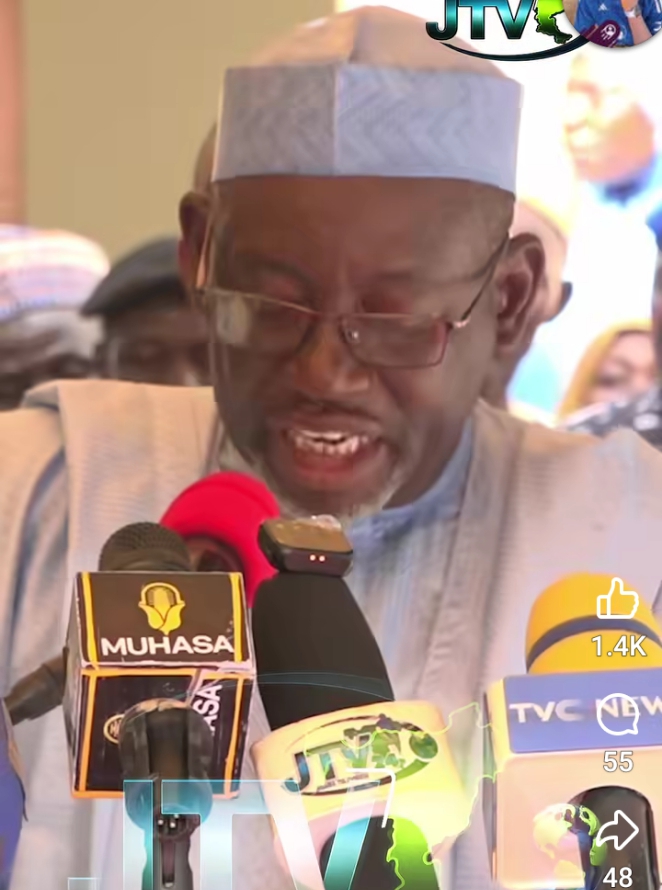
Gov Namadi’s quiet lesson in shared responbility and prosperity
By Lawal Jet Kaugama
There is an old Hausa saying that one hand cannot use a digger. It sounds, at first hearing, like a simple observation about tools. But Governor Umar Namadi, in invoking it recently while commissioning new excavators, loaders and load-bed machines for the Jigawa State Tipper Operators Association, was making a far larger point about how government ought to govern.
It would have been easy for this to pass as a routine equipment handover, the sort of ceremony that generates a press photograph and little else.
Instead, the governor used the moment to set out a working philosophy: that no government, however capable, can build an economy by itself. It must work alongside the people already doing the work. This is not a radical idea, but it is one too rarely honoured with real action, which is precisely what makes Jigawa’s example worth examining.
Sand excavation is not a trade that attracts headlines, yet it sits beneath nearly every road, foundation and building project in the state. For years, operators relied on manual digging, a method that is slow, exhausting and genuinely dangerous. Soil collapses are not theoretical risks in this line of work; they have cost labourers their health, and in the worst instances, their lives.
By placing modern machinery in the hands of the Tipper Operators Association, the Namadi administration has done something that reaches well beyond economic policy. It has made a direct intervention in the safety of ordinary workers, replacing hazardous manual labour with mechanised processes designed to prevent harm before it happens.
This is governance that understands what it is actually for. Officials frequently speak of growth in the language of statistics: GDP figures, investment targets, rankings on ease of doing business. These numbers matter, but they mean little to a man digging sand by hand under the Jigawa enervating sun.
What this initiative does is translate policy into something a tipper operator can feel the next morning: a safer, quicker, more dignified way to earn a living. That is development measured in human terms, not merely fiscal ones.
There is a quieter benefit too, one tied to cost and self-reliance. By strengthening local capacity for excavation, the state reduces operators’ need to source equipment and services from elsewhere, which helps keep transport and construction costs down within Jigawa itself. Cheaper, more efficient local supply chains make housing and infrastructure more affordable, and they make the state more attractive to further investment.
Every naira retained within Jigawa’s economy, rather than spent procuring services from outside it, strengthens the local economic base the governor has consistently championed.
This initiative also sits comfortably within a wider pattern in the Namadi administration’s approach to governance, one of partnership rather than paternalism.
Whether through engagement with traditional institutions on community security, proactive measures on flood mitigation and climate adaptation, or now the empowerment of grassroots trade associations, the thread is consistent: a recognition that the state cannot, and should not try to, do everything alone. Genuine, lasting development requires government to create the conditions in which citizens and private actors can build alongside it, not wait passively for it.
Sceptics of public-private collaboration sometimes argue that such arrangements blur accountability or quietly favour particular interests. These are fair concerns in principle, and they deserve scrutiny under any administration. But what distinguishes this initiative is the transparency of its purpose and the breadth of its benefit.
The machinery was not handed to a single contractor; it became a shared productive asset for an entire professional association, with safety and livelihood benefits rippling out to workers and the wider communities they serve.
There is something instructive, too, in the governor’s choice of words. Proverbs survive because they distill generations of collective wisdom into a single memorable line. That Governor Namadi reached for one rooted in everyday labour, rather than the abstract vocabulary of policy documents, suggests a leader speaking to the people doing the digging, not merely about them.
Jigawa’s challenges, economic, infrastructural and environmental, will not be solved by any single actor working alone. They demand precisely the sort of coordinated, hands-on partnership this initiative represents.
Governor Namadi deserves recognition not simply for providing equipment, but for the philosophy his actions express: that government’s role is to strengthen the hands already at work, not to replace them. One hand cannot use a digger. Two, working in concert, can move a great deal of earth.
Lawal Jet Kaugama writes from Kano