

By Uji A Iliyasu
Sitting immediately behind the Berom in size, the Tarok (also spelt Taroh) are widely described by their own people and by cultural researchers as the second-largest indigenous ethnic group in Plateau State. Journalist, Tanchit Monica Binjin, has noted that the Tarok people from Langtang are the second largest ethnic group in the state (BellaNaija) .
Where the Berom anchor Plateau’s central Jos axis, the Tarok anchor its southern flank, the agrarian, hill-and-plain country that stretches southeast of Jos towards Taraba and Nasarawa States.
Short History
The Tarok are an agrarian people of southeast Plateau State who call their land Tarok and their language also Tarok, and they coalesced over centuries from diverse groups including the Pe, Ngas, Jukun, Boghom, Tel (Montol) and Tal peoples, forming a distinct society long before colonial contact (Joshua Project) .
This is one of the more remarkable facts about Tarok identity: unlike ethnic groups that trace to a single ancestral lineage, Tárók is a deliberate amalgamation, separate migrant communities that settled on the Langtang hills and plains and, over generations, fused into one people with one language and one set of customs.
Longtau’s research places Tarok as one of the Benue–Congo languages almost completely surrounded by a sea of Chadic-speaking neighbours: Ngas, Tel, Boghom, Hausa and Yiwom, while its non-Chadic neighbours are the Pe, Jukun-Wase and Yangkam (Africa Prime News) .
Colonial contact and Christian missionary activity reached Tarokland by 1904, though early inhabitants were slow to trust the newcomers. It was later migrant groups, those who used mission and colonial connections to gain Western education, who rose to prominence, and today Tarok sons occupy an outsized place in Nigeria’s military and political history:
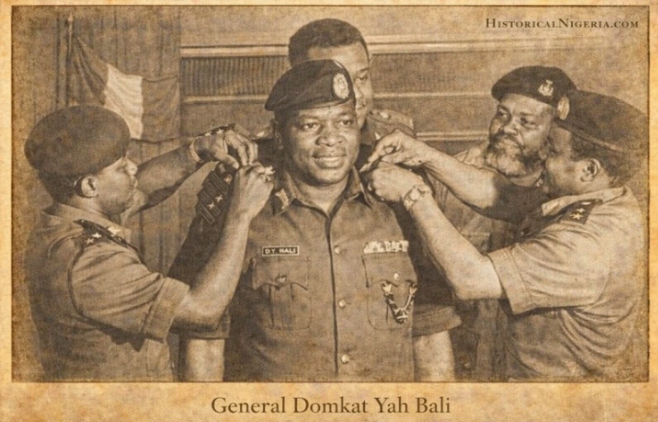
Langtang is nicknamed the “Home of Generals,” having produced more Army Generals than almost any other single Nigerian ethnic group, including Domkat Bali, Joshua Dogonyaro, Jeremiah Useni and John Shagaya.
Language
The people call themselves oTárók, their language iTárók, and their homeland ìTàrók. iTárók belongs to the Tarokoid branch of the Plateau language family, itself part of the vast Benue–Congo/Niger–Congo family, placing it in the same broad linguistic universe as Berom, but distinct from the Chadic (Afro-Asiatic) languages of neighbouring groups like the Ngas and Boghom.
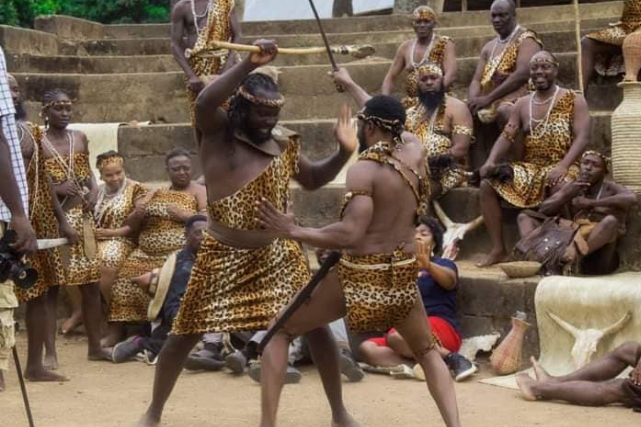
Music also drives the community’s best-known modern institution, the Ilum Otarok (“Tarok Day”) cultural festival, where singing, drumming, and traditional dance groups from across Langtang North, Langtang South, Wase, Mikang and Kanke converge in a shared display of heritage.
Belief and Religion
Most Tarok today identify as Christian, the faith reaching Tarokland with missionaries from 1904, yet indigenous belief remains a living, respected system rather than a relic.
At the centre of it is the orim ancestral cult, in which ancestors are represented by initiated men and post-menopausal women. Orim are usually heard rather than seen, but on certain occasions, disciplining “stubborn” community members, resolving disputes, or delivering prophecy, they emerge as masked figures who speak through voice disguisers, in a form of the Tarok language layered with code words that only unmasked interpreters can translate for the wider community.
Every sizeable Tarok settlement maintains a sacred grove just outside it, reserved as the dwelling place of the orim, which only initiated men above a certain age may enter.
Traditionally, each of the Tarok’s 20-plus sub-clans also has its own spiritual leader, the ponzhi nbin, who before colonial rule doubled as political head of that community.
Music and Dance
Song and dance are woven into everyday Tarok social life, not reserved for special occasions alone. In Tarok tradition, unmarried young men and women gather at moonlight plays and at a designated dance arena called “atak sal,” where young women perform satire songs, a socially sanctioned form of musical commentary used to needle people, including confirmed bachelors, into better behaviour (Jotscroll) .
Foods
Tarok cuisine reflects the group’s farming economy: guinea corn, millet, yams, rice and cassava dominate the fields, farmed by both men and women, with women often taking the lead in cultivation and in local markets. The staple dish is amwam, a thick porridge typically eaten with soups made from groundnut or local leafy greens, a meal pattern common across Nigeria’s Middle Belt but seasoned and prepared in distinctly Tarok style.
Climate and Weather
Langtang sits in the lowland, southeastern belt of Plateau State, considerably warmer than the cooler highland Jos Plateau associated with the Berom. Langtang South, for instance, averages around 27°C, giving Tarokland a tropical savanna character: hot days, a pronounced wet season that supports the region’s grain and tuber farming, and a drier season better suited to festivals, travel and outdoor cultural events.
Marriage
Marriage — nkam uchar in the Tarok language — is treated as a near-sacred social obligation rather than simply a personal choice, given its central role in procreation and lineage continuity.
Unmarried adults face open social pressure, including the pointed satire songs performed by young women described above. In notably serious cases of prolonged bachelorhood or spinsterhood, the orim institution itself has traditionally been invoked to compel marriage, a striking example of how deeply the ancestral cult reaches into ordinary social life, not just ritual or crisis moments.
One especially distinctive Tarok custom is the planting of a tree to symbolically mark a union, tying the new marriage — quite literally — to the land.


Industry
As an agrarian society, farming is the backbone of the Tarok economy: guinea corn, millet, yams, maize, rice, cassava and sorghum are cultivated across the hilly and plains terrain of Langtang North, Langtang South, Wase, Mikang and Kanke.
Beyond agriculture, the Tarok have built an unusually strong presence in the Nigerian military and public service, a “soft industry” of sorts, with the group’s outsized number of senior army officers translating into significant political and administrative influence at state and federal level over the decades.
Burials
Tarok funeral rites, particularly for elderly men, follow a distinctive sequence. Death is marked by ngaga — a rite involving the beating of drums, the chanting of incantations, and the wielding of spears, all intended to drive death itself away from the living. This is followed by nken orim, during which the spirit of the deceased is ritually received and reunited with the ancestors, formally rejoining the family within the spiritual community of the orim.
It is a burial tradition that treats death not as an ending but as a transition, from the visible family into the unseen ancestral one that governs so much of Tarok communal life.
Paramount Traditional Ruler
The Tarok paramount stool is known as the Ponzhi Tarok (also Ponzhi Taroh), seated in Langtang. Its most recent substantive holder was retired Chief of Defence Staff and former Minister of Defence General Domkat Yah Bali, installed in December 2010 and widely regarded, despite years of legal and chieftaincy disputes over his selection, as the legitimate Ponzhi Tarok until his death on 4 December 2020.
Since Bali’s passing, the stool has remained vacant. As recently as May 2025, Plateau State Governor Caleb Manasseh Mutfwang addressed the Tarok Nation at the Ilum Otarok festival and publicly promised that his administration was in the “final stages” of resolving the succession and would soon install a new Ponzhi Tarok.
As of the most recent reporting, in September 2025, Tarok stakeholders were still formally appealing to the state government to conclude the process, so visitors and researchers should treat the paramount stool as currently vacant, pending a new installation.
(Photos of General Domkat Bali as the last Ponzhi Tarok, and of the Ilum Otarok cultural festival, are shown above.)
Guide for Foreign Visitors: What Matters Most
If you remember only a handful of things about the Tarok before visiting Langtang or engaging Tarok communities, make it these:
Respect the orim institution, even from a distance. Sacred groves outside Tarok settlements are not scenic curiosities, they are active spiritual sites, and only initiated men may enter them. Never approach or photograph a masked orim figure without explicit local permission.
The paramount stool is currently vacant. Do not assume a sitting Ponzhi Tarok, the position has been unfilled since General Domkat Bali’s death in 2020, with the state government still working toward a new installation.
Time a visit around Ilum Otarok (Tarok Day), the annual cultural festival, for the richest possible exposure to Tarok music, dance, dress and communal life in one setting.
Come prepared for lowland heat. Unlike the cooler Jos Plateau highlands associated with the Berom, Tarokland is noticeably warmer — average temperatures around 27°C — so plan accordingly, especially in the wet season.
Marriage is treated as a serious communal matter, not just a private one — a useful cultural lens for understanding Tarok social pressure, humour (via satire songs), and even the tree-planting custom that marks a union.
Try amwam if offered, it’s the clearest culinary window into everyday Tarok life, distinct from dishes associated with the Berom or other Plateau groups.
Credits: Historical and cultural information drawn from Joshua Project, Wikipedia, Grokipedia, BellaNaija, Johnson Okunade’s Afro-Cultural Hub, Inside Jos, e-Nigeriang, Jotscroll, Punch Nigeria, Arewa Reporters, TheCable, and Britannica. Photos sourced via web image search from Independent Nigeria and related outlets covering the Ilum Otarok festival, and from historical/biographical coverage of General Domkat Bali.