
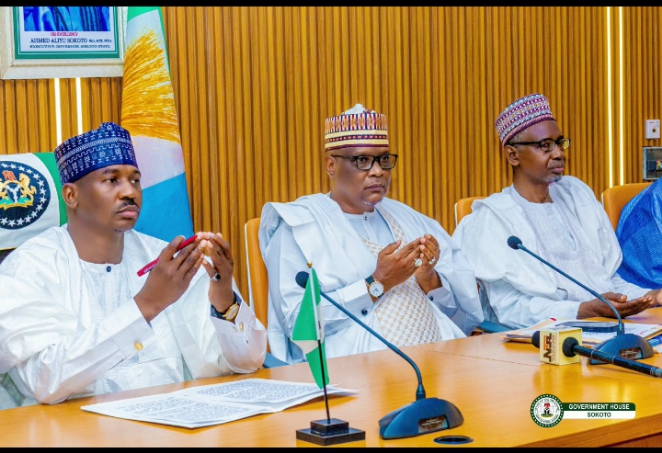
Gov Ahmed Aliyu and dividends of responsive governance
By Lawal Jet Kaugama
Governance is judged less by the grand announcements leaders make in good times than by how they act when misfortune strikes.
By that measure, Governor Ahmed Aliyu of Sokoto State has shown, once again, that his administration understands the real meaning of public service.
When fire gutted sections of the Sokoto Central Motor Park and the Old Market in July 2026, hundreds of livelihoods were suddenly put at risk. Traders who had spent years building their businesses watched their stock, tools and savings go up in smoke.
In many administrations, such a tragedy is met with a statement of sympathy, a brief visit and then silence. Governor Aliyu chose a different path. He set up a nine-member committee to investigate the causes of the fires and determine the extent of the damage.
That decision deserves more credit than it has received. A committee with a clear mandate signals that a government is more interested in facts than in appearances. Chaired by Barrister Gandi Umar Muhammad, with respected figures such as Professor Aminu Salihu Mika’ilu among its members, the panel was given a serious assignment and the credibility to carry it out.
The outcome speaks for itself. The committee received claims from 94 persons, and a thorough verification exercise confirmed 76 as genuine victims. Some may see that gap as a technicality. It is, in fact, the mark of a government that takes public funds seriously.

By insisting on verification, the administration has ensured that help reaches those who truly suffered losses, and that the integrity of the process is not compromised by opportunism. This is how responsible stewardship works: compassion backed by due diligence.
Equally commendable is the Governor’s candour. In receiving the report, he assured the 76 verified victims that government assistance would soon reach them, while making clear that this support is not compensation but a means of easing their hardship and helping them return to business. Such honesty is rare in public life. It avoids creating unrealistic expectations and presents the gesture for what it is: a government standing beside its citizens in their hour of need. His words that the state is “deeply concerned” about the impact of the fires on commerce and trade were not mere rhetoric. They were followed by action.
The Governor also took the time to commend the traders for their patience and understanding. It is easy for leaders to overlook the quiet endurance of ordinary people. By acknowledging it publicly, Governor Aliyu showed respect for the traders as partners in the progress of the state, rather than as passive recipients of government attention.
His appreciation of the committee’s work reflects another sound principle of leadership that good work should be recognised and its recommendations taken seriously.
The committee’s report covers the immediate and remote causes of the fires, the losses suffered and measures to prevent a recurrence. The Governor’s assurance that the government will study these recommendations carefully suggests a determination not only to respond to this disaster but to guard against similar future occurrence. . Prevention, after all, is the mark of foresight, and foresight is what separates caretaker governments from transformative ones.
One detail in the committee’s findings is especially instructive. Chairman Gandi disclosed that the committee recommended commending traders who managed to evacuate their goods before the fires destroyed them, citing their honesty and responsible conduct.
It is a small but meaningful point. It reflects a culture of integrity that rewards good conduct and discourages exploitation, a culture the Governor’s administration has helped nurture by conducting this process fairly and transparently.
Beyond this single episode, the Governor’s response fits a broader pattern of attentiveness to the economic well-being of Sokoto’s people. Markets and motor parks are the heartbeat of the state’s commercial life. They sustain families, support young entrepreneurs and connect Sokoto to the wider regional economy.
A leader who moves swiftly to protect and restore them understands that economic confidence is built on the assurance that government will not abandon its citizens in difficult times.
Governor Aliyu’s reassurance to the business community of his commitment to an enabling environment for enterprise is therefore more than a political pledge. It is consistent with how he has conducted himself, with order, accountability and respect for process.
No government is without challenges, and the people of Sokoto will rightly expect the promised assistance to be delivered promptly and the committee’s preventive recommendations to be implemented fully. But the direction is encouraging. A government that investigates before it acts, verifies before it disburses and speaks honestly about what it can offer is a government worth supporting.
In a political climate where public trust is often fragile, Governor Aliyu is earning it the old-fashioned way: by showing up, listening and delivering. The traders of Sokoto, and indeed all its citizens, have good reason to be reassured that their welfare is in capable hands.
Lawal Jet Kaugama, a commentator on national issues, writes from Kano. He can be reached on [email protected]