
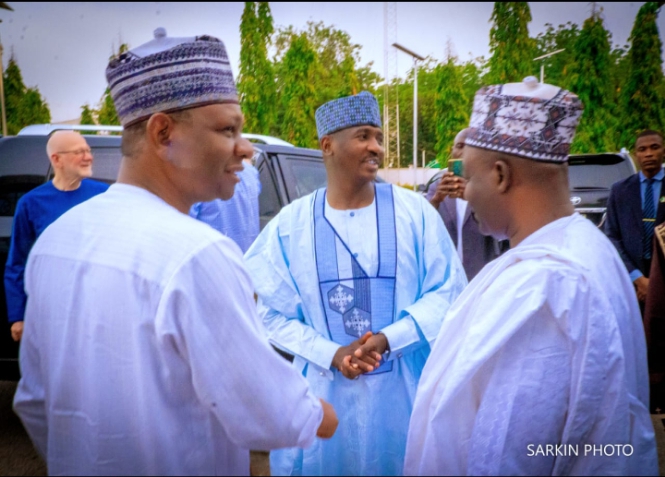
Gov Ahmed Aliyu’s resolute march towards a polio-free Sokoto State
By Lawal Jet Kaugama
Governor Ahmed Aliyu’s determined fight against polio in Sokoto State stands as one of the most commendable public health commitments in recent times.
A release signed by the state Director General, Media and Publicity, Abubakar Bawa, on Wednesday, said in a period when vaccine-derived poliovirus type 2 (cVDPV2) continues to threaten vulnerable communities, Aliyu’s administration has demonstrated clarity of vision, political will, and strategic action aimed at ending the circulation of the virus by 2026. This is not merely a policy statement, it is a bold declaration backed by measurable steps and tangible investments.
The significance of this commitment cannot be overstated. Polio, a crippling and potentially deadly disease, has long posed a challenge in parts of northern Nigeria. While tremendous progress has been made nationally, the persistence of vaccine-derived strains requires sustained leadership at the subnational level.
Gov Aliyu has shown that he understands this responsibility. His administration’s adoption of new strategies to interrupt transmission reflects proactive governance rather than reactive politics.
One of the most impressive aspects of his approach is the emphasis on intensified vaccination campaigns. Immunisation remains the most effective tool against polio, and scaling up coverage requires logistics, manpower, funding, and community trust.
By procuring critical equipment such as deep freezers, generators, and motorcycles, the Sokoto State government has addressed the often-overlooked infrastructure gaps that undermine rural healthcare delivery. These investments ensure vaccines are stored at optimal temperatures and reach even the most remote communities without compromise.
Equally notable is the government’s commitment to enhancing disease surveillance. Detecting cases early and responding swiftly is essential to halting transmission. Surveillance systems are the backbone of any disease eradication effort, and strengthening them demonstrates a forward-thinking administration that prioritises prevention over crisis management.
Governor Aliyu’s strategy reflects alignment with global best practices and signals Sokoto’s readiness to meet international health standards.
Perhaps even more critical is the administration’s focus on community engagement to address vaccine hesitancy.
In many settings, resistance to vaccination is driven by misinformation, cultural misconceptions, and distrust. The governor’s emphasis on sustained engagement shows a nuanced understanding of the social dimensions of public health.
Vaccination campaigns succeed not only through supply chains but through trust-building. By reinforcing partnerships with traditional leaders, health workers, and community influencers, the government is fostering the social acceptance needed to achieve universal immunisation coverage.
Financial commitment is another area where Governor Aliyu deserves commendation. The release of the Routine Immunisation Memorandum of Understanding (MoU) counterpart fund for 2024 underscores fiscal responsibility and seriousness of purpose.
Too often, health initiatives falter due to delayed or inadequate funding. By ensuring timely payment and reaffirming commitment to sustained financing, the administration sends a powerful message: health is not an afterthought, it is a priority.
Beyond polio, the governor’s broader investment in primary healthcare strengthens the entire system. The recruitment of 1,500 nurses and midwives within two years is a remarkable feat. Adequate manpower is the lifeblood of effective healthcare delivery. Without trained personnel, even the best-equipped facilities cannot function optimally. By expanding the workforce and instituting a mandatory two-year rural posting policy for health workers, including medical doctors, Governor Aliyu is tackling inequity in healthcare access.
Rural communities, often neglected in service delivery, are now positioned to benefit from improved care.
This rural posting policy is particularly visionary. It ensures that primary health centres are not mere structures but vibrant service points staffed with competent professionals. Such policies promote equity and reduce disparities between urban and rural populations.
In the long term, this approach will not only aid polio eradication but also reduce maternal and infant mortality, another key concern highlighted by the governor.
The governor’s engagement with global partners such as the Bill & Melinda Gates Foundation and collaboration with institutions like the National Primary Health Care Development Agency further reflect statesmanship. Eradicating polio is a collective responsibility that transcends political boundaries. By strengthening partnerships and advocating for the extension of the Primary Health Care MoU, Governor Aliyu demonstrates openness to collaboration and accountability.
Leadership in public health requires courage, consistency, and compassion. Courage to allocate resources in challenging economic times. Consistency to sustain programmes beyond media announcements. Compassion to prioritise the wellbeing of children and families who rely on government intervention for protection against preventable diseases. Governor Aliyu has displayed these qualities in his pursuit of a polio-free Sokoto.
The goal of interrupting poliovirus transmission by 2026 is ambitious, but ambition is necessary when confronting a stubborn disease. With strategic planning, infrastructure development, manpower expansion, financial commitment, and community engagement already in motion, Sokoto State appears firmly on the path toward success.
In a country where healthcare challenges are often daunting, it is refreshing to witness leadership that acts decisively and collaboratively. Governor Aliyu’s fight against polio is not merely about eliminating a virus; it is about safeguarding the future of Sokoto’s children, strengthening the healthcare system, and reinforcing public confidence in governance.
If sustained with the same vigour and accountability, his administration’s efforts will not only end the circulation of cVDPV2 in Sokoto but also stand as a model for other states. In this fight against polio, Governor Aliyu has proven that determined leadership can transform public health aspirations into achievable realities.
Lawal Jet Kaugama, a commentator on national issues, writes from Kano