
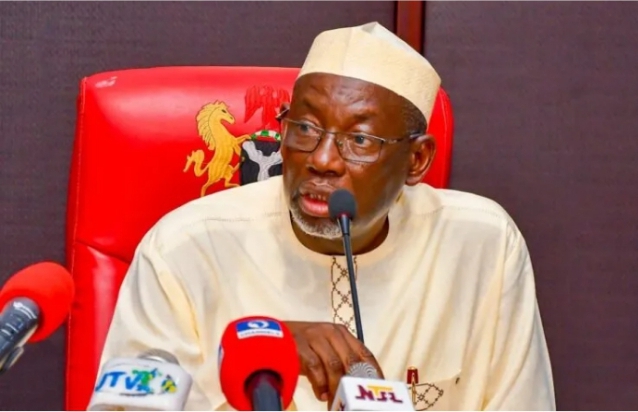
Gov Umar Namadi’s Surprise Inspection: A leadership Nigerians desire
By Lawal Jet Kaugama
To the governor of Jigawa State, Umar Namadi, leadership is not defined by the size of a convoy with traffic sirens, the elegance of an office, or the number of speeches delivered. His sense of leadership is demonstrated through a willingness to confront reality, demand accountability, and ensure that government serves the people it was elected to serve.
This article reflects on the governor’s recent unannounced visit to public offices in his state. The visit offers a practical example of his leadership philosophy: his surprise inspection of the state government secretariat.
Without prior notice, Gov Namadi visited the secretariat to assess the attendance and performance of civil servants. The inspection reportedly uncovered several locked offices and the absence of many workers despite official working hours being well underway. While the findings may be disappointing, the governor’s decision to personally verify the situation deserves our patriotic praise.
Across Nigeria, public frustration with government institutions often stems from poor service delivery, bureaucratic delays, and a perception that many public servants operate without adequate supervision. Citizens frequently complain about visiting government offices only to discover that responsible officials are unavailable or that simple administrative processes take unnecessarily long hours or days to complete. These challenges weaken public confidence in government and undermine development.
Governor Namadi’s action sends a different message. Rather than depending solely on reports prepared by aides or permanent secretaries, he chose to see things for himself. That decision reflects an understanding that governance requires firsthand knowledge of how public institutions function. Reports may be useful, but nothing replaces direct observation.
The governor’s inspection also reinforces an important principle: accountability begins with leadership.
When the chief executive of a state personally monitors the performance of public institutions, it encourages discipline throughout the system. Civil servants become more conscious of their responsibilities, supervisors become more vigilant, and the public gains confidence that someone is watching over the machinery of government.
Public service is exactly that: service to the public. Every government employee receives a salary funded by taxpayers. In return, citizens deserve punctuality, professionalism, and commitment from those entrusted with managing public affairs. Absenteeism, negligence, and indifference have no place in a modern civil service that seeks to promote economic growth and social development.
Equally commendable is the message Gov Namadi sent by reminding heads of ministries, departments, and agencies to ensure their staff report to work on time and carry out their duties diligently.
Leadership cannot succeed through the governor’s office alone. It requires every level of government to embrace responsibility and uphold high professional standards. However, inspections should not become one-off events that generate headlines before fading into memory. Their real value lies in consistent follow-up.
Where misconduct is established, disciplinary measures should be fair, transparent, and in accordance with civil service regulations. At the same time, hardworking and dedicated public servants deserve recognition and encouragement. Rewarding excellence is just as important as correcting failure.
Gov Namadi’s approach also highlights a broader truth about governance. Development is not measured only by roads, hospitals, schools, and other physical projects. Those investments can only deliver meaningful results when public institutions function efficiently. A disciplined, motivated, and accountable civil service remains one of the strongest foundations of sustainable development in any society.
It would be encouraging to see more governors, ministers, local government chairmen, and heads of public institutions adopt similar practices.
Regular, unannounced inspections, combined with effective monitoring and performance evaluation, can significantly improve service delivery across Nigeria. Citizens deserve leaders who remain connected to the realities experienced by ordinary people rather than relying exclusively on official briefings.
Gov Namadi’s surprise visit to the Jigawa State Government Secretariat demonstrates that effective leadership requires visibility, courage, and a genuine commitment to public service. It reflects an administration that appears determined to ensure that government institutions work for the people, not merely for those who occupy public office.
If sustained with consistency, fairness, and institutional reforms, this leadership style could strengthen public confidence in government and improve the quality of governance in Jigawa State, and spreads to other states in the North and Nigeria as a whole.
More importantly, it offers a valuable lesson for leaders across Nigeria: public office is a sacred trust. It exists to serve the people; not for personal interests, political allies, or privileged circles.
Gov Namadi’s surprise inspection is, therefore, more than an administrative exercise. It is a reminder that the true measure of leadership lies not in words, but in action.
Lawal Jet Kaugama, a commentator on national issues, writes from Kano