
LUMINAH Initiative: FG targets 1 million underserved girls, women by 2030
By Uji A. Iliyasu, Abuja
The Federal Government has called on state governments and local communities to take ownership of the LUMINAH 2030 Initiative, stressing that the success of the policy will be determined not in Abuja but in the states and communities where girls live and learn.
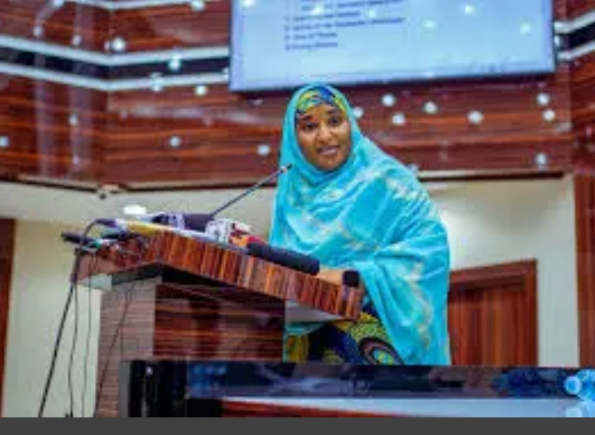
Minister of State for Education, Prof. Suwaiba Ahmad, made the call on Monday in Abuja during a two-day stakeholder engagement with LUMINAH 2030 pilot states.
Launched in March 2025, the initiative aims to empower one million underserved girls and women across Nigeria by 2030. Ahmad expressed concern over persistent gaps in inclusion, learning quality, and gender equity despite some progress in the education sector.
“Let every state become a LUMINAH exemplary state. Let every community become a place where girls can learn safely and with dignity,” she said.
She unveiled the Nigeria Education Sector Renewal Initiative (NESRI), a coordinated roadmap designed to rebuild the foundations of learning and ensure that no child is left behind. According to her, NESRI, introduced under President Tinubu’s Renewed Hope Agenda, rests on six priorities: expanding technical and vocational education and training (TVET), strengthening STEMM and innovation, reducing out-of-school children, empowering the girl child, ensuring equitable education, and building digital systems.
Ahmad described the engagement as “a moment of reflection and recommitment to the future of every Nigerian girl,” recalling her own experience growing up in a community where girls’ dreams were once limited.
“We all saw that emotional video, those girls are our daughters. Girls who wake before dawn to fetch water instead of going to school; girls who hawk on the streets when they should be learning. Their cries for learning are calls for justice and opportunity,” she said.
She described LUMINAH 2030 as a bold, holistic model for girl-child education and empowerment that goes beyond schooling to tackle root of exclusion by empowering mothers and caregivers to support education and drive social reorientation.
Also speaking, UBEC Executive Secretary, Hajia Aisha Garba, said the programme had been fully integrated into UBEC and State Universal Basic Education Boards (SUBEBs).
Garba said LUMINAH 2030 is “not just another programme” but a national movement to empower over one million underserved girls and women with education, vocational skills, and digital literacy by 2030.
She revealed that UBEC had created a Special Unit on Alternative Education for Girls with a dedicated budget line for states to implement interventions such as alternative high schools, scholarships, accelerated basic education, and mothers’ empowerment.
Garba added that the initiative, aligned with SDG 4, will begin with 12 pilot states before scaling nationally, assuring transparency, accountability, and sustainability.
“We are not merely implementing a programme,” she said. “We are writing a new chapter in Nigeria’s education story, one where no girl is left behind.”