
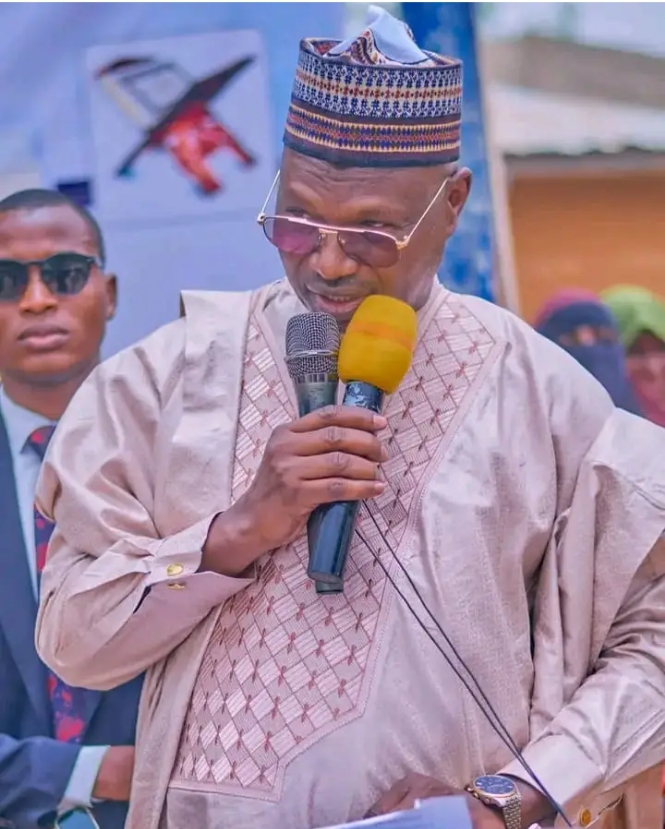
Senator Mallamadori’s transformational projects in Jigawa north-east
By Lawal jet Kaugama
In the realm of Nigerian politics, where citizens often cry out for leaders who match words with action, Senator Amb. Ahmed Abdulhamid Mallamadori (APC Jigawa North-East) stands as a refreshing exception. Within less than two years in office, Senator Mallamadori has not only met expectations—he has surpassed them, leaving an indelible mark across Jigawa North-East through a vast array of people-centred capital projects.
From healthcare to education, from water supply to electricity, Senator Mallamadori’s initiatives reflect a leadership style rooted in empathy, accountability, and a clear vision for development. He is not just building structures; he is building hope, dignity, and opportunity for thousands of his constituents.
One of the most impactful undertakings is the construction of an ultra-modern Primary Healthcare Centre in Yayari ward, Hadejia. Access to healthcare remains a critical challenge in many rural communities, and this facility promises to drastically reduce maternal mortality, infant deaths, and the burden of preventable diseases in the area. It is a bold step in the direction of achieving universal health coverage at the grassroots.
Religious and cultural values also find a place in the Senator’s developmental blueprint. His efforts to build and renovate several mosques—including ones in Barburan village, Duma Dumin Toka, Gidan Zikiri Kampala, and Dolewa village—are not just about physical infrastructure. They represent an investment in the spiritual and communal wellbeing of the people. The mosques serve as centres for unity, learning, and moral development.
A particularly commendable aspect of Senator Mallamadori’s agenda is his aggressive push for electrification and lighting through solar street lights across over 15 villages and urban quarters. Areas like New GRA Hadejia, Bello Bayi Quarters, Ummulkhairi Yoghurt Quarters, and Kafur village now enjoy safer nights and more vibrant evening economies, all thanks to the illumination brought by these projects.
This shows a strategic understanding of how lighting contributes to security, social interaction, and economic activity.
His commitment to water supply is equally impressive. In a region where access to clean water can be life-changing, the Senator facilitated the installation of solar-powered water schemes in multiple villages, including Dinginsa and Sunbultu. In addition, the supply of over 440 hand pumps across 11 wards in Kaugama speaks volumes about his intent to eradicate water scarcity. The rehabilitation of the Kazura water supply scheme and provision of submersible pumps and water generators further underscores his holistic approach to water infrastructure.
Economic empowerment also finds a prominent place in his developmental strategy. The proposed modern market at KUMSA and the construction of a modern butchers’ shed at Birniwa Abattoir are tailored toward boosting local commerce and supporting small-scale traders. These projects, once completed, will generate employment, enhance food hygiene, and attract more trade activity to the region.
Sports and youth development have not been left behind. His proposed mini stadium at Kiri Kasamma and the renovation of Hadejia stadium’s VIP section and dressing rooms are strategic in harnessing youth talent and promoting recreation. These are not mere sports projects—they are investments in peace, unity, and the future of Jigawa’s youth.
On the energy front, the Senator has supplied multiple 500kva transformers, power generators, and electricity repair kits across different locations including Mallamadori, Kafin Hausa, and Hadejia. These efforts are enhancing electricity reliability for thousands of households and businesses, powering homes, education centres, and places of worship.
Importantly, the construction of a 5km drainage system in Tumballe Pit, Mallam Madori, reveals a keen understanding of environmental and infrastructural challenges. Flood mitigation through proper drainage is vital for protecting farmlands, roads, and homes, and it’s heartening to see this included in his priorities.
While these achievements are impressive in number, what makes Senator Mallamadori truly outstanding is the diversity and balance of his projects. He hasn’t focused solely on urban centres or high-profile areas. From the remote village of Dodorin Girbobo to the busy quarters of Hadejia, his presence is felt equally. This even-handed approach speaks of a leader who recognizes that every citizen, no matter their location or status, deserves a share in the dividends of democracy.
Furthermore, the engagement with international partners, such as the Qatar Fund for water supply projects, demonstrates his diplomatic acumen and ability to attract external support to supplement government efforts at home. It’s a model worth replicating by other lawmakers.
In a time when political promises are often broken or forgotten after elections, Senator Mallamadori is showing that effective representation is still possible. His trackrecord is not just a list of completed projects, it is a case study in responsible governance.
As the 2027 election cycle slowly approaches, one can only hope that more leaders will take a cue from his approach. For the people of Jigawa North-east, they are not just witnessing infrastructure; they are witnessing a transformation. And for that, distinguished Senator Mallamadori deserves our collective commendation and continued support.
Lawal Jet Kaugama, a commentator on national issues, writes from Kano