
Gov Namadi’s timely meeting with party stakeholders exemplifies inclusiveness in governance
By Lawal Jet Kaugama
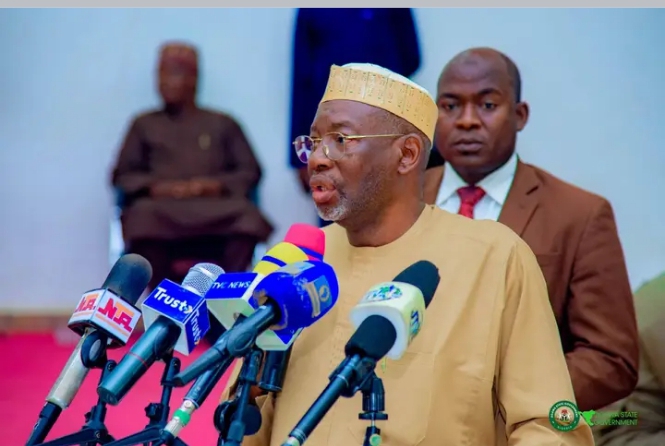
Jigawa State Governor Umar Namadi’s recent engagement with key stakeholders in Jigawa State capital, Dutse, was not just a routine political meeting as it reveals a leadership style anchored in reflection, inclusiveness, and a clear commitment to people-centred principle.
When political tension usually overshadows development priorities, his message stands out for its sobriety and sense of purpose.
What makes this intervention particularly significant is its timing.
As Jigawa State approaches another electoral cycle, the tendency for political actors to become distracted by personal ambition and internal rivalry is not uncommon. Yet, Gov Namadi appears determined to redirect attention to fundamentals of governance, unity, and service delivery.
By convening members of the State Executive Council, the House of Assembly, local government leaders, and heads of MDAs, he reinforces the idea that leadership is a collective business, and that progress requires alignment at all levels.
One of the most compelling aspects of his message is the emphasis on introspection. Leadership, as he rightly pointed out, is not merely about occupying positions but about evaluating impact and direction. This moment of “pausing to reflect” is often missing in governance, where the urgency of daily administration can obscure long-term vision.
By encouraging stakeholders to think about where they are and where they are headed, the governor is fostering a culture of accountability and strategic thinking.
Equally important is his insistence on unity of purpose. As Nigeria’s political environment is shaped by party dynamics, personal interests, and regional considerations, maintaining cohesion is no small task. His reminder that all stakeholders belong to the All Progressives Congress (APC) and must prioritise the development of the state above all else is both timely and necessary. It underscores a fundamental truth: political platforms are only meaningful when they translate into tangible benefits for the people.
The reactions from observers further validate the governor’s approach. Many respondents highlighted key themes from his address: respect for hierarchy, unity, compassion, the vulnerable, and unwavering commitment to progress. These are not abstract ideals but practical principles that define effective governance.
When leaders emphasise respect and collaboration, they create an environment where institutions function better and policies are implemented more efficiently.
Gov Namadi’s focus on grassroots engagement is another noteworthy element. In many parts of Nigeria, the disconnect between government and the governed remains a persistent challenge. By prioritising structures that reconnect leadership with the grassroots, he is addressing this gap head-on. This approach not only builds public trust but also ensures that policies are informed by the real needs of the people. Governance, after all, is most effective when it is responsive and inclusive.
However, the feedback also contains subtle cautionary notes, particularly regarding decision-making and the influence of advisers. One respondent urged the governor to critically assess recommendations from commissioners, suggesting that some may be driven by personal rather than official interests. This is a reminder that while inclusivity is important, discernment is equally crucial. Effective leadership requires the ability to filter advice, balance competing interests, and make decisions that serve the broader public good.
Another layer of commentary extends beyond Jigawa, touching on broader political dynamics in the region. The mention of Abba Kabir Yusuf and the complexities of political alignment in Kano highlights the interconnected nature of governance in northern Nigeria.
While these issues may not directly concern Jigawa, they reflect the broader environment in which Governor Namadi operates, as it touches where political stability and cooperation across states can influence development outcomes.
Perhaps the most striking aspect of the governor’s message is his perspective on power. By stating that “power belongs to God” and urging those with political ambitions to remain patient and grateful, he introduces a tone of humility that is often absent in political discourse. This stance not only reduces tension but also promotes a healthier political culture, where competition is not seen as a do-or-die affair but as part of a democratic process.
In commending Gov Namadi, it is important to recognise the courage required to adopt such a people-centred approach. It is easier, politically, to focus on short-term gains, patronage networks, or populist rhetoric. Choosing instead to emphasise unity, service, and long-term development requires both conviction and discipline. It also demands consistency that ensures that these principles are not just articulated but embedded in policy and practice.
Jigawa State, as the governor noted, has made significant progress, but much remains to be done. The path forward will require sustained effort, collaboration, and a steadfast commitment to the ideals he has outlined. If the spirit of this engagement is maintained, and leaders continue to reflect, unite, and prioritise the people, then the vision of a more developed, prosperous cohesive Jigawa is not only feasible but within reach.
In the end, Gov Namadi’s message is a call to responsibility. It challenges leaders to rise above personal interests and work collectively for the common good. It reassures citizens that their government is focused on their welfare. And most importantly, it sets a tone of humility and purpose that redefines governance in Jigawa State.
Lawal Jet Kaugama, a commentator on national issues, writes from Kano