
Defence Minister Badaru:
Timely diplomacy and rebranding of Nigeria’s defence engagement
By Lawal Jet Kaugama
In this era, global security challenges are becoming increasingly complex and interwoven. Nigeria’s ability to project responsible leadership on the international stage has never been more critical.
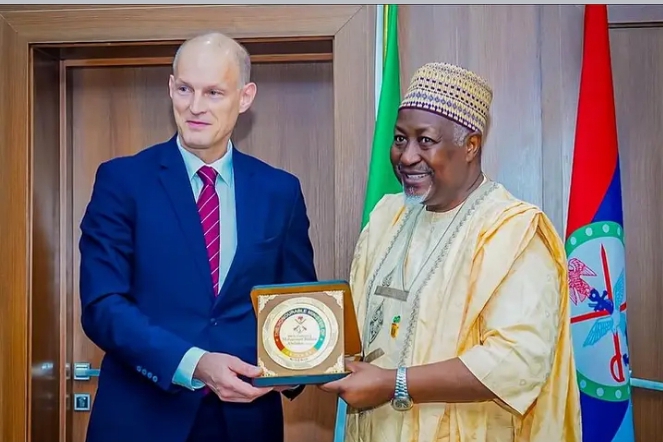
The recent visit of the Deputy Foreign Minister of the Republic of Poland, H.E. Wojciech Zajączkowski, to Ship House in Abuja, where he was warmly received by Nigeria’s Minister of Defence, Mohammed Badaru Abubakar, once again highlights the minister’s steady, strategic, and remarkably effective diplomatic approach. Under his watch, Nigeria’s defence diplomacy has taken on a new level of sophistication, clarity, and purpose.
Badaru’s engagement with Poland is one of many examples that demonstrate his commitment to positioning Nigeria as a credible and respected partner in global security cooperation. Poland, a NATO member with a rapidly advancing defence industry and significant military experience, represents an important strategic ally for Nigeria. That such a high-level discussion took place at the minister’s office,
and that it was rich in substance, focusing on strengthening defence cooperation, improving military collaboration, and exploring emerging areas of partnership, underscores Badaru’s diplomatic maturity. It shows that Nigeria is not merely reacting to global events but actively shaping its own security alliances.
One of the most commendable aspects of Badaru’s diplomacy is its consistency. Since assuming office, he has demonstrated a clear understanding that defence is no longer limited to battlefield readiness; it is also about forging relationships, exchanging expertise, and cultivating trust with nations that can help Nigeria enhance its military capacity.
He has established an impressive pattern of engaging with partners on equal footing, emphasising mutual respect and long-term benefit. This approach has elevated Nigeria’s image, countering the often unfair narrative that African states only seek external assistance without offering strategic value in return.
In his meeting with Deputy Foreign Minister Zajączkowski, Badaru showcased once again his ability to articulate Nigeria’s defence priorities in a way that aligns with global security interests. Discussions with Poland reflect an appreciation for modern defence trends, including the need for advanced training, technology transfer, intelligence sharing, and cooperation in tackling transnational threats. Such conversations signal a shift from transactional diplomacy to strategic diplomacy, an evolution that Nigeria urgently needs.
Moreover, Badaru’s diplomacy has helped restore confidence among Nigeria’s international partners. For years, concerns about internal security challenges, bureaucratic bottlenecks, and inconsistent policy directions weakened Nigeria’s engagement with the international defence community. However, the minister’s calm, methodical, and practical style has reassured partners that Nigeria is both serious and sincere about addressing insecurity. His interactions are marked by clarity of purpose: securing assistance that strengthens Nigeria’s defence institutions while ensuring that partnerships align with the country’s sovereignty and long-term goals.
Even more importantly, Badaru has managed to merge diplomacy with domestic reform. His engagements are not symbolic; they are tied to tangible improvements. Whether through capacity-building initiatives, joint training programmes, or modernisation of military assets, Nigeria’s defence environment is gradually being reshaped. The meeting with the Polish delegation fits neatly into this broader agenda.
Poland’s military transformation from a Soviet-era structure to a modern, NATO-aligned force offers lessons Nigeria can adapt, and Badaru understands the value of such experience.
Beyond the technical benefits, Badaru’s diplomatic finesse has contributed to repositioning Nigeria as a responsible regional power. His calm demeanour, combined with an unrelenting focus on results, has helped Nigeria rebuild moral authority in West Africa and beyond.
He does not dramatise issues; instead, he addresses them with a mix of tact, seriousness, and strategic foresight. At a time when global alliances are shifting and nations are strengthening ties based on security concerns, this level of diplomacy is invaluable.
Critics may argue that diplomacy alone cannot solve Nigeria’s security problems. That is true. Yet, diplomacy remains a critical pillar of modern defence management. In fact, no nation can sufficiently combat insecurity without strong alliances, access to training and technology, cooperatively designed strategies, and shared intelligence. Badaru’s approach recognises this. He is crafting a defence posture that is outward-looking yet rooted in national interest, a far cry from the insular, short-term strategy that previously limited Nigeria’s engagements.
The minister’s reception of Deputy Foreign Minister Zajączkowski should therefore be seen as more than a courtesy call. It was a reaffirmation of Nigeria’s willingness to deepen global partnerships, a demonstration of the minister’s diplomatic skill, and an example of how Nigeria can leverage its position to build pragmatic alliances. Badaru has set a new bar for defence diplomacy—one grounded in professionalism, foresight, and unwavering commitment to Nigeria’s security.
In sum, Badaru deserves commendation for bringing stability, depth, and strategic direction to Nigeria’s defence diplomacy. His work is quietly reshaping the country’s global defence reputation, strengthening military cooperation, and deepening partnerships that will benefit Nigeria for years to come.
His meeting with the Polish diplomat is yet another testament to the high-quality diplomacy that has become the hallmark of his tenure.
Lawal Jet Kaugama, a commentator on national issues, writes from Kano