

EDO STATE PART II: VISITOR’S GUIDE
THE ESAN PEOPLE
The Esan, also historically rendered “Ishan,” are one of Nigeria’s most distinctive Edoid peoples, a fiercely independent, historically militaristic, and highly educated community occupying the plateau lands of central Edo State. Known for their warrior heritage, herbal medicine, and a cluster of proud, semi-autonomous kingdoms, the Esan have shaped Nigerian history far beyond the borders of their homeland.
Short History
Esanland’s roots stretch back centuries. Archaeological and linguistic evidence suggests human settlement of the savannah-forest belt that became Esan country for at least 3,000 years, tied to the broader migrations that also populated the Benin heartland. But the Esan identity, as it is known today, crystallised much later, in the 15th century, around a defining historical episode.
In 1460, Oba Ewuare of Benin, the same monarch who transformed Benin into an empire, imposed strict mourning laws following a personal bereavement, banning sexual relations, bathing, drumming, dancing, and cooking across the kingdom for an extended period. Many Bini subjects found the restrictions unbearable and fled eastward onto the plateau, settling in what became known as Esanland.
The very name “Esan” is widely believed to derive from the Bini phrase “E san fia”, meaning “they have fled” or “they jumped away”, a name that stuck even after Oba Ewuare relented and tried, largely unsuccessfully, to draw the migrants back.
Rather than reintegrating under Benin, these settler groups organised into their own independent chiefdoms. According to tradition, Oba Ewuare eventually brokered peace by recognising early Esan leaders. He recognized figures like Ekpereijie of Irrua and Alan of Ewohimi, as Onojie (kings) in their own right, with the understanding that the title, once conferred, would remain hereditary within those lines.
Over subsequent centuries this pattern repeated across the plateau, producing the roughly 30–35 distinct Esan kingdoms and clans that exist today, each centred on a town such as Uromi, Irrua, Ekpoma, Ubiaja, Igueben, Ewu, and Ewohimi.
“Ishan,” the more familiar colonial-era name, emerged simply because British administrators struggled to pronounce “Esan” correctly.
Despite their historic ties to Benin, the Esan kingdoms developed their own distinct political culture, military traditions, and, famously, a reputation as skilled mercenary warriors and hunters who were sought after well beyond their own territory.
Esanland today makes up the Edo Central Senatorial District and remains one of the three broad cultural blocs, alongside the Bini and the Edo North peoples, that constitute modern Edo State.
Language
The Esan people speak Esan, an Edoid language closely related to but distinct from Edo (Bini), reflecting the group’s origin as an offshoot of the Benin Kingdom that developed independently over more than five centuries. Esan is generally mutually distinguishable from Bini, though the two share considerable vocabulary and grammatical structure as members of the same language family. Despite the historical “Ishan” label imposed by colonial administrators, native speakers and cultural bodies today consistently use “Esan” both for the language and the people.
As with many Nigerian indigenous languages, there is active concern among community associations about generational fluency decline, and diaspora and homeland cultural unions promote Esan-language content, proverbs, and instruction to keep the language vital.
Music and Dance
Esan cultural life places heavy emphasis on music, dance, and folklore as expressions of communal identity, so much so that Esan historian Chief Okojie observed that a people’s true character can be read in their songs, dances, and oral traditions.
Traditional Esan music leans on drums, flutes, and percussion to accompany both ceremonial and recreational dance, with distinct dance styles associated with specific occasions: royal installations, funerals, harvest festivals, and social gatherings, each have their own musical register. Masquerade traditions are prominent across Esan towns, often performed by specific age-grade or lineage societies, combining costume, drumming, and acrobatic movement in celebrations tied to ancestral veneration and seasonal festivals.
Contemporary Esan musicians and entertainers have also carried the region’s rhythms into mainstream Nigerian music and comedy, reinforcing the community’s reputation for cultural creativity.
Belief and Religion
Traditional Esan religion, like that of related Edoid peoples, centres on a supreme creator deity together with a range of intermediary spirits, deities, and ancestral forces believed to shape daily life, health, and fortune.
Ancestor veneration is a foundational element: family lineage heads maintain shrines to departed forebears, and proper burial and remembrance rites are considered essential to keeping ancestral favour.
Esan communities are also historically renowned across Nigeria for traditional and herbal medicine. Trado-medical practice is treated as a serious, respected vocation, often passed down within specific families, and Esan herbalists have long served clients from well beyond Esanland itself. As elsewhere in Edo State, Christianity is now the dominant formal religion among the Esan, but traditional beliefs, festivals, and rites of passage continue to run alongside it, particularly around chieftaincy, marriage, and death.
Kingship
Esanland has no single paramount monarch; instead, it is organised into roughly 30 to 35 autonomous kingdoms or clans, each ruled by its own Onojie (plural: Enijie), a hereditary king whose authority is confined to his own domain.
This decentralised structure, rooted in the circumstances of Esanland’s founding by groups fleeing Benin independently, has fostered both strong local identity and a long tradition of inter-town rivalry that visitors will still sense in local pride today.
Prominent Esan kingdoms include Uromi, Irrua, Ekpoma, Ubiaja, Igueben, Ewu, Ewohimi, and Ubiaja, among others, each with its own palace and royal lineage.
Despite the absence of a single Esan monarch, the various Enijie collectively represent Esan traditional authority in wider Edo State affairs and are treated with the same reverence within their domains that the Oba commands in Bini territory.

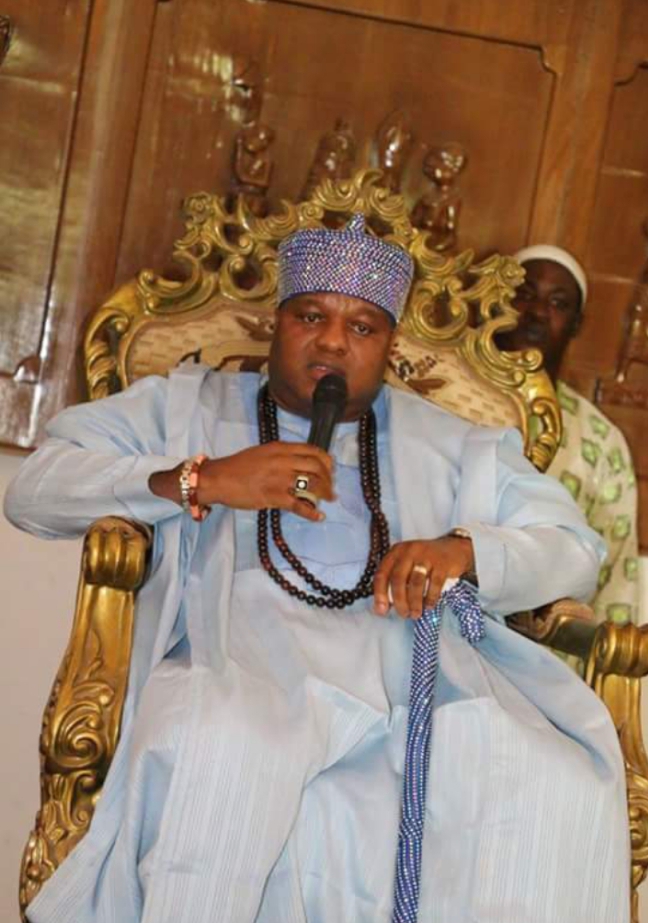
Top-down:
Onojie of Ekpoma, HRH Anthony Ehizojie Abumere II
Onojie of Uromi, HRM Zaiki Anselm Odaloighe Edenojie II.
Foods
Esanland’s economy has long rested on agriculture, and its cuisine reflects that: staples include yam, cassava (processed into garri and fufu), and rice, typically served with hearty soups such as ogbono, egusi, and bitterleaf soup, often enriched with dried fish, meat, or bush game.
The region’s fertile plateau soil supports a wide range of fruit, mango, orange, pineapple, guava, cashew, banana, plantain, black pear (ube), avocado, and lime, alongside major cash crops like palm produce and rubber.
Palm wine, tapped locally, remains central to hospitality and ceremony, offered to guests and used in virtually every traditional rite, from marriage negotiations to chieftaincy installations. Esan cuisine, like much of Edo State’s, tends toward rich, well-spiced, palm-oil-based soups paired with pounded or swallowed starches.
Climate and Weather
Esanland sits on a plateau rising to roughly 134 metres above sea level, giving it a somewhat cooler and drier character than the low-lying forest zones nearer the coast, though it remains firmly within Nigeria’s tropical climate belt. The area experiences a long rainy season, roughly April through October, and a shorter dry season from November to March, that includes the harmattan period around December and January, bringing dust-laden winds and cooler mornings.
The flat-to-gently-undulating terrain, largely free of dense forest cover compared to Bini areas further south, makes it well suited to agriculture and reasonably comfortable for travel, especially in the dry season, when most Esan festivals and homecoming events are concentrated.
Courtship and Marriage
Esan traditional marriage is a formal, family-centred process rather than a purely private arrangement between two individuals, and it proceeds through a recognised sequence of steps: an initial period of courtship and mutual introduction (Ivbuomo meaning, “seeking for a bride”), followed by formal visits and negotiations between the two families, presided over by the Okaegbe, the senior elder representing the bride’s lineage.
The ceremony traditionally involves the presentation of kola nuts, palm wine, and gifts, and a distinctive playful ritual in which “fake brides”, often other young women of the family, are paraded before the groom, who must correctly identify his intended bride before she is formally presented and blessed, often while seated on her father’s lap.
A striking and widely noted feature of Esan marriage custom is that the bride price itself is kept deliberately small and largely symbolic, traditionally fixed at a token sum (historically described as 24 cowries, and in more recent times a modest 24 naira), reflecting a strong cultural conviction that daughters are not sold into marriage.
Any larger sum a groom’s family presents beyond that token amount is typically returned to help the couple establish their new home.p
Esan tradition recognises both monogamous and polygamous unions, and marriages remain understood as a bond between two families and lineages as much as between two individuals, which is also why, in traditional practice, a deceased married woman is returned to her own family’s land for burial among her ancestors.


Beautiful Esan brides
Industry
Historically, the Esan economy combined subsistence and commercial farming with a strong tradition of skilled trades: cotton cultivation and weaving were significant enough that “Ishan cotton,” used to produce the thick, multicoloured cloth known as Ukpon-Ododo, was a recognised regional specialty well before the twentieth century.
Esan communities were also historically known for mercenary military service, hunting, and trado-medical practice as respected professions.
In the modern era, agriculture remains a mainstay, palm produce, rubber, and food crops in particular, alongside trading and a strong emphasis on formal education;
Esan towns host notable institutions including Ambrose Alli University in Ekpoma, and the area has produced a disproportionately high number of Nigerian academics, doctors, lawyers, and civil servants relative to its population, a point of considerable community pride.
Urbanisation around towns like Ekpoma, Irrua, and Uromi has also brought growth in retail, transport, and light industry.
Tourist Attractions
Esanland offers visitors a quieter, more rural counterpoint to Benin City’s grand royal monuments, centred on itsa plateau landscape, traditional palaces, and living customs. Notable 6
The palaces of the various Enijie, particularly in Uromi, Irrua, and Ekpoma, which remain active seats of traditional authority and are often open to respectful visitors during festivals.
Irrua Specialist Teaching Hospital, a nationally significant medical institution and one of Nigeria’s key centres for viral haemorrhagic fever (including Lassa fever) research and treatment.
Ambrose Alli University, Ekpoma, the state university founded under Bendel State’s first civilian governor, itself an Esan son, and a hub of the town’s modern identity.
Esan farmland and plateau scenery, appealing to visitors interested in rural and agro-tourism, particularly around the harvest season.
Seasonal traditional festivals and homecoming events held across Esan towns, which showcase masquerade displays, drumming, and dance, and are best experienced by coordinating visits with local town associations or diaspora “hometown” events, many of which are held around Christmas and New Year when families return from the cities.



Top-down:
Ambrose Alli University, Ekpoma
Irrua Specialist Teaching Hospital
Prominent People
The Esan have produced a striking number of nationally significant Nigerians. Chief Anthony Enahoro, born in Uromi, became the youngest newspaper editor in Nigerian history at 21 and, in 1953, at just 30 years old, moved the historic motion in the colonial legislature calling for Nigeria’s independence, a foundational moment in the country’s path to self-rule.
Professor Ambrose Alli, from the Ekpoma area, served as the first civilian Governor of the old Bendel State from 1979 to 1983, where he built an extensive network of schools and colleges and founded what is now Ambrose Alli University.
Admiral Augustus Aikhomu, born in Irrua, rose to become Chief of Naval Staff and later served as Chief of General Staff and de facto Vice President of Nigeria under General Ibrahim Babangida from 1986 to 1993, using his position to secure development projects including the Irrua Specialist Hospital.
Pastor Chris Oyakhilome, an internationally known evangelist and founder of Believers’ LoveWorld (Christ Embassy), is also of Esan heritage.
These figures, spanning politics, the military, education, and religion, reflect the community’s strong and consistent investment in formal education and public life.



From Top-down: Chief Anthony Enahoro, Prof. Ambrose Alli, Vice Admiral Augustus Aikhomu
Burial Ceremony
Death and burial among the Esan carry significant ceremonial weight, reflecting both ancestral belief and the deceased’s standing within family and community. Rites typically unfold in stages: an initial period of mourning and ritual preparation, formal interment, and, for elders, chiefs, and especially reigning Enijie, a later “second burial” or final rites ceremony, sometimes held months after the initial burial, involving extended family gatherings, feasting, and, traditionally, masquerade performances befitting the deceased’s status.
A distinctive Esan custom is the practice, tied to the community’s marriage system, of returning a married woman’s body to her own paternal family’s land for burial among her own ancestors rather than her husband’s, underscoring how Esan marriage is understood as an alliance between families rather than a full transfer of a woman’s lineage identity.
As with the Bini, the death of a reigning Onojie is treated with particular solemnity, involving formalised mourning customs within the palace before a successor is installed, and elaborate ceremony befitting the continuation of the royal line.
References
Kwekudee Trip Down Memory Lane, “Esan (Ishan) People: Ancient Warriors, Highly Homogeneous and Vibrant Educated People of Edo State in Nigeria”
United Esan Organization, Inc., “Esan Culture & People”
Rex Clarke Adventures, “Esan Tribe in Edo State”
Ekpoma UK Association, “The Esan People”
The African Archives, “The Esan (Ishan) People”
AClasses, “Esan History & Tradition” and “Learn from the Notable Esan People In Nigeria”
101 Last Tribes, “Esan people”
Esan Peoples Congress, “Esan Community Catalogue”
The Guardian Nigeria, “Edo State politics: Whither Esan people?”
Wikipedia, “Augustus Aikhomu”
Vanguard News, “Augustus Aikhomu is dead” and related coverage
Esanland.org, “Bride Price in Esanland: A Socio-Cultural Analysis,” “Marriage in Esanland,” “Esan (Edo) Traditional Wedding Guide”
Business Post Nigeria, “Esan Traditional Marriage and Taboos”
Photo credits: images sourced via web search from Esanland.org and other publicly available cultural/travel features on Edo State.
Uji A. Iliyasu, journalist and educator, can be contacted @ 0806 7364107 (whatsApo), and 08078486507 (call)