
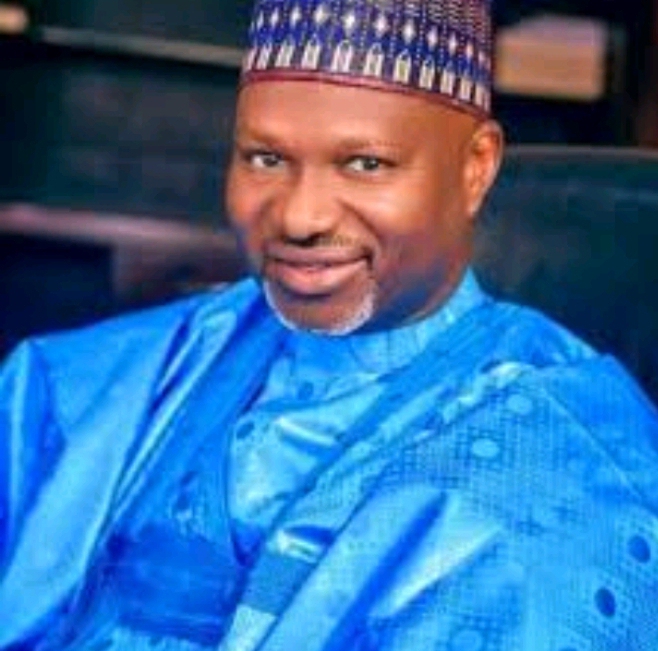
Examining the exemplary representation of Senator (Amb) Ahmed AbdulHamid Malam Madori
By Lawal Jet Kaugama
In a political climate often criticized for inaction and disconnection from the grassroots, Distinguished Senator (Amb) Ahmed AbdulHamid Malam Madori stands as a luminous exception. Representing Jigawa Northeast Senatorial District, his recent legislative achievement—the successful passage of the Federal Medical Centre (FMC) Hadejia Establishment Bill—has not only reaffirmed his commitment to effective representation but has also drawn widespread praise from every corner of his constituency. From the aged who have suffered silently under the burden of poor healthcare to the youth looking to a future filled with possibilities, from struggling families in rural wards to professionals in urban centres, the people of Hadejia and the wider Jigawa State are united in gratitude. They are singing Malam Madori’s praise—not out of formality, but out of heartfelt appreciation for a senator who has turned his words into tangible, life-changing results.
The bill, originally introduced as the Medical Centre (Amendment) Bill 2024 (SB 278), gained momentum under the skillful navigation and unwavering advocacy of Senator Malam Madori. Its journey through the legislative process, culminating in its passage during the Senate’s third reading on May 21, 2025, marks a defining moment in the history of Jigawa Northeast. Beyond being just another piece of legislation, this bill is a of hope and a blueprint for how representation should be executed in a functional democracy.
Historically, Jigawa Northeast has faced systemic neglect in the allocation of federal healthcare infrastructure. Many residents have been forced to travel long, difficult distances to access specialist care, a situation that has too often turned manageable illnesses into fatal tragedies. The establishment of a Federal Medical Centre in Hadejia is, therefore, more than a developmental project—it is a lifesaving initiative. It is a response to years of unmet healthcare needs. And it is proof that when leaders listen, understand, and act decisively, lives are transformed.
Senator Malam Madori’s leadership is characterized not by rhetoric but by results. His efforts to ensure that this bill did not die in committee level or linger in bureaucratic limbo speak volumes about his legislative tenacity. His strategic engagement with the Senate Committee on Health (Secondary and Tertiary), which conducted the public hearing on February 27, 2025, reflects an inclusive and transparent approach to governance. He built consensus, articulated the urgent needs of his constituents, and earned the respect and support of his colleagues across party lines. In doing so, he showcased what mature, issue-based politics can achieve.
The socio-economic implications of the Federal Medical Centre in Hadejia cannot be overstated. Apart from improving access to healthcare, the facility will create both direct and indirect employment opportunities. It will attract skilled medical and administrative personnel from across the nation. It will promote training and research. Young people from Jigawa will no longer have to migrate far from home to pursue careers in medicine or allied health sciences. Instead, they will find opportunity within reach, thereby helping to curb the region’s braindrain.
Furthermore, the FMC Hadejia initiative aligns perfectly with Nigeria’s broader goals of health equity and national development. By bringing tertiary healthcare closer to underserved populations, it ensures a more balanced distribution of federal resources and strengthens the national health system as a whole. In championing this cause, Senator Malam Madori has also amplified Jigawa’s voice on the national stage, highlighting the region’s needs, potential, and rightful place in Nigeria’s development discourse.
The applause resounding across Hadejia and its environs is not just for a bill passed, but for a promise kept. In marketplaces and mosques, schools and saloons, homes and health posts, the name of Senator Ahmed AbdulHamid Malam Madori is on the lips of grateful constituents. They praise him not only for his vision but for the integrity with which he has pursued it. The elderly call him a blessing to their generation. The youth see in him a model of leadership that is accountable, accessible, and aspirational. Women speak of the relief they will feel when healthcare for maternal and child issues becomes available nearby. Local leaders commend him for placing Jigawa Northeast on the map—not with noise, but with impact.
What sets Senator Malam Madori apart is the clarity of his purpose. His legislative agenda is rooted in the lived experiences of his people. He is not a distant politician confined to the corridors of Abuja but a servant-leader attuned to the cries and aspirations of his constituents. His work on the FMC Hadejia bill is a masterclass in constituency-driven legislation—identifying a pressing need, consulting widely, building support, and delivering results.
Credit must also be given to the leadership of the Senate, including President of the Senate, His Excellency Senator Godswill Obot Akpabio GCON, and Deputy President of the Senate, His Excellency Senator Jibrin Barau CFR, among others, for recognizing the merit of the bill and supporting its passage. However, it was the consistent pressure, strategic engagement, and moral clarity of Senator Malam Madori that ensured the bill did not falter. His ability to work collaboratively while maintaining a strong focus on his district’s needs is a hallmark of responsible statesmanship.
As Nigeria continues its journey toward equitable development, the story of the Federal Medical Centre in Hadejia offers a powerful lesson: true progress is possible when leaders put people first. The widespread acclaim for Senator Madori is well-deserved, and it should serve as both an encouragement and a challenge to other public officials. In every corner of Jigawa Northeast today, hope has been rekindled. Infrastructure may take months or years to materialize, but the sense of inclusion, the belief in government, and the affirmation of dignity have already begun to flourish.
Distinguished Senator Ambassador Ahmed AbdulHamid Malam Madori has proven that leadership is not about occupying a seat but about making that seat matter. He has shown that when vision meets action, the result is transformation. The people of Hadejia and Jigawa at large are not just celebrating a new medical centre—they are celebrating a new era of leadership. One that listens. One that delivers. One that inspires.
And for this, their voices are raised in unison: “Thank you, Senator Madori. You have made us proud.”
Lawal Jet Kaugama, a commentator on national issues, writes from Kano