
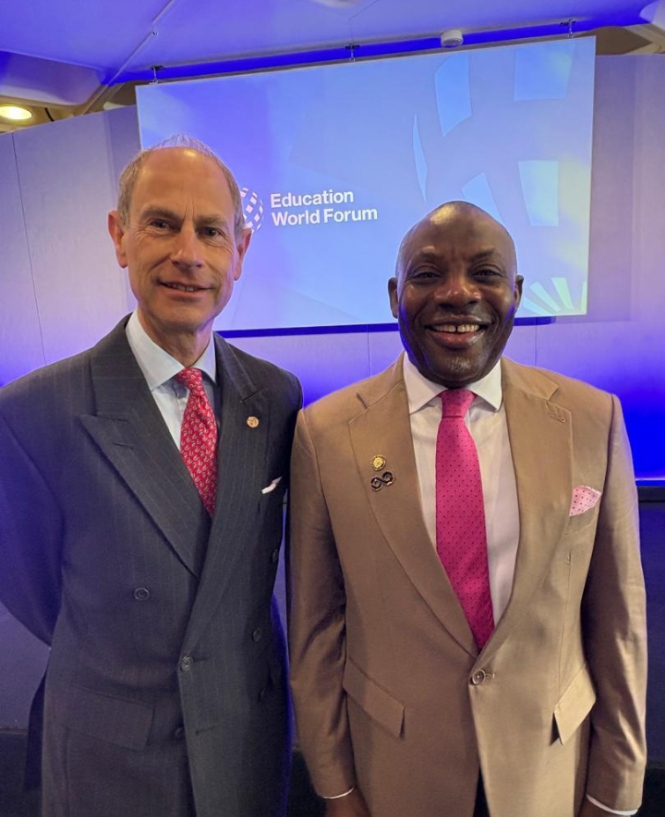
FG determined to equip young Nigerians with employable skills –Alausa
By Uji A Iliyasu Abuja
Nigeria’s Minister of Education, Dr. Maruf Tunji Alausa, has reaffirmed the Tinubu administration’s commitment to non-formal education as a strategic tool for youth empowerment and job creation, declaring that the federal government is determined to equip young Nigerians with skills for both present and future economies.
Dr. Alausa made the declaration during a high-profile special plenary session at the Education World Forum (EWF) in London, United Kingdom, moderated by His Royal Highness Prince Edward, the Duke of Edinburgh.
He joined fellow panelists — Ontario’s Minister of Education, Paul Calandra; Rio Grande do Sul’s Secretary of State for Education, Raquel Teixeira; and International Youth Representative of the DofE International Award Foundation, Andrea Chakma, to deliberate on the role of non-formal education, soft skills development, and industry participation in improving youth employability.
Addressing the forum, the minister outlined Nigeria’s broad range of programmes targeting out-of-school children, adults, and vulnerable populations, describing them as interventions designed to close literacy gaps, deliver vocational skills, and mainstream marginalised groups into the national economy.
“What we are doing in Nigeria is because we have a lot of out-of-school children, we have to find a way to quickly get them a kind of non-formal education,” he said.
Central to the government’s approach is an Accelerated Basic Education Programme, which provides an alternative curriculum aligned with mainstream schooling for out-of-school learners.
Complementing this is the Technical and Vocational Education and Training (TVET) initiative, a flagship federal programme offering tuition-free vocational training, stipends, and start-up support aimed at closing skills gaps and stimulating entrepreneurship.
Dr. Alausa also highlighted the National Policy on Skills Development, which promotes flexible learning pathways combining hands-on training, digital literacy, and vocational skills.
Additional programmes include mass literacy and adult education initiatives running nationwide, as well as the Almajiri and Out-of-School Children Education programme, which blends traditional Quranic schooling with basic and vocational training.
Cutting across all these efforts is a mandatory entrepreneurship and innovation certification embedded into courses at various levels, ensuring learners graduate with practical business skills regardless of their educational pathway.
“The whole goal of what we are doing is to get them the skills, skills for the present and skills for the future,” the minister said, adding that digital technology training also forms a critical pillar of the strategy.
Dr. Alausa used the occasion to commend the Duke of Edinburgh for visiting Nigeria in November 2025, noting Nigeria’s active membership of the Duke of Edinburgh International Award Foundation.