
FG sets deadline to activate smart, schools, to end JSS-SSS split
By Uji A Iliyasu Abuja
The Federal Government has set a December 2026 deadline to ensure all completed Smart Schools, Bilingual Schools and Alternative Schools across the country are fully operational, while also announcing plans to phase out the policy separating junior and senior secondary schools.
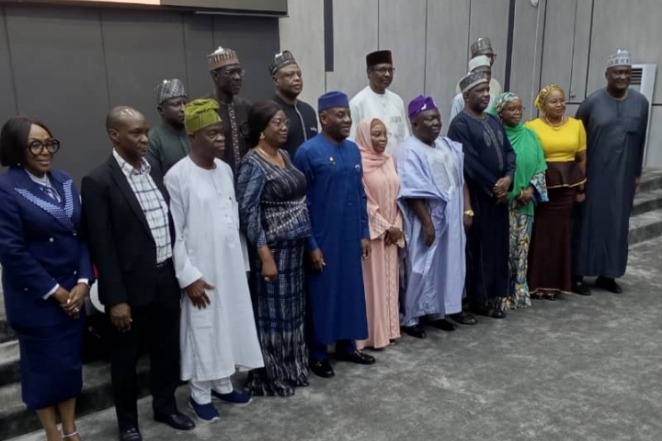
Minister of Education, Dr. Maruf Tunji Alausa, disclosed this on Tuesday in Abuja during the inauguration of the Universal Basic Education Commission (UBEC) Ministerial Implementation and Monitoring Committee for Smart Schools, Bilingual Schools and Alternative Schools.
Alausa expressed frustration that several completed education projects had remained unused despite significant public investment, noting that the situation would no longer be tolerated under the Renewed Hope Agenda.
“Our aim is to get the bilingual, smart and alternative schools operational before the end of the year 2026,” he said, adding that government’s responsibility extends beyond building classrooms to ensuring every investment translates into meaningful learning opportunities for Nigerian children.
He was particularly critical of the failure to hand over completed schools to state governments, describing every locked facility as a daily loss to thousands of children.
“Every abandoned school project represents resources that are not giving their intended educational value,” the minister said.
Alausa also raised the alarm over Nigeria’s staggering primary-to-junior secondary school dropout rate, revealing that approximately 20 million pupils fail to transition from primary to JSS level. He attributed part of the problem to an imbalance in infrastructure, noting that Nigeria has roughly 80,000 public primary schools against only about 15,000 junior secondary schools — a ratio of one to eight.
He further identified the disarticulation policy, which separates JSS and senior secondary school administration under different principals, as a contributing factor to overcrowded junior secondary schools and underutilised senior secondary institutions.
“I can objectively report today that this disarticulation policy has failed. We will phase it out,” he declared, adding that the matter would be formally addressed at the next National Council on Education meeting.
The newly inaugurated committee has been mandated to verify the status of all Smart, Bilingual and Alternative School projects nationwide, facilitate the completion of outstanding infrastructure, and ensure formally completed schools are handed over to state ministries of education.
Additional responsibilities include overseeing equipment installation, ensuring adequate staffing, community engagement and the submission of quarterly progress reports to the Minister and the UBEC Executive Secretary.
UBEC Executive Secretary, Dr. Aisha Garba, disclosed that 37 Smart Schools had been established across the country, with 24 already in operation and the remainder at various stages of completion. She added that 30 Bilingual Schools had been established across nine states under the UBEC-IsDB0 programme, with three commissioned and four others substantially completed.
Speaking on behalf of the committee, its chairman, Emeritus Professor Rashid Aderinoye, assured the minister that members would discharge their responsibilities with transparency and in close collaboration with relevant stakeholders.