
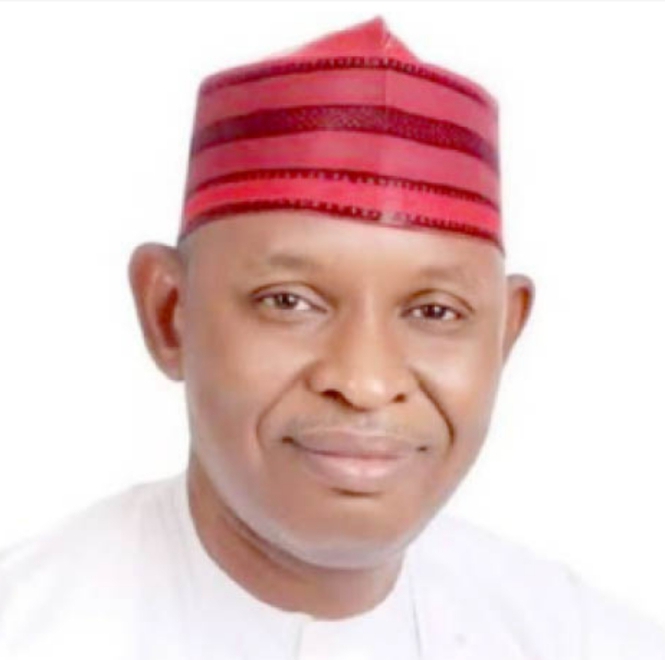
Gov. Abba Yusuf: Model of visionary leadership and fiscal innovation in northern Nigeria
By Lawal Jet Kaugama
In a period when many Nigerian states are struggling to sustain their economies and reduce dependence on federal allocations, Kano State, under the dynamic leadership of Governor Abba Kabir Yusuf, has emerged as a shining example of effective governance, financial prudence, and forward-thinking innovation. The recent data released by the National Bureau of Statistics (NBS) and corroborated by Statista has shown that Kano State’s Internally Generated Revenue (IGR) has doubled—rising from ₦37.38 billion in 2023 to ₦74.77 billion in 2024. This remarkable feat, representing a 100 percent increase, is not merely a stroke of luck but a product of deliberate planning, transparency, and a people-centred approach to governance.
Governor Yusuf’s leadership style, since his assumption of office, has been marked by a blend of boldness, inclusivity, and fiscal discipline. The governor understood from the outset that sustainable development cannot thrive on external funds or handouts from Abuja. Instead, he recognised that a solid internal revenue system is the backbone of progress. Hence, one of his administration’s first steps was to overhaul the Kano State Internal Revenue Service (KIRS), which had previously been plagued by inefficiency, leakages, and corruption.
By appointing competent and trusted professionals to key positions, Governor Yusuf ensured that the KIRS became a model of efficiency and accountability. The result of this strategic decision is now evident: Kano State has joined the ranks of Nigeria’s fastest-growing revenue states, second only to Enugu, which recorded a 433 percent surge. For Kano, this achievement signifies not only economic recovery but also the restoration of public confidence in governance.
Unlike many administrations that resort to overtaxing citizens to boost revenue, Governor Yusuf has demonstrated an exceptional level of empathy and prudence. His government deliberately refrained from taxing ordinary workers and the struggling masses, including the Adaidaita Sahu tricycle operators—who, under the previous administration, were heavily exploited. This shows that Governor Yusuf understands the delicate balance between revenue generation and social welfare. His approach proves that effective leadership does not require burdening citizens, but rather, managing existing resources wisely and plugging the holes of corruption.
What stands out most in Governor Yusuf’s leadership is his commitment to transparency and accountability. His administration’s policy of “blocking leakages and loopholes” in revenue collection has yielded outstanding results, turning wastage into wealth. This strategy demonstrates his awareness that revenue efficiency is not only about collecting taxes but also about ensuring that every naira counts. It reflects a leader who sees public funds as a sacred trust and who refuses to allow the state’s resources to be siphoned away through corrupt channels.
Moreover, Governor Yusuf’s ability to channel the increased IGR into visible infrastructural development sets him apart from the political rhetoric often associated with governance in Nigeria. His spokesperson, Ibrahim Adam, aptly noted that the people are beginning to wonder where the government is getting the funds for the many infrastructural projects springing up across Kano. The answer, of course, lies in the governor’s disciplined fiscal reforms and resource management. From road rehabilitation and urban renewal to the upgrading of healthcare and educational facilities, the evidence of progress is there for all to see.
It is also noteworthy that Governor Yusuf’s success has been achieved through cooperation and goodwill from the people of Kano State. His open-door policy and participatory governance model have inspired trust and encouraged citizens to play active roles in the state’s economic transformation. Rather than imposing harsh policies from above, he engages stakeholders across sectors—business owners, civil servants, traditional rulers, and youth groups—in dialogue and decision-making. This inclusive approach ensures that the government’s policies are both people-oriented and sustainable.
In the broader context of Nigerian politics, Governor Yusuf’s achievements in Kano offer an instructive lesson to other state leaders. His focus on strengthening internally generated revenue without overburdening citizens is a practical roadmap for economic self-reliance. As Nigeria continues to grapple with declining oil revenues, fluctuating federal allocations, and economic uncertainty, leaders like Abba Kabir Yusuf are proving that local solutions—driven by integrity, vision, and competence—can drive development from within.
Equally important is the governor’s sense of gratitude and humility. His acknowledgment of the people’s cooperation and his assurance of continued dedication to service highlight the human side of leadership often missing in governance. Rather than taking credit alone, Governor Yusuf recognises that good governance is a partnership between the government and the governed. This humility endears him to the people and strengthens the social contract upon which democracy thrives.
Ultimately, the doubling of Kano’s IGR in just one year is not merely a statistic—it is a testament to purposeful leadership, a vindication of Governor Yusuf’s reformist agenda, and a beacon of hope for the future. It underscores what is possible when leadership is guided by honesty, innovation, and a genuine desire to improve the lives of citizens.
As other states in Nigeria study the data and wonder how Kano achieved such rapid growth, they will do well to emulate Governor Abba Kabir Yusuf’s principles: merit-based appointments, institutional reform, financial transparency, and compassion for the people. In a political climate often dominated by excuses and inertia, his example stands as proof that leadership, when anchored on integrity and vision, can indeed transform societies.
Kano’s success story is, therefore, not just about numbers—it is about the rebirth of trust in government and the power of sound leadership to turn challenges into opportunities. Governor Abba Kabir Yusuf has shown that with determination and the right team, a state can rise from mediocrity to excellence. His stewardship has put Kano on the map as a model for economic resilience and effective governance, reaffirming that Nigeria’s progress truly begins at the state level—one visionary leader at a time.
Lawal Jet Kaugama, a commentator on national issues, writes from Kano