

Gov. Ahmed Aliyu and social contract with his people in Sokoto
By Lawal Jet Kaugama
By any fair assessment, the recent warning issued by Sokoto State Governor, Ahmed Aliyu, to the contractor handling the Romo (Margai) bridge rehabilitation project was more than a routine inspection remark. It was a clear statement of leadership intent and a reaffirmation of the social contract between government and the governed.The message could not have been clearer: return to site immediately or face revocation.For a state like Sokoto, where infrastructure directly affects livelihoods, mobility, and economic activity, abandoned projects are not just eyesores; they are symbols of broken promises. The Romo (Margai) bridge and the accompanying six-cell box culverts are critical to Kebbe local government area, linking communities, easing transportation, and supporting commerce. When such a project stalls despite substantial public funds already released, it strikes at the heart of public trust.Gov. Aliyu’s reaction reflects a no-nonsense approach to governance, particularly when it comes to the social contract with the people of Sokoto State. That social contract is simple but sacred: public resources must translate into tangible public benefits. Contractors who receive mobilisation funds but abandon sites are not merely breaching contracts; they are undermining confidence in government itself.It is significant that the governor acknowledged the quality of work done so far, even as he issued the ultimatum. This balance between fairness and firmness is important. It shows that this administration is not hostile to contractors, but it will not tolerate excuses where public money and public welfare are concerned. Having paid 30 per cent mobilisation, by the governor’s account, and up to 50 per cent as disclosed by the Deputy Governor, there is little justification for delays that stretch beyond reason.Equally telling is Governor Aliyu’s insistence that projects must be executed strictly in line with contractual specifications. This is where many past administrations, not only in Sokoto but across the country, have failed. Poor supervision, lax enforcement, and political patronage often allow contractors to cut corners or walk away unpunished. The result is a landscape littered with half-completed bridges, washed-away roads, and abandoned public buildings.By personally inspecting the project and issuing a public warning, Gov. Aliyu is sending a signal, not just to this contractor, but to all contractors doing business with the Sokoto State Government.
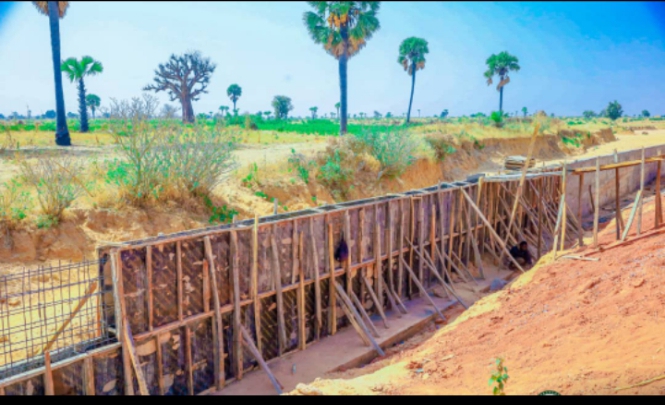
Performance matters. Timelines matter. Accountability matters.The emphasis on engaging indigenous contractors and drawing labour from benefiting communities also deserves attention. Beyond the rhetoric of development, this approach localises economic benefits and fosters a sense of ownership among residents. When community members are involved in projects, there is stronger social oversight and greater pressure to see those projects completed and maintained.The deputy governor, Idris Muhammed Gobir, provided important context by revealing that the contract was awarded in August 2024 at a cost of over ₦2.9 billion, with a completion period of six months. By January 2026, only about 50 per cent of the work has been done, and the site has been abandoned. These facts underscore why the governor’s patience appears to have worn thin, and rightly so.Infrastructure development is one of the most visible measures of governance. Roads, bridges, and culverts are not abstract policy achievements; they are lived realities. They determine whether farmers can get produce to market, whether children can get to school safely, and whether emergency services can reach communities in time. Delays and abandonment have real human costs.Gov. Aliyu’s assurance to the people of Kebbe local government area that all projects awarded there will be executed according to specifications is therefore not a casual promise. It is a reaffirmation of responsibility. It also aligns with his broader record of awarding infrastructure projects across all 23 local government areas of the state, as acknowledged by the deputy governor.Leadership, especially at the subnational level, is often tested not by grand speeches but by how decisively leaders respond to lapses. In this instance, Gov. Aliyu has demonstrated that he understands governance as a serious trust. He appears unwilling to indulge contractors who treat public projects casually or view government contracts as entitlements rather than obligations.Of course, warnings must ultimately be backed by action. If the contractor fails to return to site, revocation should follow swiftly and transparently. Anything less would weaken the very message the governor has sent. Consistency is what turns strong words into credible policy.This opinion draws from the official press release signed by Abubakar Bawa, Director General of Media and Publicity, Government House, Sokoto, on 31 January.The clarity and detail in that release reflect an administration keen to keep the public informed and to place issues of accountability squarely in the open.In the final analysis, the Margai Bridge episode is about more than concrete and culverts. It is about restoring faith in governance. By taking a firm stand, Gov. Aliyu reinforces the idea that in Sokoto State, the social contract is not negotiable, and that is a stance many citizens will welcome.
Lawal Jet Kaugama, a commentator on national issues, writes from Kano