

Gov. Ahmed Aliyu: Leadership guided by love of God
By Lawal Jet Kaugama
In an age when politics often appears detached from faith, values, and morality, it is refreshing—indeed, inspiring—to witness a leader whose governance is firmly anchored in the love of God.
The Governor of Sokoto State, Ahmed Aliyu, has once again demonstrated through word and deed that his administration is committed not merely to infrastructure and economic development, but to something far more enduring: the spiritual and moral grounding of future generations.
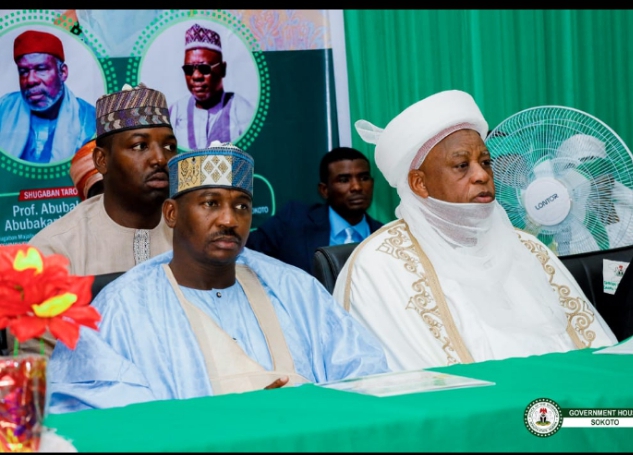
The recent graduation ceremony of 111 Qur’an memorizers from the Sheikh Dahiru Usman Bauchi Foundation in Sokoto served as more than just an academic milestone. It was, in truth, a clear statement of priorities by Gov. Aliyu and his government. By reaffirming his readiness to encourage Qur’anic memorisation among pupils and providing concrete support to Islamic institutions, he has shown that his love for God is not a private sentiment, but a guiding principle of leadership.
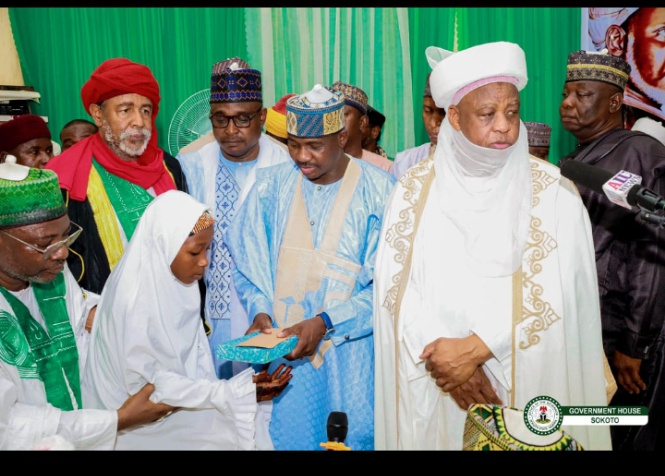
For many leaders, religion is often confined to rhetoric, to be invoked only at campaign rallies or in times of crisis. For Gov. Aliyu, however, it is evidently a living force shaping policy. His remarks that encouraging Qur’anic memorisation will help raise “a generation that upholds the good teachings of Islam in line with the Sunnah of Prophet Muhammad (peace be upon him)” strike at the very heart of why such efforts matter. He understands that the values enshrined in the Qur’an—discipline, morality, respect for others, and reverence for God—are not just for individual piety but for societal wellbeing.
It is one thing to make lofty pronouncements about the role of religion in society, but Gov. Aliyu has gone further by backing words with tangible action, as revealed by a release signed by the Director General, Media and Publicity, Sokoto State Government House, Abubakar Bawa on Saturday.
Bawa said the renovation of 65 Jumu’at Mosques across Sokoto State—25 of which have already been completed and 15 commissioned—is not mere tokenism. It is evidence of a government that appreciates the central role of the mosque in community life. By ensuring that worshippers have a dignified environment to perform their congregational prayers, the Governor is investing in the moral backbone of society.
His decision to introduce monthly cash allocations to Jumu’at mosques, ranging from ₦300,000 to ₦500,000 depending on their category, is equally praiseworthy. Too often, religious institutions are left to fend for themselves financially, with clerics struggling to maintain facilities or support their congregations. By institutionalising such allocations, Gov. Aliyu has recognised the mosque as not only a place of worship but also a centre for community development, learning, and moral guidance.
Furthermore, his administration’s provision of allowances for Imams, their deputies, and Mu’azzins is a bold acknowledgment of their labour of love. These individuals are the unsung custodians of spirituality in society, and by supporting them materially, the government is affirming the dignity of their work.
What makes Gov. Aliyu’s efforts particularly commendable is the holistic vision behind them. Encouraging Qur’anic memorisation is not being treated as an isolated religious act, but as a means of addressing wider social challenges. The Governor rightly observed that structured Qur’anic education helps to keep children off the streets, thereby curbing the scourge of begging and idleness that afflicts many communities. By calling for land to be identified for a permanent site for the Sheikh Dahiru Usman Bauchi Foundation in Sokoto, Gov. Aliyu is laying the foundation for long-term institutional stability, ensuring that generations yet unborn will benefit from structured religious education.
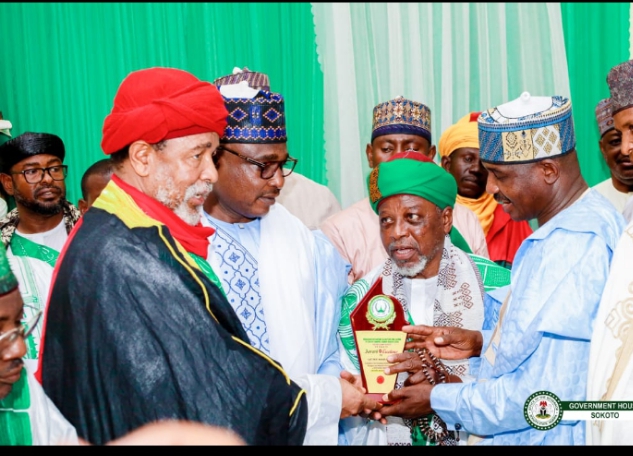
His love for God also shines through in the respect he accords to religious leaders and scholars. By working closely with the Sultan of Sokoto, respected clerics, and figures like Sheikh Dahiru Usman Bauchi, he has displayed humility and recognition that leadership is not about one man’s vision but about collective responsibility under God. His willingness to involve these figures in shaping the religious and moral life of the state is proof of his sincerity. It is often said that leaders reveal their priorities through the company they keep and the institutions they strengthen; by that measure, Gov. Aliyu passes with distinction.
Equally noteworthy is the generosity his administration has encouraged among others. The donations by distinguished figures such as Senator Abdulaziz Yari—₦10 million for the graduands, ₦10 million for the organisers, and further support for the school—were inspired by the atmosphere created at the event. When leaders place God at the centre of governance, they inspire others to give, to support, and to uplift. In this sense, Gov. Aliyu’s faith-driven governance is contagious, sparking a culture of generosity that benefits the wider society.
Critics may argue that government should concern itself primarily with roads, electricity, and hospitals. Yet such a narrow view fails to grasp that without moral and spiritual grounding, material development is fragile. What use are roads if they are travelled by lawless men? What good is electricity if it powers homes where corruption festers? Gov. Aliyu appears to recognise that true progress must rest on a foundation of values—and that values are best nurtured through faith and the love of God.
In conclusion, Gov. Ahmed Aliyu has proven himself to be a leader who wears his love for God not as a badge of personal piety but as a framework for governance. His support for Qur’anic memorisation, his commitment to strengthening mosques and religious leaders, and his understanding of the role of faith in solving societal ills all mark him out as a statesman of rare calibre. At a time when many leaders across the world are accused of moral bankruptcy, Sokoto is fortunate to have at its helm a man whose compass is fixed firmly on God. His example deserves not only recognition but emulation, for leadership rooted in the love of God is the surest path to lasting peace, prosperity, and harmony.
Lawal Jet Kaugama, a commentator on national issues writes from Kano