
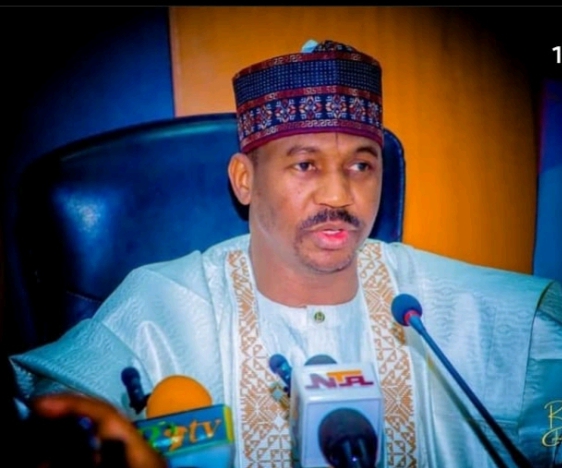
Gov. Ahmed Aliyu’s bold agricultural drive: A people-centred vision for Sokoto’s prosperity
By Saidu Sule
In a time when many Nigerian leaders are grappling with dwindling public trust and economic hardship, Gov. Ahmed Aliyu of Sokoto State has demonstrated once again that good governance is rooted in foresight, compassion, and a clear commitment to the welfare of the people. His latest intervention in the agricultural sector — the appointment of Local Government Coordinators and a multi-stakeholder committee to oversee the sales and distribution of subsidised fertilisers for the 2025 wet season — is a commendable move that deserves not only praise but emulation across the country.
The governor’s initiative, Press Secretary to the state government, Abubakar Baba, said is not merely an act of routine governance; it is a deliberate policy aimed at improving food security, promoting rural economic growth, and empowering the grassroots. By ensuring that fertilisers reach farmers in all 244 wards of the 23 Local Government Areas, Dr Aliyu is strengthening the backbone of Sokoto State’s economy — agriculture.
Historically, agriculture has been the mainstay of the Sokoto economy, employing a majority of its citizens and sustaining rural livelihoods. However, in recent years, farmers have been faced with rising input costs, irregular access to support services, and limited access to market-driven policies. The governor’s focus on subsidised fertiliser distribution speaks directly to these challenges, reaffirming his administration’s resolve to make Sokoto State self-reliant in food production.
The brilliance of this policy lies in its people-centred approach. The appointment of credible and qualified individuals as Local Government Coordinators — many of whom are accomplished academics, former administrators, and respected community leaders — is a testament to the governor’s inclusive leadership style. These are individuals who understand their localities, enjoy the trust of the people, and are well-positioned to ensure transparency in fertiliser distribution.
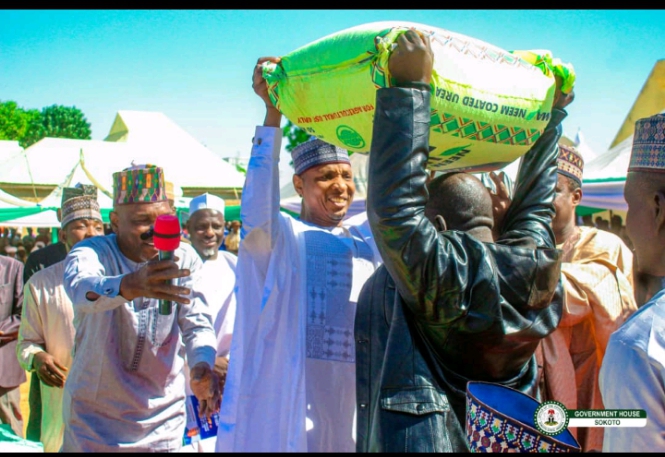
Moreover, the composition of the supervisory committee is particularly laudable. With representation drawn from traditional institutions, religious groups, youth councils, women’s organisations, and security agencies, the committee mirrors the diversity and dynamism of Sokoto society. This broad-based approach not only ensures accountability but also gives every segment of society a voice in the agricultural process.
One of the most commendable features of this initiative is the clear terms of reference given to the coordinators and committee members. These include coordinating fertiliser sales, ensuring equitable distribution, preventing hoarding and diversion, and enforcing government-approved pricing. Such clarity of purpose is rare and reinforces the seriousness with which the administration approaches the welfare of its citizens.
The ripple effect of this agricultural investment cannot be overstated. Agriculture, when properly supported, impacts all sectors of the economy. Improved farm yields will translate into food security, lower prices, and reduced hunger — especially at a time when inflation and food shortages are affecting households across Nigeria. The availability of fertilisers at subsidised rates will boost productivity, enhance the incomes of rural farmers, and contribute to local employment, especially for the youth and women.
Furthermore, a thriving agricultural sector can stimulate the growth of agro-processing industries, transport, and marketing services. When the farming economy is healthy, it opens up opportunities for warehousing, logistics, retail trade, and export. This has the potential to drastically reduce youth unemployment and rural-urban migration. Indeed, the governor’s attention to agriculture is a long-term investment in peace, stability, and economic diversification.
Gov. Aliyu has thus shown himself not only as a man of vision but also as a leader who listens to his people. His commitment to ensuring that fertilisers reach every ward, that the right quantities are sold at the right prices, and that the process is monitored by trusted community representatives, reflects an administration rooted in justice, fairness, and equity.
While the road to agricultural transformation is not without challenges — including threats of corruption, mismanagement, and black-market activities — the governor’s proactive measures suggest a readiness to confront these head-on. By putting mechanisms in place for monitoring and accountability, including the involvement of the police, DSS, and Civil Defence Corps, he has sent a strong signal that malpractices will not be tolerated.
As Sokoto farmers prepare for the 2025 wet season, they can do so with renewed hope and assurance that their governor is walking with them. This intervention, though targeted at a single planting season, may well prove to be a cornerstone of Sokoto State’s broader economic revival.
Gov. Aliyu deserves the applause of all well-meaning citizens — not just in Sokoto, but across Nigeria. His policies serve as a reminder that leadership is not about populism or empty promises, but about tangible, life-changing decisions. Agriculture must return to the centre of national development discourse, and Sokoto is already leading the way.
In a nation searching for direction, it is heartening to see a governor who understands that feeding the people is not charity, but duty. Dr Aliyu’s bold steps in supporting farmers, empowering local communities, and restoring dignity to agriculture should serve as a model for other states. Sokoto is on the path to prosperity, and agriculture is the engine driving it.
Saidu Sule writes from Sokoto, Sokoto State