
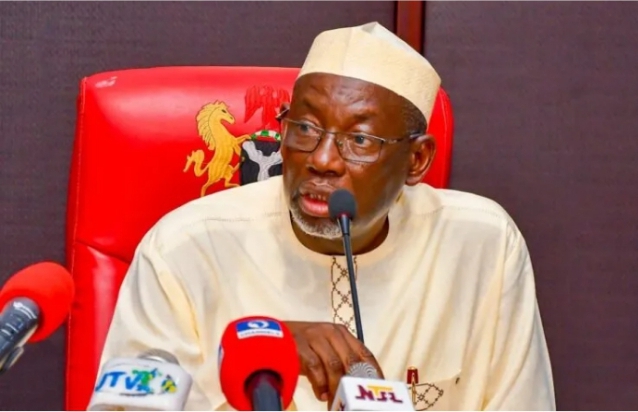
Gov Namadi’s late-night inspection and lessons in leadership
By Lawal Jet Kaugama
There is a particular kind of leadership that cannot be legislated, budgeted for, or written into a service charter. It is the leadership that shows up unannounced, at an hour when officials least expect scrutiny, to see things as they truly are rather than as they are reported to be by the press.
Gov Namadi’s decision to suspend the N1.3bn renovation contract at Gumel General Hospital, following an unscheduled late-night inspection, is precisely this kind of leadership, and it deserves to be commended without reservation.
It would have been easy for the governor to rely on progress reports filed from air-conditioned offices, on photographs curated to flatter, or on the reassurances of officials keen to protect their own standing. Instead, he chose to see for himself, at night, when contractors and site managers are least prepared for a gubernatorial visit. What he found evidently displeased him enough to halt the project altogether.
That single act of independent verification tells the people of Jigawa State something important: their governor is not content to govern by paperwork alone but by action.
Public infrastructure projects in Nigeria have too often suffered from a familiar and depressing pattern. Contracts are awarded with fanfare, ground-breaking ceremonies are held before cameras, and then the trail goes cold. Years later, communities are left with skeletal structures, abandoned equipment, and hospitals or schools that exist only in the register of government promises.
The Gumel General Hospital project, awarded to Yasmeen Automobile Nigeria Limited in December 2025 at a cost exceeding a billion naira, with an eight-month completion window, was always going to be a test of whether Jigawa State intended to break from that pattern. Governor Namadi’s intervention suggests, emphatically, that it does.
What makes this decision especially commendable is its timing within the life of the contract. Rather than waiting until the eight-month deadline had passed, by which point substandard work might have been concealed beneath finishing touches, the governor acted while there was still time to course-correct.
This is the difference between reactive governance, which merely apportions blame after failure, and proactive governance, which prevents failure from taking root. A hospital is not an ordinary public building. It is where residents of Gumel and its surrounding communities will bring their sick, their injured, and their newborns.
Compromised workmanship in such a facility is not merely a financial waste; it is a direct threat to the wellbeing of the very people the project was meant to serve.
There is also a broader signal being sent to contractors across Jigawa State. When a governor personally inspects a project site at night and is prepared to halt work on a contract worth over a billion naira, the message to every firm holding a government contract is unambiguous: quality will be verified, and shortcuts will not be tolerated.
This is precisely the kind of deterrent effect that responsible public procurement requires. Too many contractors have grown accustomed to a climate of lax supervision, where initial disbursements are collected and subsequent performance is treated as optional. Gov Namadi’s action disrupts that complacency and re-establishes the principle that public funds come with attached public accountability.
It is worth noting, too, the discipline this decision reflects. Suspending a major contract is never a costless exercise. It invites delay, potential legal complications, and the inconvenience of restarting procurement processes. A less committed leader might have accepted mediocre work simply to avoid these complications and to present a completed project as a political achievement.
Gov Namadi has chosen the harder, more honest path, insisting that the people of Gumel receive a hospital built to the standard their taxes and their trust deserve, even if that means enduring short-term setbacks.
This episode fits within a broader pattern that has come to characterise the Namadi administration, which adopts a preference for verifiable outcomes over ceremonial announcements, and a willingness to intervene directly rather than delegate accountability entirely to bureaucratic processes.
Whether in agriculture, flood control, or now healthcare infrastructure, the governor has repeatedly demonstrated that his interest lies in results residents can see and feel, not merely in the optics of project commissioning.
As the Gumel General Hospital renovation moves toward resolution, whatever form that takes, the people of Jigawa State can take comfort in knowing that their action governor is watching, even when the cameras are not. That is governance worth commending, and it is governance worth expecting to continue, because the Namadi administration has given Jigawa democratic dividends beyond expectations.
Lawal Jet Kaugama, a commentator on national issues, writes from Kano