
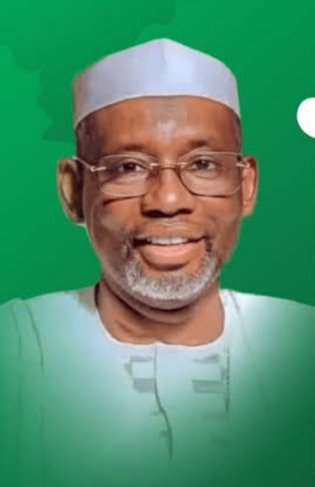
Gov Umar Namadi: Charting a new course in Jigawa’s flood defence
By Lawal Jet Kaugama
The distribution of working equipment to 15 community-based organisations in Jigawa State represents far more than a routine logistical exercise; it signals a fundamental shift in how the state intends to tackle the perennial menace of flooding.
Not to done through occasional panicked responses, but through sustained, deliberate action rooted in community participation and partnership.
Governor Umar Namadi’s administration has grasped a truth that many governments take too long to learn. Flood control is not the preserve of government agencies alone. It requires the sustained effort of those who live closest to vulnerable waterways, who understand their local topography, and who bear the direct consequences of poor water management. By investing in these organisations, the governor has acknowledged this reality and acted upon it.
The timing of this initiative is particularly commendable. As the rains settle over Jigawa, the work of keeping rivers, canals and drainage channels clear of weeds and silt becomes genuinely urgent. Too many communities across Nigeria have experienced the devastation wrought by preventable flooding. Livelihoods destroyed, homes washed away, and essential infrastructure rendered useless.
READ ALSO. ..
Gov Abba Kabir Yusuf: Purposeful Leadership rewarded
Jigawa, with its extensive network of waterways and vulnerable agricultural communities, has suffered acutely from such disasters in recent years. The governor’s decision to ramp up these efforts precisely as the rainy season arrives demonstrates both strategic thinking and responsiveness to the immediate needs of residents.
What deserves particular praise is the recognition of these community organisations’ track record. The statement acknowledges their years of commitment to canal clearance and environmental sanitation work, efforts that often go unsung and inadequately resourced.
By publicly commending their contributions and now equipping them with the tools to expand their reach, Governor Namadi has done something increasingly rare in governance: he has credited and invested in civil society actors who have been holding the line on environmental management. This sends a powerful message that community-led solutions are valued, not viewed as supplementary to “real” government work.
The complementary investment in state capacity is equally important. The acquisition of additional amphibious excavators and the reported clearance of more than 180 kilometres of waterways demonstrates that the governor has not simply delegated responsibility to community organisations. The government is simultaneously strengthening its own operational capability. This balanced approach, supporting communities whilst building state capacity, is far more likely to achieve results than either approach in isolation. It creates synergy, ensures continuity, and demonstrates genuine commitment at multiple levels.
The 180 kilometres of cleared waterways is a concrete achievement that citizens can understand and visualise. This is not an abstract statistical target; it represents actual channels through which water can now flow more freely, reducing the risk of backing-up, overflow, and flooding in downstream communities.
For farmers whose fields have been repeatedly inundated, for homeowners who have lost property, and for traders whose livelihoods depend on stable conditions, this work translates directly into protection and opportunity.
Yet perhaps the most sophisticated aspect of Governor Namadi’s approach is his explicit rejection of the notion that flood control is a seasonal concern. The statement’s emphasis on “consistent work before, during and after the rainy season” reflects mature understanding.
Flood defence requires year-round vigilance. Channels must be cleared and maintained in the dry season so they are ready for the rains. During the rainy season, monitoring and emergency response must be continuous. Afterwards, damage assessment and preparation for the next cycle begin. This cyclical approach, if genuinely implemented, offers far greater hope of success than episodic efforts launched only when disaster strikes.
The call for residents to play their part in keeping drainage channels clear and supporting environmental sanitation is also significant. This is not paternalism, but an appeal to shared responsibility. Citizens understand that their own actions, how they dispose of refuse, whether they maintain their immediate environment, directly affect drainage capacity and flood risk. By appealing to this civic responsibility, the governor is fostering a culture of collective ownership in flood risk reduction.
Of course, intentions must now translate into implementation. Equipment distribution is merely the beginning; what matters is how effectively these organisations deploy their new tools, whether the government maintains funding and political support for this work beyond the current rainy season, and whether the promised cycle of before-during-after maintenance actually materialises. Scepticism about follow-through is warranted by past experience.
Nevertheless, Governor Namadi’s administration has set a worthwhile course. It has articulated a coherent strategy, invested real resources, and created space for community partnership. As climate variability makes flooding an ever-present threat across West Africa, this approach, blending government capacity, community investment, strategic infrastructure work, and citizen responsibility, offers a model worthy of commendation and careful observation.
The residents of Jigawa deserve protection from preventable disasters. By moving beyond rhetoric to action, the governor is delivering on that promise.
Lawal Jet Kaugama, a commentator on national issues, writes from Kano