
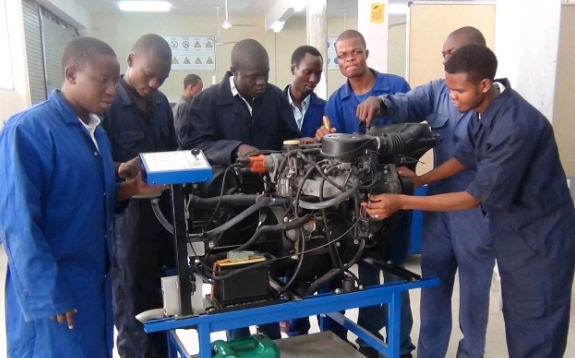
Over 30,000 candidates sit entrance exam for federal technical colleges
By Uji A. Iliyasu, Abuja
More than 30,000 candidates across Nigeria on Saturday sat the 2025 entrance examination for admission into Federal Technical Colleges, under the Federal Government’s Technical and Vocational Education and Training (TVET) programme.
The examination, which was formally flagged off by the National Business and Technical Examinations Board (NABTEB), forms part of ongoing efforts by the government to strengthen vocational education and enhance Nigeria’s technical workforce.
Speaking during a monitoring visit to the Federal Technical College, Orozo, Abuja, NABTEB Registrar and Chief Executive, Dr Mohammed Aminu Mohammed, described the initiative as a transformative step towards improving the nation’s human capital development.
Calling TVET “a beautiful and exciting federal government project,” Dr Mohammed said the programme is designed to equip young Nigerians with practical skills relevant to a wide range of industries.
He noted that the entrance exam serves a dual purpose—both to select students and to assess their individual aptitudes for suitable vocational trades.
“If you pass, we will look at your skill and study your score. We have already collected specific data from each candidate, which will help us determine whether they are best suited for electrical installation, tailoring, solar maintenance, or other vocational areas,” he explained.
Dr Mohammed underscored the programme’s potential to reduce Nigeria’s reliance on foreign labour and imported services.
“No country thrives economically without artisans, craftsmen, and technicians. They are the backbone of any economy. The era of paper qualifications is gradually giving way to a new era focused on practical ability, on what you can actually do,” he said.
He expressed concern over the continued outsourcing of routine building tasks to expatriates, noting that many Nigerian youths have the potential to take up such roles if properly trained.
“The building industry is a major source of income. With initiatives like this, our young people can reclaim these roles and earn a decent living,” he stated.
Dr Mohammed also highlighted the Federal Government’s commitment to establishing a supportive ecosystem for certified technical professionals. He cited large-scale national projects, such as the gas pipeline initiative, which will increasingly depend on skilled, locally-trained artisans.
“But the key question remains—are they certified? That’s why this programme is crucial. Certification builds trust. No one wants to risk their investment on unverified skills,” he said.
He explained that the TVET training will last between six months to one year, depending on the discipline. Graduates will receive starter kits and may be eligible for small business loans.
“This isn’t just about skill acquisition. It’s about job creation and economic empowerment. Those who complete the programme may gain government employment or establish their own businesses with the support structures being put in place,” he added.
To handle the high volume of applicants, Dr Mohammed said a selection committee—including NABTEB officials, principals of federal technical colleges, and representatives from the Federal Ministry of Education—will oversee the admissions process.
He further disclosed that results of the examination are expected within three weeks.
“We aim to release the results within 21 days. Only then can we determine how many candidates will proceed to the next stage. It’s too early to give numbers now, but by this time next year, we expect this paper-based process to be fully digitised,” he said.