
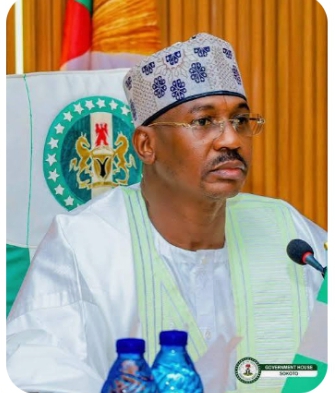
Sokoto 2027: Tambuwal’s remarks on Gov Ahmed Aliyu reflect political desperation
By Lawal Jet Kaugama
Recent comments attributed to former Sokoto State Governor Aminu Waziri Tambuwal, suggesting that Gov Ahmed Aliyu would fail to secure a second term in office, have rightly attracted criticism from concerned stakeholders across the state.
Among those who have spoken out is the Sokoto Youth Emancipation Front (SYEF), whose condemnation of the former governor’s remarks reflects the growing sentiment among many citizens that such comments are unnecessary, divisive, and unbecoming of a statesman of Tambuwal’s status.
As a former governor and experienced political leader, Tambuwal ought to understand better than most that democratic leadership should be guided by issue-based discourse, constructive criticism, and respect for the will of the peoplle.
Premature declarations for 2027 Sokoto governorship intended to undermine an incumbent government does not augur well for the polity.
For a politician of his calibre to publicly predict electoral failure for a sitting governor, especially one who is still in the middle of his mandate, raises serious questions about his motives and political judgment.
Rather than engage in statements that appear designed to provoke political tension, Tambuwal should focus on contributing meaningful ideas to democratic development and offering guidance where necessary.
Political maturity demands that former officeholders rise above partisan bitterness and place the interests of the people above personal ambitions or political rivalry.
What makes Tambuwal’s comments even more misplaced is the reality on ground in Sokoto State. Gov Aliyu’s administration has, within a relatively short period, demonstrated commitment to governance and service delivery in ways that have earned him the confidence and admiration of many residents.
Across key sectors, the governor has shown visible leadership and practical dedication to improving the lives of ordinary citizens.
In the area of water supply, the administration has taken commendable steps to improve access to clean water in several communities, addressing one of the longstanding challenges facing residents in urban and rural areas alike.
Access to water is a basic necessity, and any government that prioritises such infrastructure demonstrates seriousness about public welfare.
On housing and infrastructure, Gov Aliyu has also recorded notable progress. Efforts to improve public facilities and expand housing initiatives indicate an administration focused on laying the foundations for long-term development. These projects are not only improving living standards but also creating jobs and stimulating local economic activity.
Perhaps most importantly, the governor’s attention to workers’ welfare has further endeared him to the people. In a country where many state governments struggle with salary backlogs and labour disputes, regular payment of salaries and prioritisation of civil servants’ welfare represent responsible governance. A government that respects workers and ensures prompt payment understands the direct connection between employee welfare and effective public service delivery.
It is therefore, no surprise that many political observers and residents believe Gov Aliyu is steadily building the goodwill necessary to secure a second term.
Elections are ultimately determined by the people, and the people tend to reward leaders who perform, deliver results, and remain connected to their needs. Based on current realities, Aliyu’s governance style and developmental strides have positioned him strongly in the eyes of many Sokoto citizens for second term.
Tambuwal’s remarks, rather than weakening the governor’s political standing, may in fact strengthen public sympathy for him. Nigerians are increasingly tired of politics rooted in personal attacks, bitterness, and unproductive rhetoric. Citizens now demand performance, accountability, and visible leadership, not empty political pronouncements from individuals no longer in office.
Moreover, if Tambuwal truly believes in democracy, he should trust the electorate to make their judgment when the time comes. It is not the duty of any former governor to decide who deserves re-election through public declarations. That responsibility belongs solely to the people of Sokoto State, who are more than capable of evaluating the achievements and shortcomings of their leaders.
The attempt to cast doubt on Gov Aliyu’s re-election prospects at this stage appears less like objective political analysis and more like fear of the governor’s rising popularity and growing political acceptance.
When opposition figures begin to focus more on predictions than policy alternatives, it often signals anxiety over the incumbent’s increasing momentum.
Political competition is healthy in every democracy, but such competition must remain respectful, issue-driven, and beneficial to public discourse.
Former leaders should set examples of maturity and patriotism, not contribute to unnecessary political hostility through provocative commentary. Gov Aliyu’s achievements, leadership style, and focus on governance continue to speak louder than the noise of critics.
His administration’s visible commitment to development, welfare, and service delivery has strengthened public confidence and laid the groundwork for sustained support ahead of future elections.
If current momentum continues, and if the administration remains focused on delivering dividends of democracy to the people, then Gov Aliyu’s second term may not only be possible, it may well be inevitable.
Tambuwal and others who wish to challenge the governor politically would do better to present alternative ideas and policies rather than resort to dismissive predictions. Democracy thrives when leaders debate solutions, not when they seek headlines through inflammatory statements.
By all visible indications, Gov Aliyu’s results are steadily guaranteeing him the trust, confidence, and renewed mandate of the people of Sokoto State.
Lawal Jet Kaugama is a commentator on national issues. He writes from Kano.