
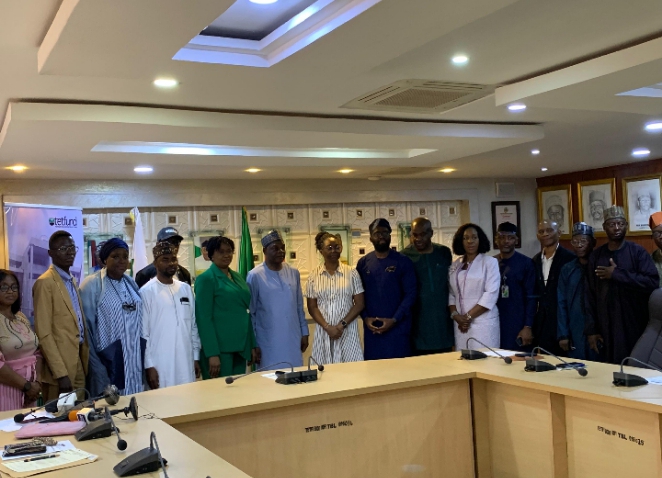
TETFund inaugurates national committee on autism centres across six geopolitical zones
By Uji A Iliyasu, Abuja
The Tertiary Education Trust Fund (TETFund) has inaugurated a national committee to develop a framework for establishing international-standard autism centres across Nigeria’s six geopolitical zones, to expand access to specialised care, strengthen research and support affected families.
The Executive Secretary of TETFund, Sonny Echono, inaugurated the committee in Abuja on Thursday, charging members to produce practical, evidence-based and sustainable recommendations for locating the centres in selected university medical schools.
Echono said the initiative would build on the Special High Impact Intervention for medical schools, which is upgrading infrastructure and equipment for training medical professionals. He explained that the centres would provide early diagnosis, developmental assessment, treatment, rehabilitation, research and professional training, while supporting families and caregivers and sparing them the burden of travelling long distances for care.
He disclosed that the centres were being considered under the proposed 2027 TETFund Special Intervention, subject to the committee’s findings, identification of eligible institutions, availability of resources and necessary approvals.
Echono urged the committee to back its recommendations with needs assessments, realistic cost estimates, technical specifications, measurable deliverables and credible sustainability plans. He also called for transparent criteria in selecting host institutions, including geographical spread, existing facilities, human resource capacity, institutional commitment and the ability to sustain the centres, and asked members to expedite their work so that provisions could be considered in the 2027 budget.
Responding, the committee’s Chairperson and Vice-Chancellor of the University of Medical Sciences, Ondo, Professor Ebunoluwa Aderonke Adejuyigbe, described the assignment as a significant step towards a coordinated, accessible and sustainable system of autism care, research and community support in Nigeria.
A paediatrician, she noted that many families raising children with autism still face delayed diagnosis because of denial, limited access to specialised services, financial constraints and inadequate professional support.
She said the committee would be guided by five pillars: clinical services and early intervention; research and innovation; training and capacity building; community engagement and inclusion; and sustainability and quality assurance.
Adejuyigbe stressed that the centres must generate locally relevant research, including on autism prevalence, to inform policy and clinical practice. She also called for a multidisciplinary workforce of paediatricians, psychiatrists, psychologists, speech and language therapists, occupational therapists and special educators.
She further emphasised collaboration with primary healthcare facilities, schools, community health workers, religious and traditional leaders, parents’ associations and families to promote early identification, appropriate referrals and reduced stigma. She warned against establishing facilities without clear plans for long-term operation.
“Our success must not be measured merely by the number of centres established, but by the number of individuals and families whose lives are positively transformed, the communities reached, and the knowledge generated to improve autism care in Nigeria and across Africa,” she said.
The committee is expected to recommend host institutions, set minimum standards for the design and operation of the centres, develop implementation schedules and cost estimates, and propose a monitoring and evaluation framework.