

Why Jigawa’s new medical university matters
By Lawal Jet Kaugama
When the National Universities Commission (NUC) announced this week that it had approved the establishment of the Jigawa State University of Medical and Allied Sciences, the news carried significance well beyond the addition of a 70th state-owned university to Nigeria’s higher education landscape. It confirmed, once again, that Governor Umar Namadi understands something many of his counterparts across the federation have yet to grasp: that human capital, not concrete alone, is the true foundation of state development.
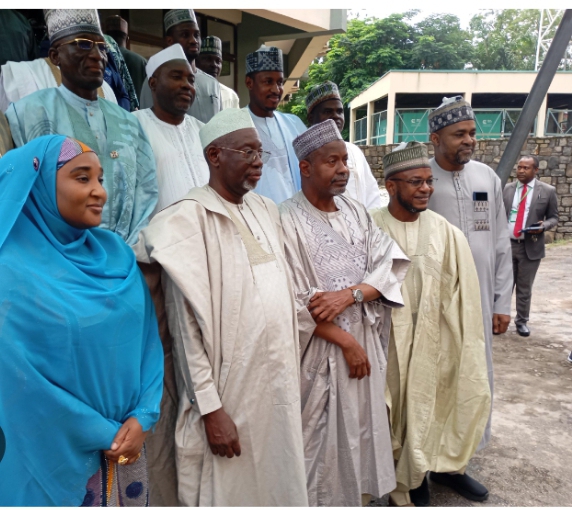
NUC Executive Secretary Prof. Abdullahi Ribadu, said the recognition also marks a historic first; the first time a state government has acquired a privately-owned university and converted it into a public institution within Nigeria’s university system.
That single fact tells a story of its own. Rather than commissioning a university from scratch, with all the years of bureaucratic delay and infrastructural uncertainty that typically entails, the Namadi administration identified an existing institution, saw its potential, and moved decisively to bring it under public ownership for the benefit of Jigawa’s citizens.
It is the kind of pragmatic, outcome-focused governance that too often gets overlooked in favour of more ceremonial achievements.
The timing and rationale behind this decision deserve particular commendation. Nigeria’s doctor-to-population ratio remains stubbornly below the World Health Organisation’s recommended threshold, a crisis deepened by the now-familiar exodus of medical professionals seeking greener pastures abroad.
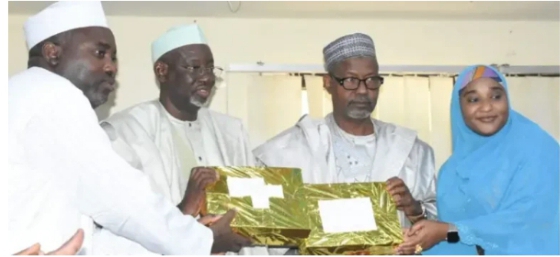
Governor Namadi did not simply lament this reality; he acted on it. By his own account, Jigawa State currently sponsors roughly 200 medical students studying abroad, a costly and logistically demanding arrangement that, however well-intentioned, leaves the state dependent on foreign institutions to produce its own healthcare workforce.
The establishment of a dedicated medical university at home is a direct, structural response to that dependency, and a far more sustainable one.
This is what serious human development planning looks like. It is not reactive. It does not wait for a crisis to fully mature before responding. It anticipates the trajectory of a problem — in this case, the shrinking pool of doctors serving Jigawa’s communities — and builds the institutional capacity to solve it from within.
Training doctors locally, rather than exporting students and hoping they return, keeps talent rooted in the state, reduces the financial burden of overseas sponsorship over time, and builds an educational ecosystem that can eventually serve neighbouring states as well.
It is also worth noting the discipline with which this transition is being managed. Rather than disrupting the lives of students already enrolled in the institution’s former non-medical programmes, the university will allow them to complete their studies before the school pivots exclusively to medical and allied health disciplines. From the 2027 academic session, it is expected to roll out programmes in Anatomy, Physiology, Public Health, Nutrition and Dietetics, and Radiography and Health Information Management, pending NUC resource verification. This is careful, methodical planning — the kind that protects current students while building deliberately toward a clearer institutional identity.
Minister of State for Education, Prof. Suwaiba Ahmad, rightly situated this achievement within a broader national context, describing it as consistent with President Bola Tinubu’s Renewed Hope Agenda and its emphasis on expanding access to quality education and developing skilled manpower. But the truth is that Jigawa did not wait to be told to prioritise education; it has been building toward this moment through years of deliberate investment in the sector.
This latest milestone sits alongside the state’s existing commitment to Sule Lamido University, and Governor Namadi has been urged — appropriately — to sustain funding for both institutions as they grow.
What stands out most about this development is its long-term orientation. Governors are frequently judged, fairly or not, by the visibility of their achievements: the roads commissioned, the bridges opened, the buildings inaugurated. Education infrastructure, by contrast, often pays its dividends slowly, over a generation, in the form of doctors who never had to leave home to gain their qualifications, and communities that no longer have to travel hundreds of kilometres for specialist care.
Governor Namadi has chosen to invest in that slower, harder, more consequential kind of progress.
Jigawa State’s acquisition and transformation of what will become its state medical university is, in the end, a statement of priorities. It says that a government can look past the immediate political calendar and invest instead in the people who will still be practising medicine in Jigawa decades from now.
That is the kind of leadership Nigeria’s states need more of, and Governor Umar Namadi deserves genuine credit for providing it.
Lawal Jet Kaugama, a commentator on national issues, writes from Kano