
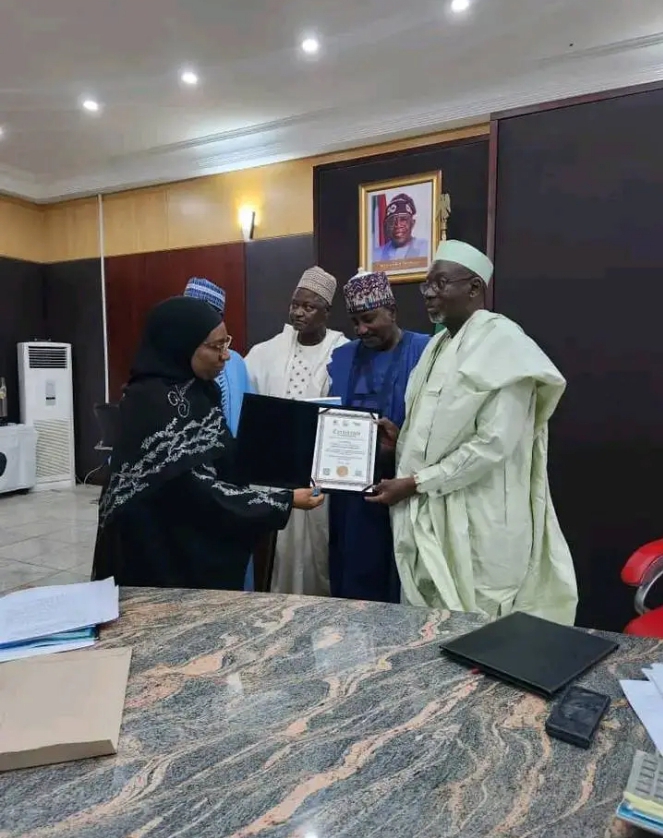
Gov. Umar Namadi: Recognition of peace, and progressive leadership in Africa
By Lawal Jet Kaugama
The recent recognition of His Excellency Malam Umar Namadi, the Executive Governor of Jigawa State, as one of Africa’s 100 Most Notable Peace Icons is not only a well-deserved honour, but also a resounding affirmation of the calibre of leadership he represents.
The award, conferred at a prestigious international gathering in Kigali, Rwanda, marks a milestone in Governor Namadi’s political journey and serves as an inspiration to both his constituents and the broader African community.
In a continent frequently grappling with political instability, social unrest, and uneven development, Governor Namadi has charted a markedly different course, one of peace, progress, and purpose. His selection as one of the most notable peace icons in Africa places him in the league of respected leaders who have gone beyond rhetoric to deliver tangible change, particularly in the realms of governance, education, and community empowerment.
The virtues that have earned Governor Namadi this continental accolade are evident in both the style and substance of his administration. First among these is his unwavering commitment to peace. At a time when political polarisation and insecurity continue to plague many regions, Governor Namadi has maintained a calm and stabilising influence in Jigawa State. He governs not by fear or force, but through dialogue, inclusion, and fairness. These are indeed core ingredients of sustainable peace.

Peace, however, is not merely the absence of conflict; it is the presence of justice, opportunity, and equity. It is in this context that Governor Namadi’s focus on inclusive development becomes particularly noteworthy. His administration has prioritised social policies that uplift the most vulnerable segments of society.
By ensuring that government interventions reach the grassroots, he has made governance more people-centred and responsive.
Education has been one of the cornerstones of Governor Namadi’s developmental agenda, and it is no coincidence that his representatives at the Kigali ceremony were senior officials in the education sector, Professor Haruna Musa of SUBEB and Dr Hauwa Babura, his Technical Adviser on Basic Education. Their presence at the event, and their own commendation, speak volumes about the strategic importance the Namadi administration attaches to education as both a tool for empowerment and a vehicle for peacebuilding.
Under his leadership, Jigawa State has witnessed unprecedented efforts to revitalise basic education. From the construction of new classrooms and the rehabilitation of dilapidated schools to the provision of instructional materials and improved teacher welfare, the Namadi government has left no stone unturned in giving children the chance to thrive.
Education, after all, is the most potent antidote to ignorance, intolerance, and conflict. A society that reads, learns, and thinks is a society that progresses in harmony.
Another remarkable virtue of Governor Namadi is humility in leadership. Despite holding high office, he has remained accessible to his people, frequently consulting stakeholders across various sectors before making key decisions. This inclusive leadership style is not only democratic but also developmental. It fosters a sense of ownership among the people and encourages civic responsibility.
Transparency and accountability have also characterised his administration. In an era where public distrust of government is growing across the world, Governor Namadi has ensured that resources are judiciously used and that public officials are held to the highest standards of integrity. This has resulted in increased public confidence and greater cooperation between the government and the citizenry.
Moreover, his commitment to youth empowerment and job creation stands out. Recognising that peace cannot be sustained in a society riddled with unemployment and economic despair, the Namadi administration has launched initiatives aimed at creating jobs, supporting small and medium-scale enterprises, and nurturing entrepreneurship. By investing in young people, he is not only securing the present, but also safeguarding the future.
The international dimension of this honour should not be overlooked. For an African governor to receive such recognition beyond Nigeria’s borders is both significant and symbolic. It reflects the growing relevance of subnational leadership in global discourses on peace and development. It also signals to the world that meaningful change does not always have to originate from national capitals, it can emerge from any corner of the continent where vision, courage, and integrity exist.
This award is more than a personal accolade for Governor Umar Namadi; it is a validation of a leadership style that prioritises peace over power, people over politics, and progress over populism. It is a call to other leaders across Africa to embrace similar values and rise above divisive tendencies for the greater good.
As the people of Jigawa State bask in the pride of this international recognition, it is essential to remember that the journey is not over. The path to peace is a continuous one, demanding vigilance, resilience, and constant innovation. But with leaders like Governor Namadi at the helm, there is every reason to be optimistic.
In honouring Governor Namadi, the world has acknowledged that quiet, competent, and compassionate leadership still matters. And in celebrating him, we renew our hope that Africa’s future can indeed be peaceful, inclusive, and prosperous.
Lawal Jet Kaugama, a commentator on national issues, writes from Kano.