
On Gov Namadi’s inclusive governance model
By Lawal Jet Kaugama
By bridging the gap between government institutions and community custodians, Governor Umar Namadi has demonstrated the kind of strategic, people-centred leadership that Nigeria’s challenges demand.
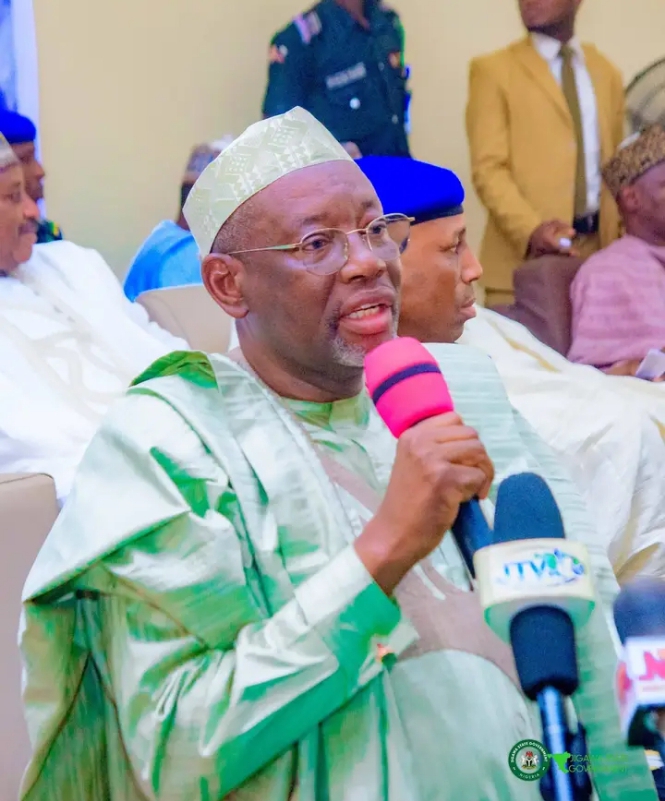
His recent hosting of the 8th Executive Committee Meeting of the Northern Traditional Rulers’ Council in Dutse represents far more than a ceremonial gathering, it is a masterclass in recognizing the multifaceted nature of governance and the irreplaceable role of traditional institutions in nation-building.
The governor’s decision to convene this council, and to centre the discussions on bread-and-butter issues affecting ordinary families, reflects a refreshing departure from the compartmentalisation that often characterises government work.
Rather than relegating traditional rulers to ceremonial roles or treating them as relics of a bygone era, Governor Namadi has positioned them where they belong: as critical partners in understanding and addressing the real challenges facing northern Nigeria.
Consider the issues that dominated the discussions: insecurity, poverty, drug abuse, and the alarming number of out-of-school children. These are not abstract policy concerns confined to government offices and development reports. These are the lived realities of families in every community across the northern states.
Parents lose sleep over the safety of their children. Households struggle to put food on the table. Young people fall prey to substance abuse for lack of opportunity and direction.
And far too many children remain locked out of the promise that education offers. Governor Namadi’s acknowledgment of these challenges, coupled with his openness to hear from traditional rulers about their ground-level perspectives, demonstrates a leader who is genuinely interested in understanding problems before prescribing solutions.
What is particularly commendable is the governor’s insight that security is not the exclusive domain of security agencies. This observation cuts to the heart of a misconception that has long hindered our national security discourse.
Too often, we treat security as something that happens to communities, a service provided by soldiers, policemen, and intelligence operatives. Governor Namadi’s framing reminds us that security is something communities must actively participate in creating.
The home is where discipline and values are formed. Schools are where young people’s futures are shaped and their energies channelled productively. Places of worship serve as moral anchors. The wider community provides the social cohesion that makes crime difficult to conceal and trust easier to build.
This holistic understanding of security places Governor Namadi in the vanguard of leaders who grasp that sustainable peace requires the restoration of social fabric, the engagement of all stakeholders, and the recognition that government cannot solve these problems alone.
Traditional rulers, as the governor rightly acknowledged, are uniquely positioned to mobilise this collective effort. They command respect, wield moral authority, and maintain daily contact with their subjects in ways that government officials often cannot.
The presence of His Eminence, the Sultan of Sokoto, at the meeting further elevates its significance. The Sultan’s participation underscores the high regard in which the governor is held at the regional level and signals that Jigawa State is not operating in isolation but as a committed member of a broader northern consensus on addressing shared challenges.
This is strategic leadership of a sophisticated kind, one that recognises that issues of security, education, and social welfare transcend state boundaries and require coordinated responses.
Governor Namadi’s gratitude towards the traditional rulers is equally noteworthy. In acknowledging their role as “a strong link between government and the people,” he validates an institution that might otherwise be marginalised in the race towards modernity and bureaucratic efficiency.
This validation is not mere courtesy; it is a strategic recognition that excluding traditional rulers from governance structures is a self-inflicted wound. Their legitimacy in the eyes of their subjects, legitimacy built over generations, is an asset that no government can afford to squander.
The hashtags accompanying the governor’s statements encapsulate a vision of development that places citizens at the centre of governance. “People First” is not merely a slogan but a commitment to prioritising the welfare of ordinary Nigerians.
“Renewed Hope,” meanwhile, resonates with the national mood and suggests that even as Nigeria grapples with daunting challenges, there is optimism that thoughtful, inclusive leadership can yield tangible improvements.
As Jigawa State and the northern region navigate the path forward, Governor Namadi’s approach to governance—one that values tradition, listens to community voices, and tackles root causes of insecurity—offers a model worth emulating.
In an era of polarisation and institutional suspicion, his willingness to work with traditional rulers and to acknowledge their centrality to development is both a validation of their enduring importance and a demonstration of leadership wisdom.
The 8th Executive Committee Meeting may fade from headlines, but the principles it embodies, collaborative governance, inclusive problem-solving, and respect for community institutions, ought to endure.
Lawal Jet Kaugama, a commentator on national issues, writes from Kano