
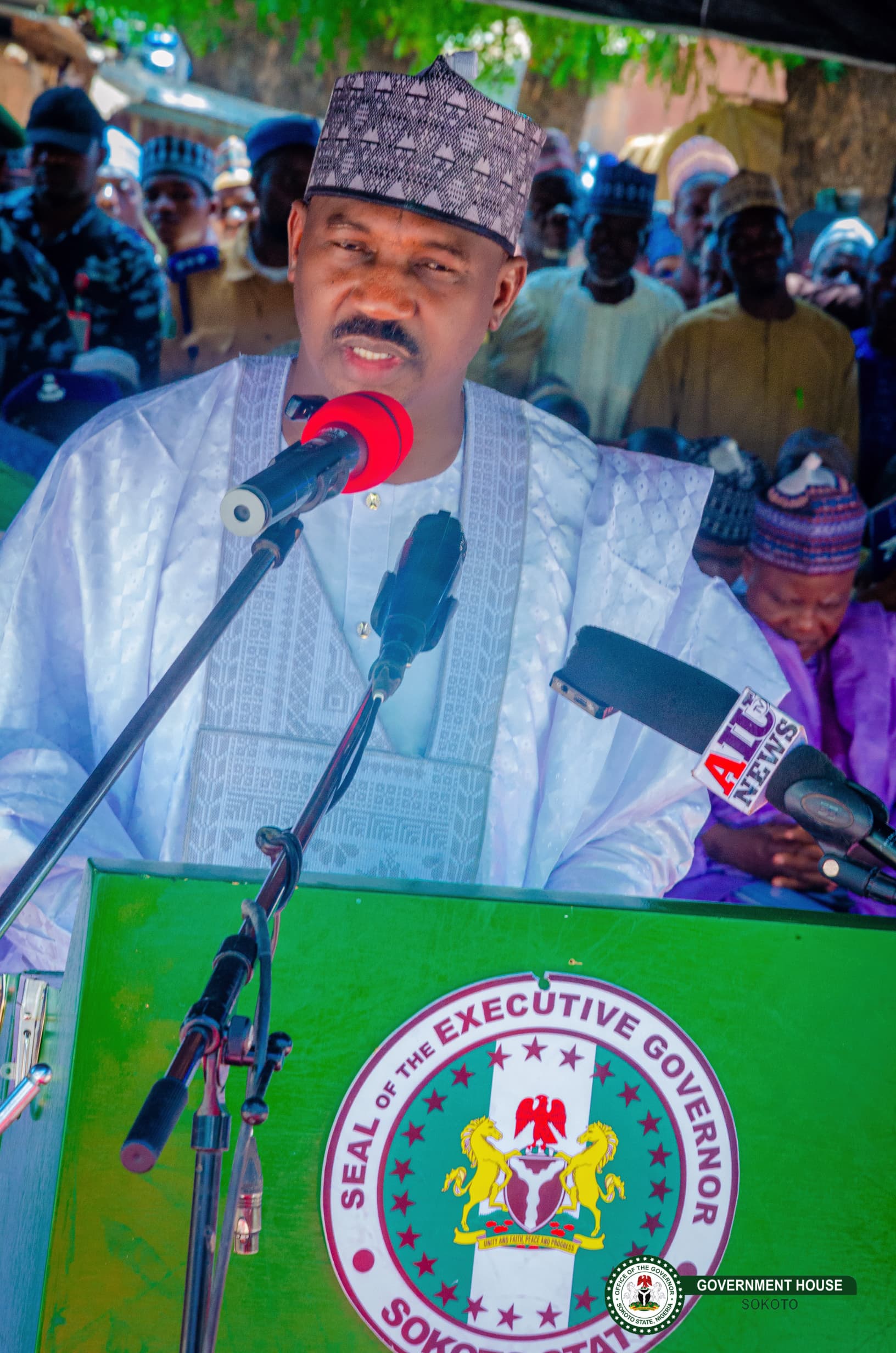
Gov.Ahmed Aliyu’s Sallah gift to pilgrims demonstrates his compassion in religious matters
By Lawal Jet Kaugama
In a time when genuine leadership is sorely needed across Nigeria, Governor Ahmed Aliyu of Sokoto State has once again distinguished himself as a leader with empathy, foresight, and a strong sense of responsibility to his people.
According to a release by Press Secretary to Sokoto State Governent, Abubakar Bawa, on Sunday, Gov. Aliyu’s recent donation of 1,000 Saudi Riyals—equivalent to ₦450,000—to each of the 3,200 state pilgrims as a Sallah gift is not merely a monetary gesture; it is a powerful testament to the values of generosity, compassion, and good governance that define the best of public service.
Such a move is rare in today’s political climate, where many public officials are often detached from the immediate needs and experiences of the people they represent. By reaching out personally to the pilgrims in Minna during their Hajj rites, Governor Aliyu sent a clear message: he sees them, he values their sacrifices, and he is intested in their welfare. This is the kind of leadership Nigerians deserve: responsive, humane, and deeply rooted in service.
The significance of this donation cannot be overstated. At a time when many pilgrims are concluding the spiritually demanding Hajj rituals and preparing for their return journey to Nigeria, such financial support provides tangible relief. The costs associated with travel, accommodation, and basic needs during Hajj are considerable, even with state and federal subsidies. For many pilgrims, especially those of modest means, the 1,000 Saudi Riyals serve not only as a financial cushion but also as a symbol of solidarity from their state leader.
In Islam, the act of giving—particularly during Sallah (Eid al-Adha)—is highly commendable. It reflects the spirit of the season, rooted in sacrifice, generosity, and compassion. Governor Aliyu’s gesture is aligned with these spiritual values and has earned him not only the gratitude of his citizens but also the admiration of many Nigerians across the country.
Equally commendable is the governor’s praise for the Sokoto pilgrims, whom he described as “good ambassadors” of the state. In the context of international travel, especially to a religiously significant destination like Saudi Arabia, the conduct of pilgrims reflects not only their personal discipline but also the reputation of their homeland. The governor’s statement that none of the Sokoto pilgrims were found violating Saudi laws is a testament to the high moral standards and discipline instilled in them.
Such commendations matter. They boost the morale of the pilgrims and encourage a culture of responsible citizenship and religious observance. Governor Aliyu’s public appreciation of their conduct sends a message that good behaviour is recognised and valued—an important lesson in accountability and integrity.
Governor Aliyu’s consistent prioritisation of the welfare of Sokoto State residents has been evident since he assumed office. His reassurances to the pilgrims during his Minna visit are not mere political rhetoric but part of a broader track record that includes investments in healthcare, education, security, and infrastructure. By extending his concern to citizens even when they are thousands of kilometres away from home, he demonstrates a holistic approach to governance.
Leaders are often measured not by how they act in moments of triumph but by how they respond to the day-to-day needs of their people. In this case, Governor Aliyu’s action reveals a deep understanding of the importance of both spiritual and material support for his constituents. He has struck a commendable balance between faith and governance—two spheres that often overlap in Nigeria, especially in predominantly Muslim states like Sokoto.
Another notable aspect of Governor Aliyu’s leadership is his appreciation for religious institutions and key figures such as the State Amirul Hajj, Alhaji Ummarun Kwabo. In his remarks, the governor commended the Amirul Hajj for his tireless efforts in coordinating a successful pilgrimage, and also acknowledged the Sokoto State Pilgrims Welfare Agency for their dedication and competence.
This demonstrates a collaborative approach to leadership—recognising that the success of any government programme or religious undertaking relies on teamwork. By giving due credit to those working behind the scenes, Governor Aliyu is fostering a culture of gratitude and mutual respect within the state’s administrative and religious institutions. Such an approach can only enhance efficiency and morale among those tasked with executing government policies.
Governor Aliyu’s call for pilgrims to intensify prayers for Nigeria, especially concerning the issue of insecurity, reveals his broader nationalistic vision. It is a recognition that Nigeria’s current challenges—particularly in the realm of security—require both practical measures and divine intervention. In a deeply religious country like Nigeria, this appeal is likely to resonate widely.
More importantly, the governor’s remarks underline the need for unity, solidarity, and a shared sense of responsibility among citizens. While governments must do all they can to ensure safety and development, the moral and spiritual fabric of society must also be strengthened. Prayer, in this context, is not an alternative to policy but a complement to it—a reminder that national healing begins with collective intention.
The governor’s condolence to pilgrims from Gudu and Shagari LGAs over the loss of Hajiya Hadiza and Bala Jangebe reflects his empathy and emotional intelligence. In mourning with the bereaved families, he reaffirms the sanctity of life and the communal values that bind the people of Sokoto State together. His prayer for Allah’s forgiveness for the departed souls and comfort for their families reflects the depth of his faith and his commitment to compassionate leadership.
Governor Ahmed Aliyu’s gesture may appear, on the surface, as a simple donation. But beneath that act lies a philosophy of governance that is people-centred, spiritually grounded, and morally guided. In a time when public trust in leadership is at an all-time low, acts such as these help to restore faith in the potential of Nigerian democracy.
He has demonstrated that leadership is not only about grand projects and high-level negotiations but also about the quiet, meaningful gestures that touch lives and uplift spirits. As Sokoto pilgrims prepare to return home, they do so not just with fulfilled religious obligations but with the proud knowledge that their governor stands with them—in word, in deed, and in prayer.
It is hoped that other state governors and public officials across the federation will take a cue from this act of generosity and adopt a more humane approach to governance. After all, a leader’s greatness is not measured by how far he stands above the people, but by how deeply he connects with them.
Lawal jet Kaugama, a commentator on national issues, writes from Kano.