
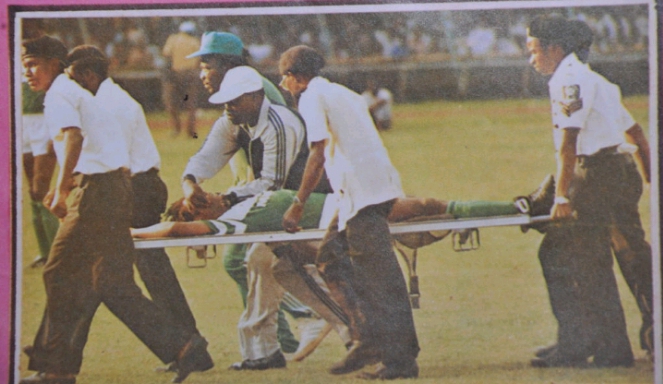
Sam Okwaraji being led outside the pitch
“He slumped and died”: The growing tragedy of sudden deaths in Nigeria
By Uji A. Iliyasu
In recent years, the phrase “he slumped and died” has become disturbingly common in Nigeria’s media space, echoing across social platforms, news bulletins, and mourning families. These sudden and often unexpected collapses—medically termed sudden cardiac death or sudden collapse syndrome—have claimed the lives of politicians, civil servants, security officers, pastors, and ordinary citizens alike.
What is more worrying is not just the frequency of these tragic incidents, but the pattern of silence, unawareness, and lack of systemic medical response surrounding them.
Chronicles of sudden deaths
From Lagos to Kano, Port Harcourt to Abuja, cases of people slumping and dying continue to rise. Though causes may vary—from heart attacks to strokes, hypertensive crises, undiagnosed diabetes, or even stress-induced cardiac arrest—the visible outcome is often the same: a person in seemingly good health suddenly collapses and dies before help can arrive.
Take, for instance, the tragic case of Barrister Nyesom, a senior civil servant in Rivers State, who reportedly slumped in his office in July 2023 and was confirmed dead on arrival at the hospital. Just months earlier, DSP Saheed Afolabi, a police officer in Ogun State, reportedly slumped during parade duties and could not be revived despite swift transportation to a nearby clinic.
In Lagos, a popular Pentecostal pastor collapsed while preaching at the altar and died before the congregation’s stunned eyes. Similar reports have emerged from Ebonyi, Borno, and Katsina, cutting across professions, religions, and socio-economic status.
More instances sudden deaths
Mohammed Fawehinmi – The first son of the late legal icon, Chief Gani Fawehinmi, reportedly slumped and died in August 2021 in Lagos. Though he was known to have battled health issues following a 2003 accident, his death still shocked many who believed he was stable.
Dr. Mathias Angbashim, a gallant police officer in Rivers State, slumped while on duty in 2022. Though praised posthumously for his dedication, his untimely death raised questions about medical fitness checks for security personnel.
In Abuja, a 43-year-old banker, Mrs. Ifeoma Nnaji, collapsed at her desk in 2023 during a particularly stressful audit exercise. By the time medical assistance arrived, she had already passed on.
In Kano State, Alhaji Sule Danlami, a prominent trader, reportedly slumped at a wedding reception. Despite being rushed to the hospital, he was declared dead shortly after arrival.
Sportsmen/women
Sportsmen and women are not left out of this national tragedy.
Over the past two decades, Nigeria has witnessed several heartbreaking losses in the world of sports, where athletes slumped and died during action. These incidents, often linked to underlying health conditions and inadequate medical response, have sparked national conversations on athlete welfare and emergency preparedness in sports.
One of the earliest and most iconic tragedies was the death of Samuel Okwaraji in 1989, but since 2005, similar incidents have persisted. In 2010, Endurance Idahor, a Nigerian striker playing in Sudan for Al-Merreikh, collapsed and died on the pitch during a league match. Though not on Nigerian soil, his death resonated deeply back home.
In 2015, David Oniya, another Nigerian footballer, slumped just minutes into a match in Malaysia and could not be revived.
A particularly tragic case occurred in March 2020, when Chineme Martins of Nasarawa United slumped during a Nigeria Professional Football League (NPFL) match. Despite desperate efforts, he passed away.
Though footballers form the bulk of these reports, other athletes have not been spared. While fewer cases are documented among Nigerian boxers and track athletes, there have been near-misses and underreported fatalities at grassroots levels, suggesting a wider, unspoken crisis.
Most recent
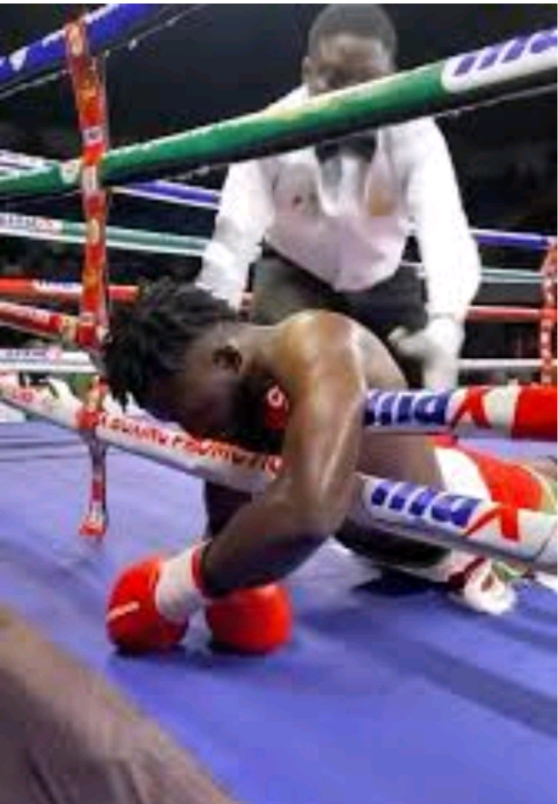
Nigerian boxer, Gabriel Oluwasegun Olanrewaju, also known in the ring as “Success”, tragically collapsed during a light‑heavyweight fight against Ghanaian Jon Mbanugu on 29 March 2025 at the Bukom Boxing Arena in Accra .
In the third round of their eight‑round bout, Olanrewaju was reportedly suddenly lost consciousness, faltering into the ropes. Paramedics and ringside medical personnel rushed to assist, and he was swiftly taken to Korle‑Bu Teaching Hospital. Unfortunately, he was pronounced dead about 30 minutes later .
Increasing awareness
Despite increasing awareness recently, Nigeria has continued to lose young, promising athletes during training or competition. These losses underscore the urgent need for proper medical screenings, presence of qualified medics during events, and the installation of life-saving equipment like defibrillators at all sporting venues.
Every fallen athlete is a painful reminder that health must be prioritized above glory.
Understanding the causes
Medical experts point to a combination of lifestyle choices, undiagnosed chronic conditions, and lack of access to emergency care as major contributors. According to the Nigerian Heart Foundation (NHF), over 40% of adult Nigerians are hypertensive, and many remain unaware until it becomes life-threatening.
“Sudden cardiac arrest, which leads to collapse, can be triggered by untreated high blood pressure, irregular heartbeat (arrhythmia), or blockages in the heart vessels,” says Dr. Adebayo Adetomiwa, a consultant cardiologist in Lagos. “Most victims do not present any serious symptoms before the fatal event.”
Other contributory causes
Workplace stress and burnout, especially among civil servants and corporate employees; poor dietary habits, which are heavy in sodium and unhealthy fats; lack of regular health screenings to detect silent killers like high cholesterol and diabetes;
inadequate access to emergency medical services, especially in rural and semi-urban areas, and cultural attitudes and delayed response.
Spiritual lens
In many Nigerian communities, especially in rural areas, sudden death is often seen through a spiritual lens. Slumping is sometimes attributed to witchcraft, curses, or divine punishment, delaying timely medical response or investigation.
In urban centres, delay also occurs due to poor first responder systems. Most offices, schools, and churches lack basic emergency kits such as Automated External Defibrillators (AEDs) or staff trained in CPR (cardiopulmonary resuscitation). As a result, victims who could be revived within the first 5 minutes often lose their lives while waiting for transportation to hospital.
The role of preventive care
Preventive medicine is still grossly under-practised in Nigeria. Many Nigerians only visit hospitals when symptoms become severe, often bypassing routine check-ups. According to a 2022 report by the Nigerian Medical Association (NMA), less than 20% of Nigerians above age 30 have had a comprehensive medical examination in the past five years.
“There is a dangerous culture of ignoring health red flags. Chest discomfort, fatigue, and headaches are dismissed until they turn fatal,” says Dr. Adetomiwa. “Sudden collapses are often the final expression of years of silent deterioration.”