
Gov. Umar Namadi’s passion for education worthy of emulation
By Lawal Jet Kaugama
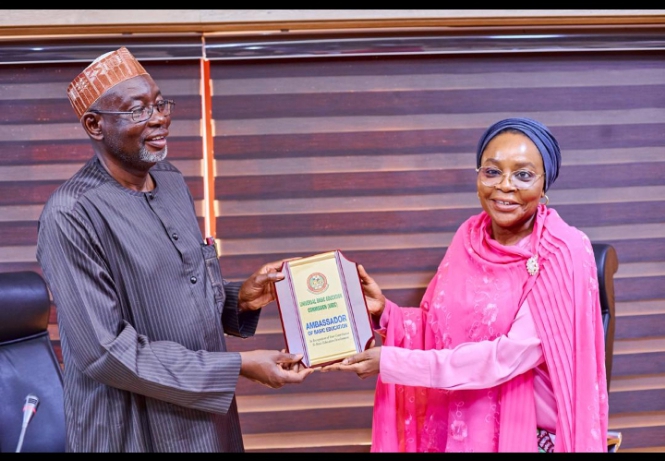
The Executive Governor of Jigawa State, His Excellency Umar Namadi, has paid a courtesy visit to the Executive Secretary of Universal Basic Education Commission (UBEC), Aisha Garba, at the Commission’s headquarters in Abuja.
According to a release signed by Head, Public Relations and Protocol, Universal Basic Education Commission (UBEC) David Apeh, on Friday, the visit focused on strengthening the partnership between Jigawa State and UBEC, with particular emphasis on addressing critical challenges in the basic education sector.
Governor Namadi reaffirmed his administration’s unwavering commitment to improving educational outcomes across the state, and called for deeper collaboration to tackle pressing issues such as maintenance of infrastructure and teacher shortages.
Namadi also highlighted innovative strategies being employed by the state to boost school enrollment, particularly the engagement of women as community influencers and mobilizers. He noted that women are playing a pivotal role in raising awareness about the importance of education and encouraging parents to enroll their children, especially girls, in school.
In her response, the Executive Secretary, Aisha Garba commended Jigawa State for its strong trackrecord, especially in the timely payment of counterpart funding, effective implementation of UBEC-supported projects, and commitment to transparency.
In a time when many leaders often relegate education to the background, Gov. Namadi of Jigawa State stands out as a refreshing example of dedication and vision. His recent visit to the Executive Secretary of the Universal Basic Education Commission (UBEC), Aisha Garba, is a clear demonstration of his deep commitment to transforming the educational landscape of his state.
Governor Namadi did not just pay a routine courtesy visit—he carried with him the weight of a mission: to seek stronger support, build deeper partnerships, and ensure that every child in Jigawa, regardless of background or gender, gets access to quality education. He addressed critical issues like dilapidated infrastructure and the shortage of qualified teachers, showing that he is not only aware of the challenges but is actively working to solve them.
Of particular note is his administration’s innovative strategy of engaging women as community influencers to drive school enrollment, especially for girls. In a society where cultural and economic factors often discourage female education, Governor Namadi’s approach is both bold and progressive. By empowering women to champion education within their communities, he is not only boosting enrollment but also fostering a more inclusive and enlightened society.
UBEC’s response to his visit speaks volumes about Jigawa’s standing. The Commission acknowledged the state’s excellent track record in counterpart funding and transparency. These are not just bureaucratic achievements—they are a testament to Namadi’s accountability and seriousness about education reform.
It is also encouraging that Jigawa is among the beneficiaries of the upcoming Hope-Edu World Bank-funded project. This is no coincidence—it is a direct result of the governor’s proactive engagement and tireless advocacy for his people. His leadership is opening doors that will benefit generations to come.
Governor Namadi’s unwavering love for education is not only inspiring but also deeply impactful. His actions send a powerful message that education is not a luxury, but a necessity for progress and prosperity. With such visionary leadership, the future of Jigawa’s children is brighter than ever.
Lawal Jet Kaugama, a commentator on national issues, writes from Kano