
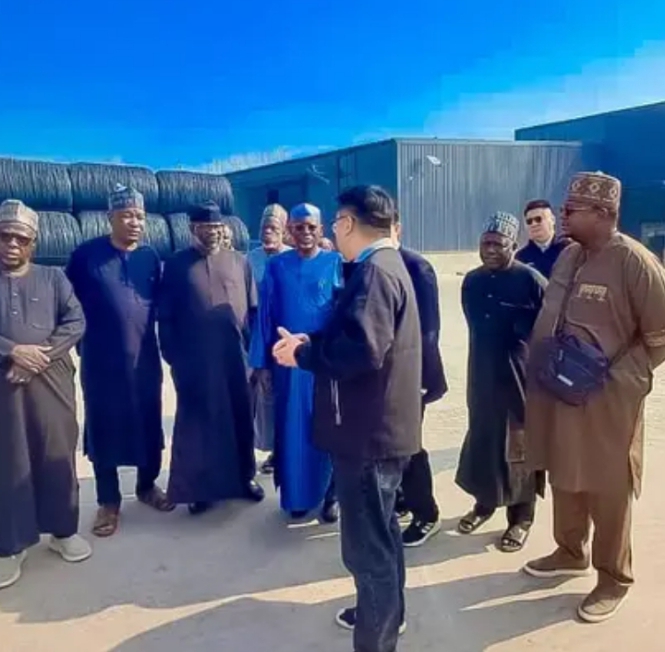
Gov Umar Namadi’s vision for a new Jigawa State
By Lawal Jet Kaugama
In a time when public trust in leadership is often tested by unmet promises and slow development, the emerging vision of Jigawa State governor, Umar Namadi, offers a refreshing and reassuring State.
At the heart of the governor’s visit to China lies a clear and commendable objective: to connect Jigawa with global investors and partners who are willing to contribute meaningfully to its growth. This approach signals a shift from dependency-driven governance to a model anchored on collaboration, innovation, and sustainability.
It is leadership that understands the realities of a globalised economy, where progress is often determined by the strength of partnerships and the ability to attract investments.
One of the most significant outcomes of the visit is the signing of a Memorandum of Understanding (MoU) to revive the Maigatari Border Free Trade Zone. This initiative, if properly implemented, has the potential to redefine the economic landscape of Jigawa. Border trade zones are not merely commercial hubs; they are engines of growth that stimulate local economies, create employment opportunities, and enhance cross-border trade.
For a state like Jigawa, strategically located and rich in human and agricultural resources, this is a bold step toward unlocking untapped potential.
What stands out even more is the governor’s deliberate focus on sectors that directly affect the daily lives of Jigawa people: agriculture, power, and local production. These are not abstract policy areas; they are the backbone of economic survival and prosperity in Jigawa.
By engaging over 20 companies in meaningful discussions, not ceremonial visits, Gov Namadi demonstrates a seriousness of purpose that is often lacking in present day polity.
Agriculture, for instance, remains the lifeline of Jigawa’s economy. The emphasis on improving farming tools, adopting modern techniques, and attracting agricultural investment reflects a deep understanding of the state’s comparative advantage. When farmers are empowered, food production increases, incomes rise, and poverty declines. This is not theory but a proven pathway to development.
Equally important is the focus on power supply. No economy can thrive without stable electricity. By prioritising discussions around energy, the governor is addressing one of the most critical barriers to industrial growth and small business development. Reliable power means thriving enterprises, job creation, and increased productivity. It is the difference between subsistence and prosperity occasioned by industrial advancement.
Gov Namadi’s commitment to local production is another strategic move that deserves recognition. In an era where import dependency weakens local industries, encouraging domestic production is both patriotic and economically sound. It ensures that wealth circulates within the state, strengthens local businesses, and builds resilience against external economic shocks.
What ties all these efforts together is the administration’s 12-point agenda; a framework that reflects careful planning and a long-term vision. Rather than chasing quick, politically convenient achievements, the governor is laying a foundation for sustainable growth. This is the kind of leadership that prioritises legacy over applause, impact over optics.
Public reactions to these efforts further underscore the significance of this approach. Across various comments and expressions of support, there is a consistent theme: trust in leadership. People recognise sincerity when they see it. They see a governor who is not just occupying an office, but one who is actively seeking solutions, engaging stakeholders, and working tirelessly to deliver results.
There is also a deeply human and spiritual dimension to Gov Namadi’s leadership that resonates with the people. His well-known prayer that if his leadership would not benefit the people, he should not be granted the position reflects humility, accountability, and a sense of divine responsibility. For many, this is not just rhetoric; it is a guiding principle that shapes his actions and decisions.
Of course, it is important to acknowledge that these are early steps in what will undoubtedly be a challenging journey. Signing agreements and initiating discussions are only the beginning.
The real test lies in implementation, translating plans into tangible outcomes that improve the lives of ordinary citizens. But if the current trajectory is anything to go by, there is every reason to be optimistic.
Jigawa’s progress may be gradual, but it is steady, and that is often the most sustainable form of growth. Rapid, unplanned development can be as harmful as stagnation. What Gov Namadi is building is a system, one that prioritises structure, continuity, and resilience.
In a political environment where many leaders focus on short-term gains, Gov Umar Namadi is charting a different course. His vision is clear, his strategy is deliberate, and his commitment appears unwavering.
By seeking global partnerships, revitalising key economic sectors, and aligning his efforts with a comprehensive development agenda, he is positioning Jigawa for a future defined by boundless possibilities.
Indeed, Jigawa is moving, slowly but steady, and under Namadi, it is moving in the right direction, laying a legacy hard to ignore many years after his tenure.
Lawal Jet Kaugama, a commentator on national issues, writes from Kano