
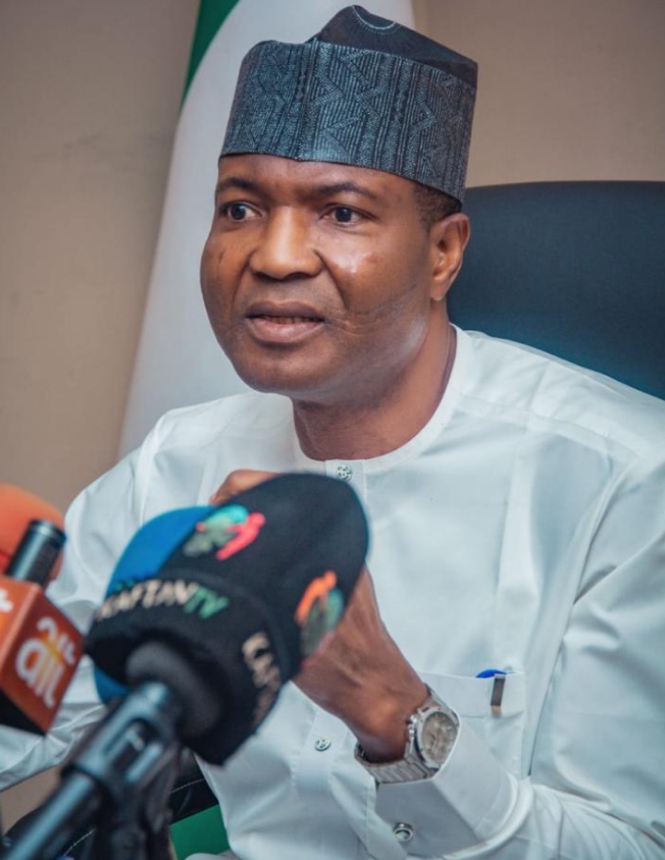
Jibrin Baba Ndace and the quiet transformation of the Voice of Nigeria
By Uji A. Iliyasu
Leadership is often the defining factor that determines whether an institution remains stagnant or evolves to meet modern realities. The short tenure of Jibrin Baba Ndace as Director-General of the Voice of Nigeria can be described as a period marked by institutional renewal, digital transformation, international engagement, and renewed editorial relevance.
His leadership represents a phase in which Nigeria’s external broadcasting service began repositioning itself in a rapidly changing global media environment.
One of the most notable developments under his leadership is the digital transformation of the organisation. In an era where traditional radio broadcasting alone can no longer sustain global relevance, the Voice of Nigeria expanded its digital presence through online streaming platforms, social media engagement, and improvements to its website and multimedia platforms.
This transformation ensured that Nigerians in the diaspora and international audiences could access VON content from anywhere in the world. The modernisation of digital platforms significantly improved audience reach and engagement, bringing the organisation closer to global broadcasting standards and strengthening Nigeria’s international media presence.
Another major achievement under Ndace’s leadership has been the strengthening of Nigeria’s international broadcasting voice. The Voice of Nigeria was originally established to project Nigeria’s image and perspectives to the global community.
Under his administration, the organisation renewed its focus on international broadcasting by strengthening foreign language services and expanding content targeted at Africa and global audiences. Through news, documentaries, cultural programmes, and development-focused content, VON continues to promote Nigeria’s foreign policy objectives, cultural heritage, tourism potential, and investment opportunities to the world. This role is critical in modern diplomacy where media platforms serve as instruments of power and international influence.
Infrastructure and institutional development also stand out among the contributions of his leadership. Public institutions often struggle with outdated equipment, poor working environments, and inefficient operational systems. However, efforts were made to improve broadcasting equipment, studio facilities, and operational efficiency within the organisation. These improvements contributed to better production quality, smoother operations, and improved staff morale.
Institutional stability in a challenging economic environment is itself an achievement, and maintaining operational efficiency in a government media organisation requires administrative discipline and strategic planning.
Staff welfare and professional development also received attention during this period. Training and retraining of journalists, engineers, and technical staff became more prominent, ensuring that personnel were equipped with modern broadcasting, digital media, and content production skills.
In a century where journalism is rapidly evolving due to technology and digital communication, investing in human capacity remains one of the most important decisions any media administrator can make. By focusing on capacity building, Ndace contributed not only to the Voice of Nigeria but also to the broader Nigerian media industry.
Content development and programming reforms formed another important part of the transformation. The organisation worked to improve news content, feature programmes, documentaries, and cultural programming that project Nigeria positively to the international community.
There was increased emphasis on developmental journalism, culture, tourism, investment opportunities, and Nigeria’s role in Africa and global affairs. This programming direction aligns with the core mandate of the Voice of Nigeria as Nigeria’s international broadcasting station and helps strengthen the country’s global narrative.
Institutional visibility and public engagement also improved during this period. Historically, many Nigerians were not fully aware of the activities of the Voice of Nigeria because its primary audience is international. However, the organisation became more visible within Nigeria through public events, media engagement, and collaborations with other media organisations and government institutions. This increased visibility helped Nigerians better understand the role of international broadcasting in national development, diplomacy, and global communication.
Strategic partnerships also formed a key part of Ndace’s leadership approach. Collaboration with international broadcasting organisations, media institutions, and government agencies helped strengthen operations and expand global presence. Partnerships are essential in modern broadcasting for content exchange, training, technology transfer, and international visibility. Strengthening these relationships helped position the Voice of Nigeria more strategically in the global media space and enhanced its role as a communication bridge between Nigeria, Africa, and the rest of the world.
Administrative reforms and organisational restructuring are also associated with this period. Large government institutions sometimes struggle with bureaucracy and inefficiency, but leadership reforms aimed at improving workflow, accountability, and productivity can significantly improve performance. Strengthening internal management systems, improving communication within departments, and ensuring more efficient operations are administrative achievements that may not always be visible to the public but are crucial for institutional growth and long-term sustainability.
It is also important to view his leadership within the broader context of Nigeria’s media diplomacy. International broadcasting is not just about news; it is about shaping narratives, projecting national identity, promoting culture, and influencing global perception. The Voice of Nigeria remains one of Nigeria’s most important soft power tools in international communication, and strengthening the organisation means strengthening Nigeria’s voice globally.
In many ways, the transformation taking place at the Voice of Nigeria under Ndace reflects the importance of leadership in revitalising public institutions and repositioning them for modern challenges. Leadership is not only about managing existing structures but about building new systems, introducing reforms, strengthening institutions, and preparing organisations for the future.
The ongoing reforms, digital transformation, staff development, international partnerships, and institutional restructuring all point to a deliberate effort to reposition the organisation for relevance in the modern global media environment.
While history will ultimately judge every public officeholder based on long-term impact, it is fair to say that Ndace’s represents a phase of repositioning and modernisation for the Voice of Nigeria.
In an evolving global media environment where institutions must adapt or risk becoming irrelevant, the reforms and institutional strengthening taking place are significant steps toward ensuring that Nigeria’s international broadcasting service remains relevant, competitive, and effective.
Through reforms, modernisation efforts, and institutional strengthening, the Voice of Nigeria continues to speak to the world not as a fading voice of the past, but as a modern broadcaster representing Nigeria in the global information space.
The quiet transformation taking place within the organisation demonstrates how leadership, vision, and institutional reform can revive public institutions and reposition them for national and international relevance.
Uji A. Iliyasu, a Public Affairs Analysist, writes from Abuja